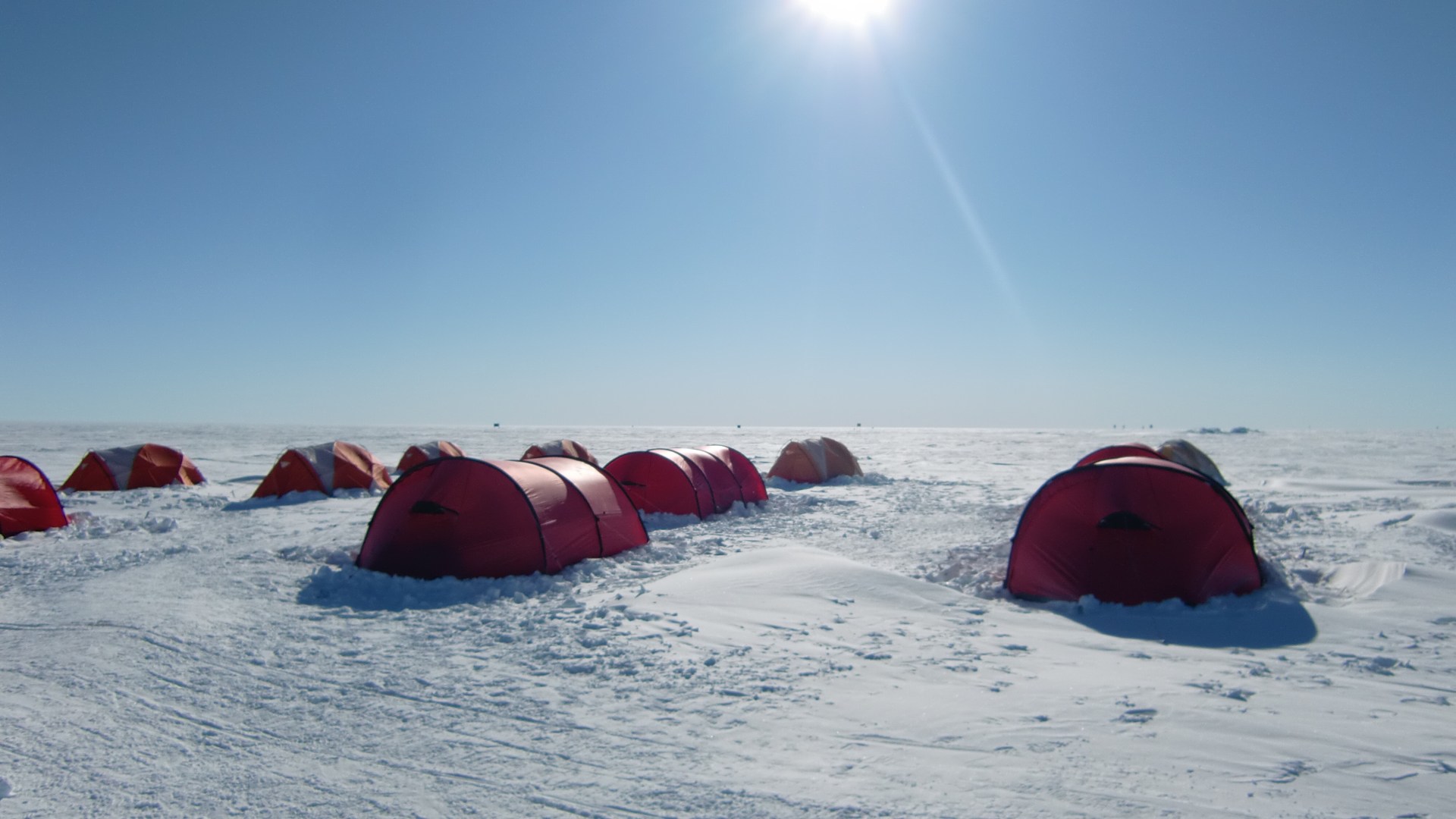
Without question, the most exciting moment of my life was standing at the Geographic South Pole – 90° South – where all 360 lines of longitude meet and the sky is blue, the air is crisp, clean and dry, and you can skip around the whole world in under 30 seconds.
I’d always wanted to go to Antarctica, but the standard tourist cruise just didn’t appeal. So while exploring ways to fly to the continent instead of going by boat, I found a trip that meant I’d actually be camping overnight at the South Pole itself.
And I mean properly camping. In a sleeping bag. In a tent. Pitched on a snow field. If you look back at the featured image, that red tent right in the middle there? That was mine.
The trip also included several nights in the interior at Union Glacier base camp from where I’d be able to explore a part of the planet that very few people have ever set foot on.

The trip was arranged by Antarctic Logistics & Expeditions (ALE), who provide transportation and accommodation for people on tourist jaunts like me, and act as a logistic hub and provide full-on support for expeditions by proper explorers and for National Antarctic Programmes.
ALE is an truly outstanding operation, and since I can’t say it better myself, I’m going to quote from their own website that they “remain the most experienced private operator on the continent with an impeccable safety record, a strong environmental ethic, and a desire to share the white continent with other passionate explorers.”
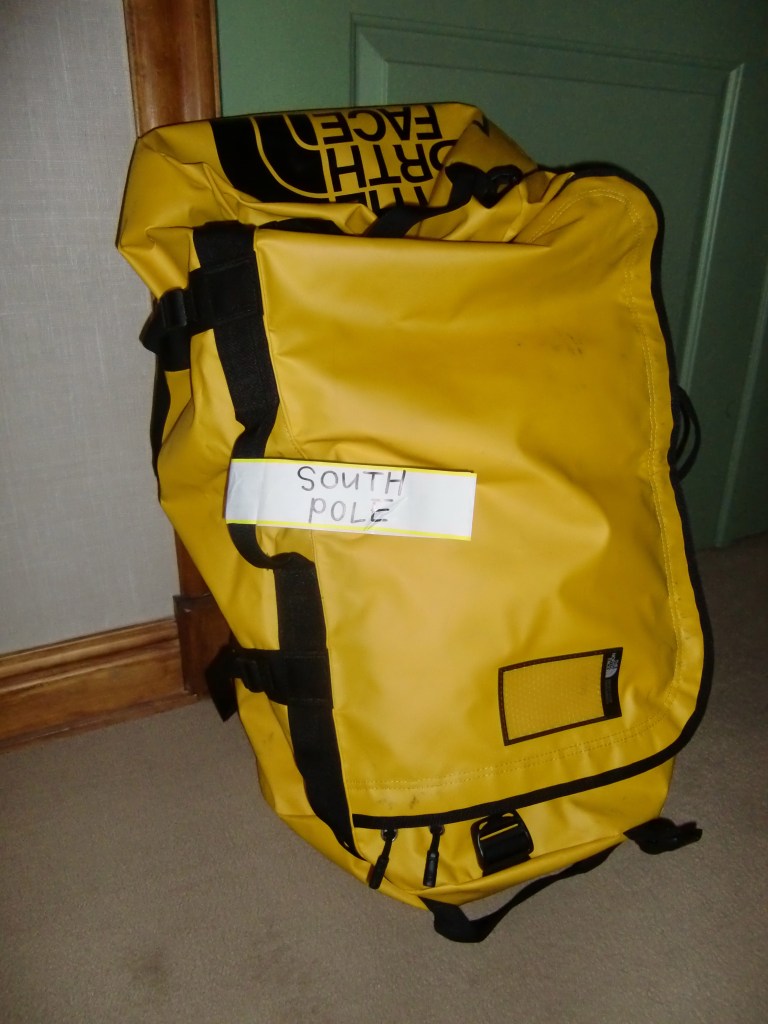
The flight to Antarctica leaves from Punta Arenas in southern Chile, and getting there from home in Hong Kong was a bit of a journey in itself.
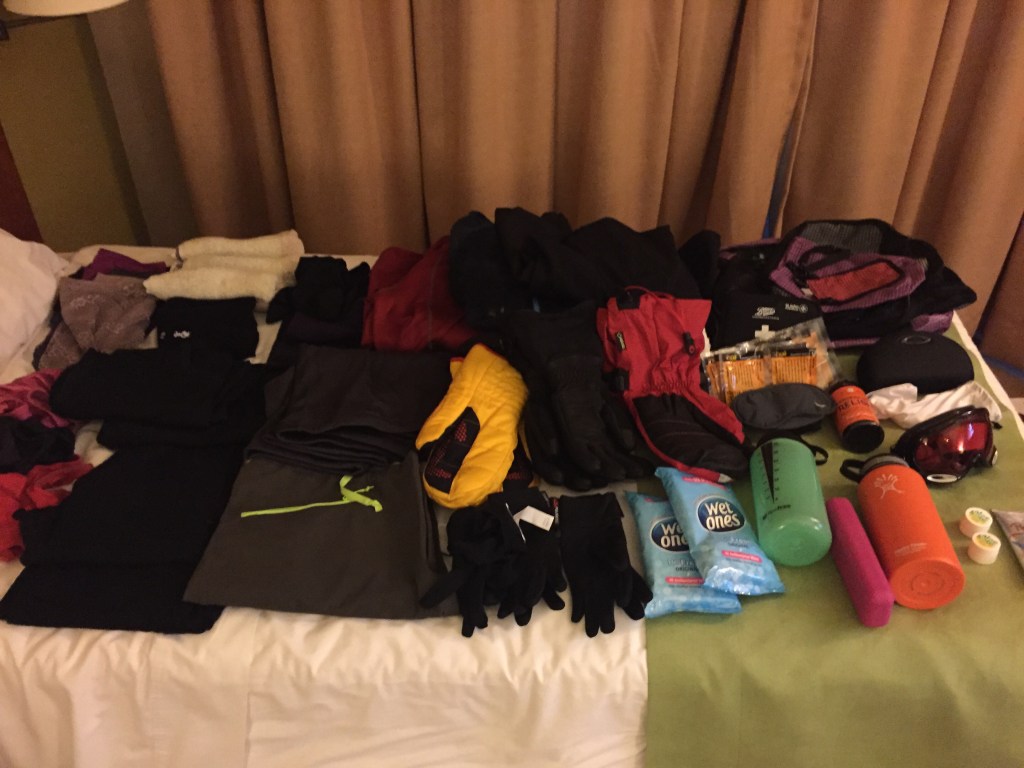
On arrival the first thing you have to do is get everything ready for inspection. As you might imagine, you need some very specific kit if you’re going to spend a week on the coldest, driest and windiest continent on earth, and the company just won’t let you travel if you’ve haven’t got everything you’ve been told to bring.
The above gear doesn’t include the outer layer – the polar insulation layer of boots, jacket and pants, which I rented from the company. But what you can see there is the base layer, the mid layer, the insulation layer and the windproof layer. Yep – that’s five layers in total! It can get pretty cold in the Antarctic.
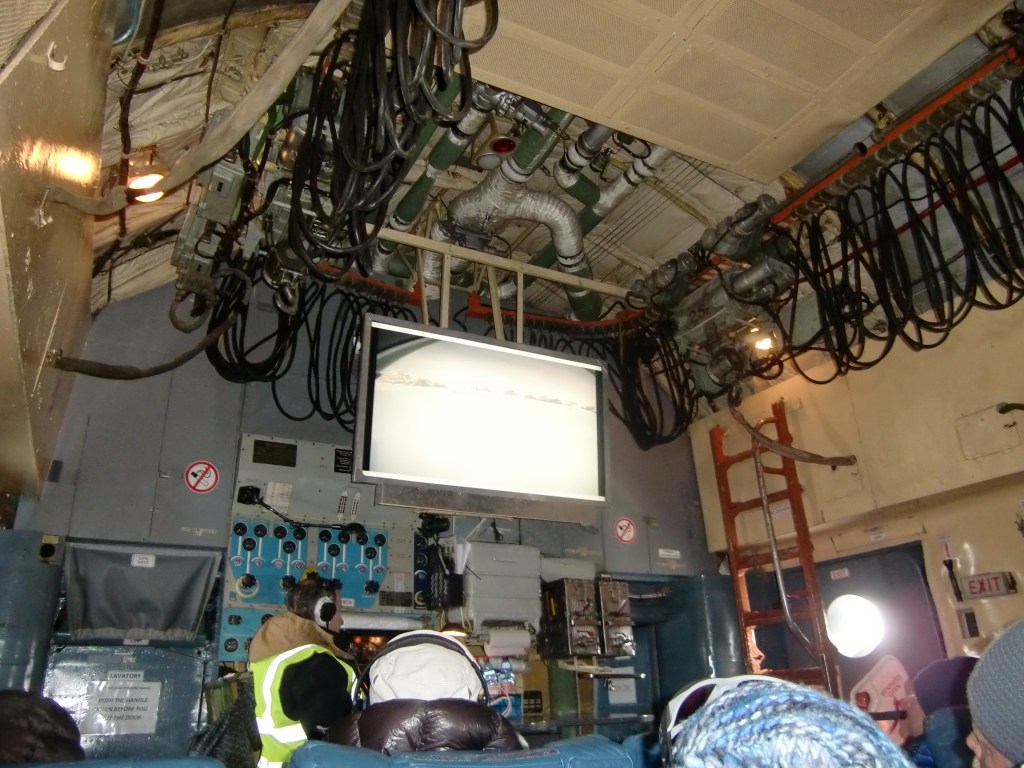
On board the Ilyushin IL-76 TD transport aircraft for our 4.5 hour flight from Punta Arenas airport to the interior of Antarctica. And you thought Ryan Air was a no frills airline!
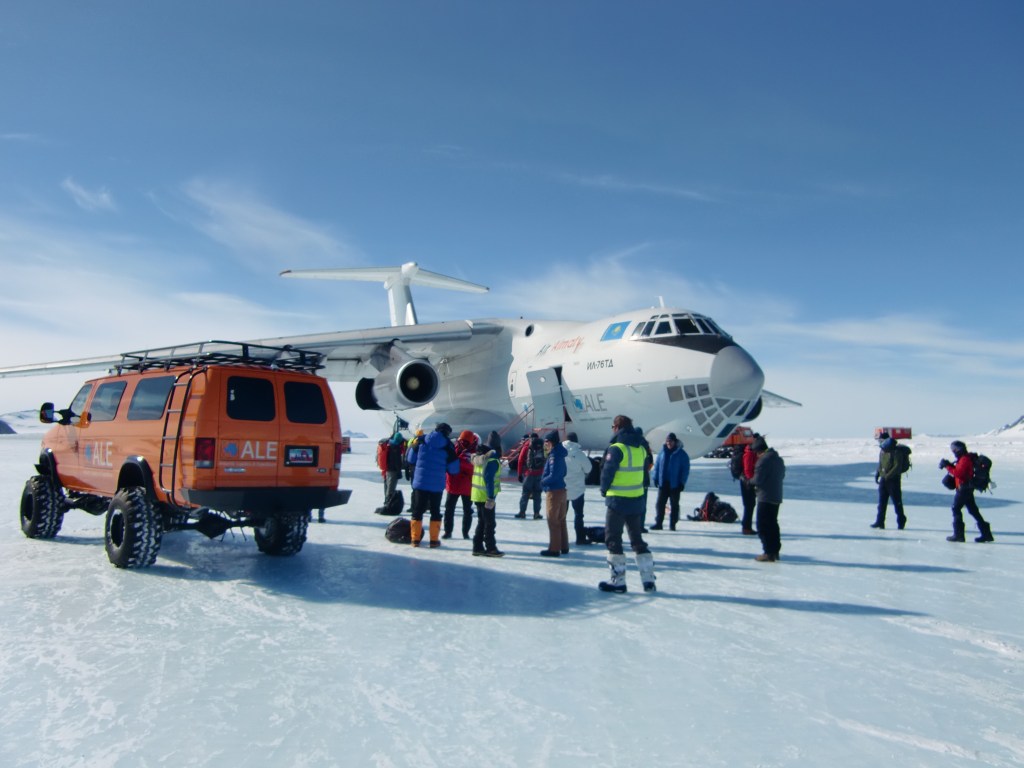
Taking our first steps on Antarctica on the naturally-occurring blue-ice runway.
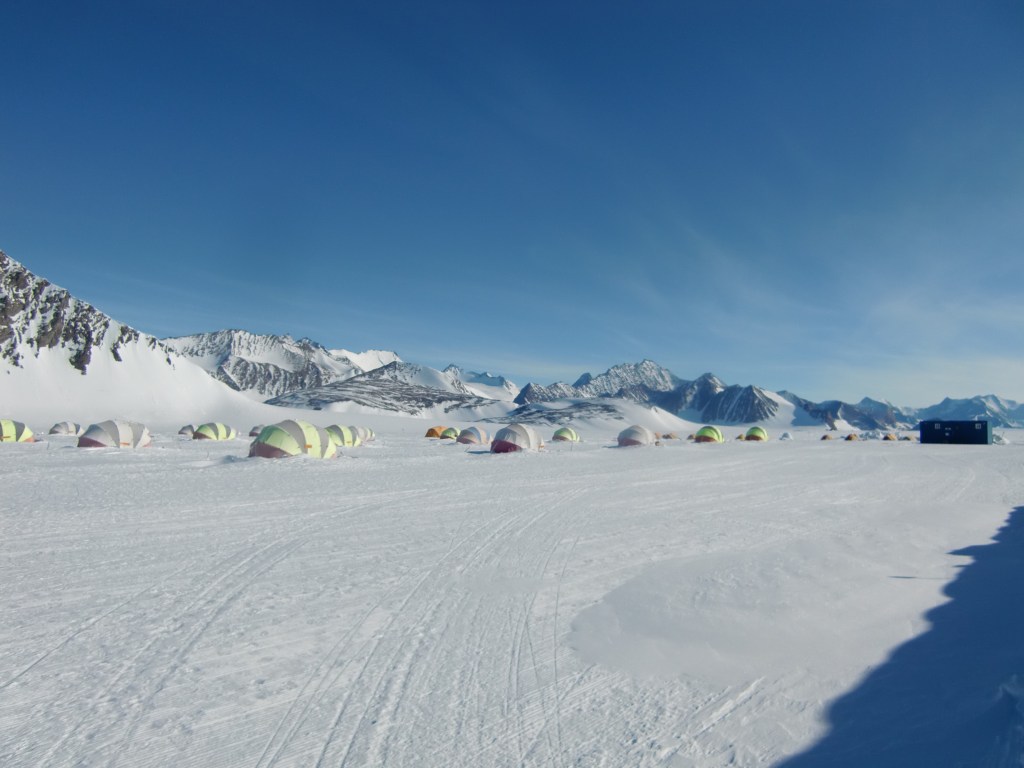
And onwards to Union Glacier Camp, which is nearly 3000 kms from the southern tip of Chile, and is the only facility of its kind in Antarctica. The camp is set up at the start of the season (Nov), and fully dismantled at the end (Jan).
The camp is named for Union Glacier – a large, heavily crevassed glacier near the remote southern Ellsworth Mountains. You can see the Ellsworth Mountains in the photo above; the base of the nearest one is at least 20 km away from the camp, which sort of blew my mind because it felt like you could walk to them in about 10 minutes.
I still wonder if it was just an optical illusion because I’m not used to seeing this kind of landscape, or if it was because everything just looks closer when you’re not looking at it through the prism of the kind of air pollution that you get in most other places in the world.
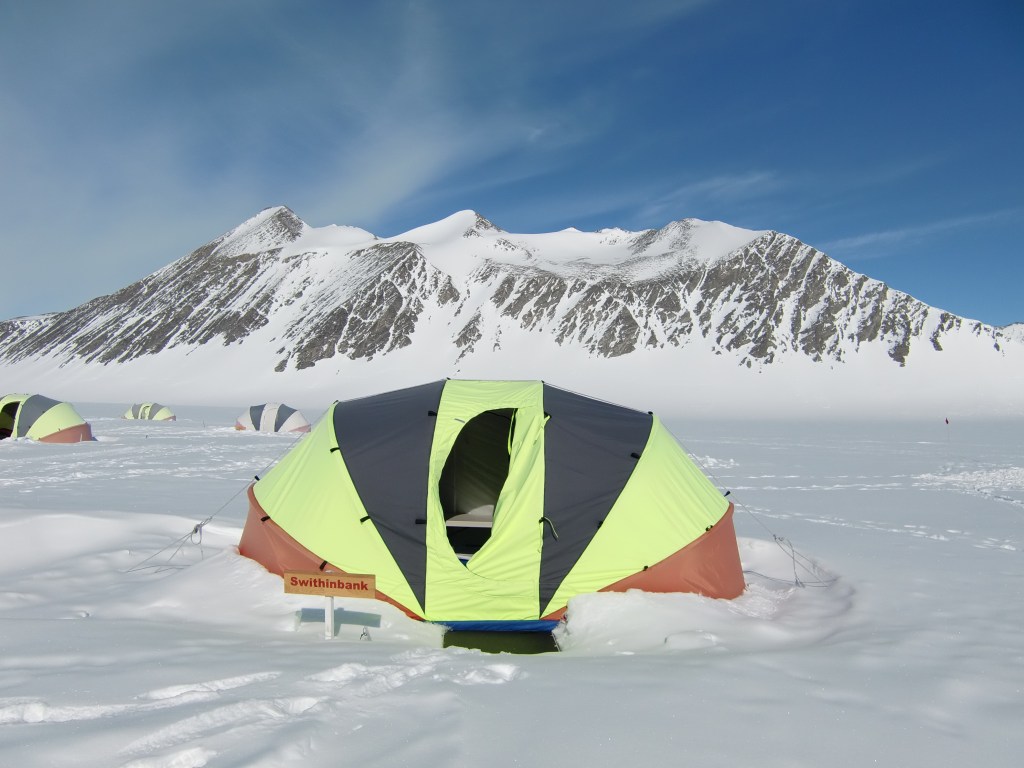
This was my home during my stay at Union Glacier Camp. These dual-occupancy clam tents are actually incredibly comfortable to live in. You can stand upright inside, and with the double-insulated wall, wooden floor underneath the tent, and 24 hours of sunlight, it was about 20°C inside, compared to about -10°C outside.
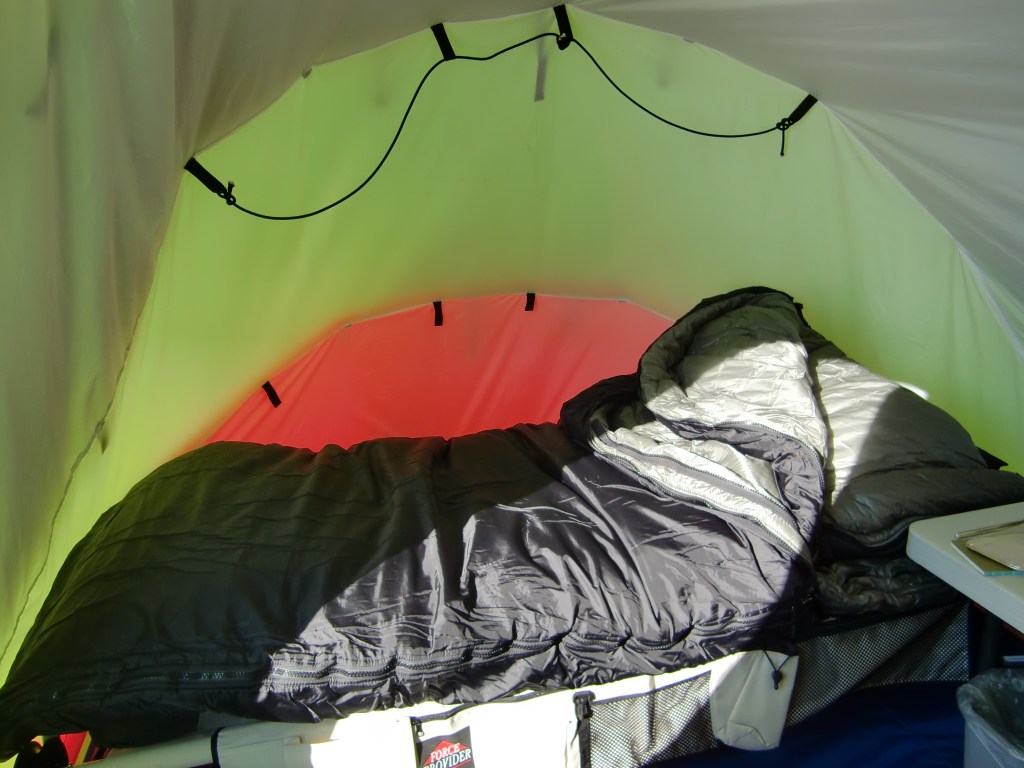
This was my cot inside the tent.
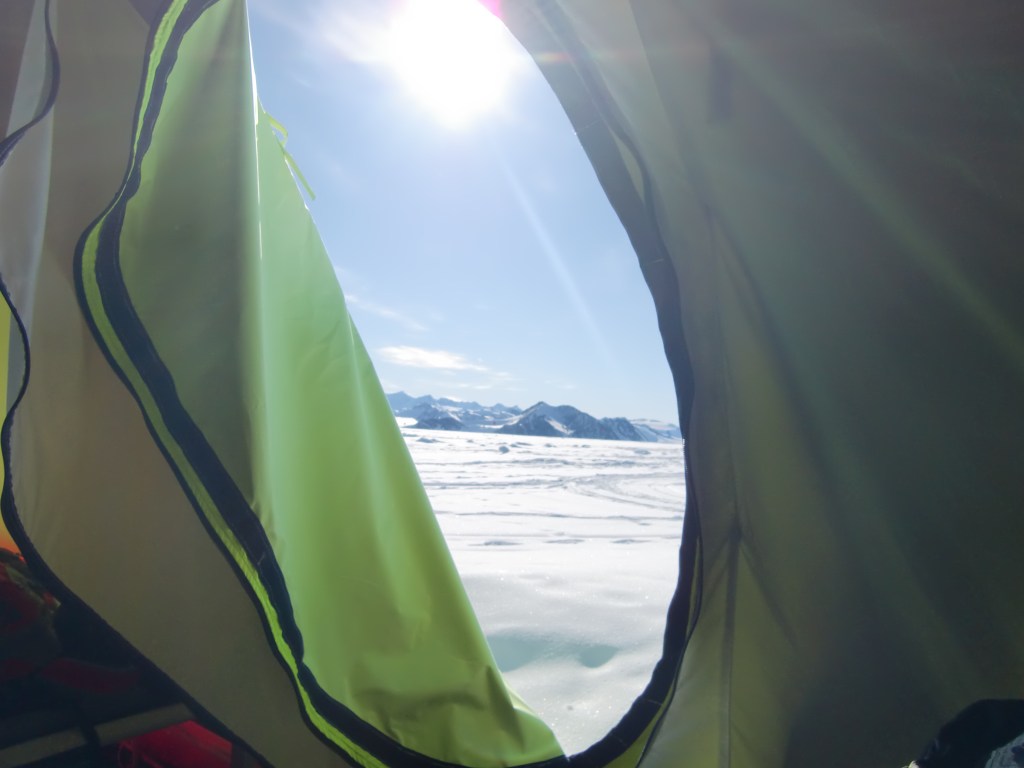
And here’s a view from my cot of the midnight sun.
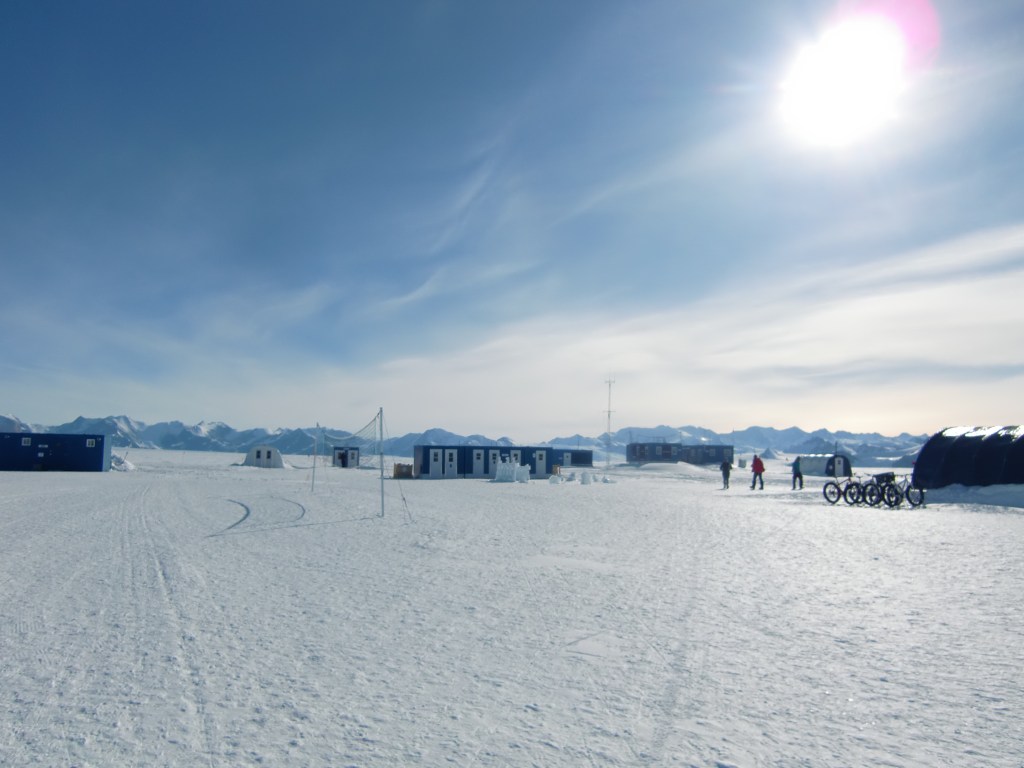
Union Glacier Camp is a fantastic base. As well as the accommodation tents, there were shower facilities, toilets, a doctor surgery, a meteorology station and two large communal tents.
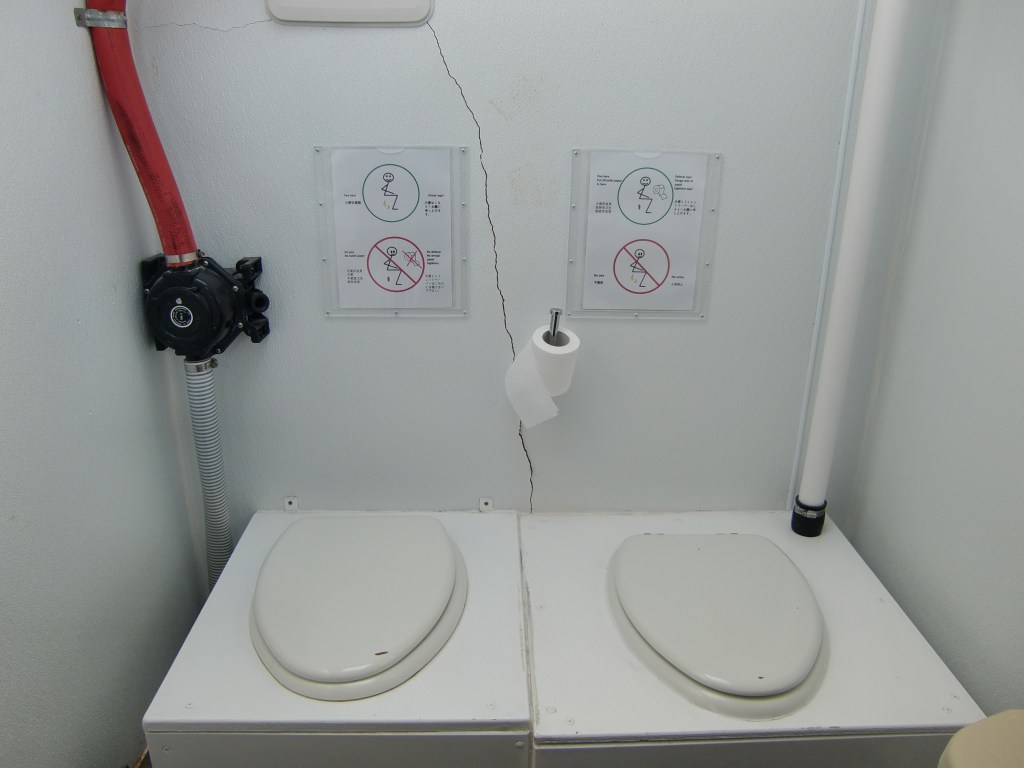
I know you’re all dying to know about the toilet facilities, but are too polite to ask…
In order to minimise both the amount of grey water produced and the amount of fuel needed to melt snow, we were limited to a shower only every 3 days. Cue the wet wipes!
Everything from Union Glacier Camp is removed at the end of the season, including all human waste. This means that liquid and solid waste needs to be kept separate for ease of transport. For women, there are two sit-down toilets, one for liquid waste and another one for solid waste and toilet paper.
If you’re out and about on an excursion, your only option is to use a “pee bottle”. The prospect of using a ‘she-wee’ to pee into a bottle in the open air behind a van when you’re wearing 5 layers of clothing has, I found, the remarkable effect of strengthening the bladder to Herculean proportions.

This is the dining tent for all meals, games and chatting to other guests, staff and – if you’re lucky – visiting scientists working on research projects.
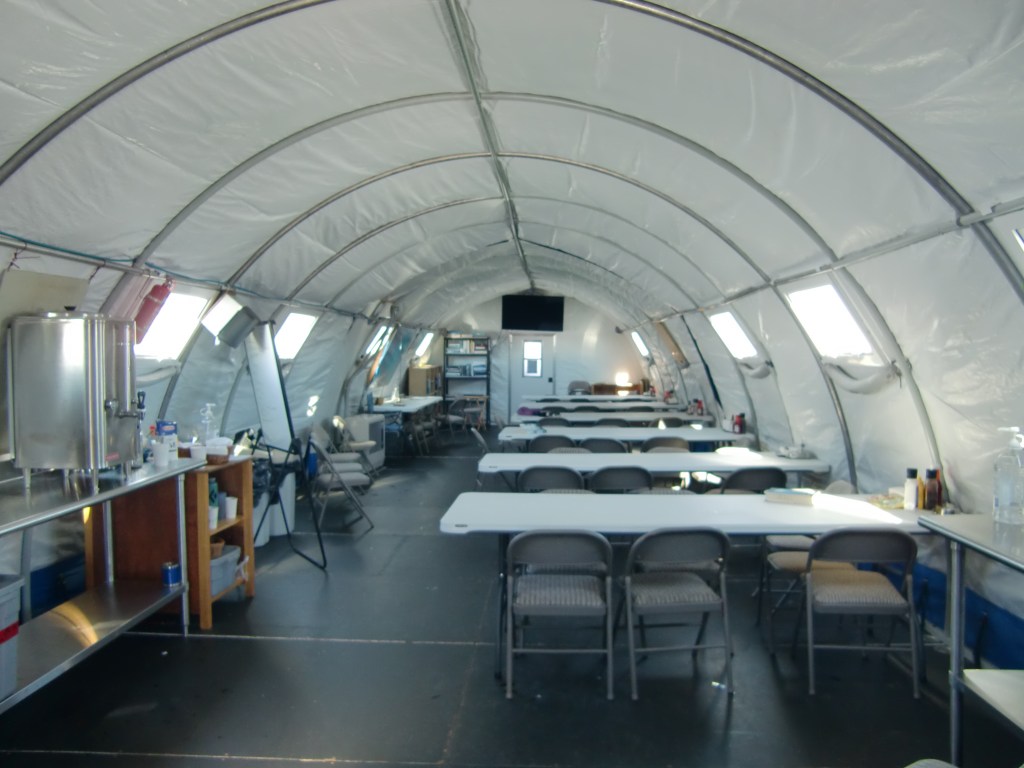
This is the quiet tent for reading, writing and contemplation, and for daily lectures from visiting explorers and researchers. As you can see – it was mostly very quiet indeed! That’s because there are so many organised activities to keep you busy…
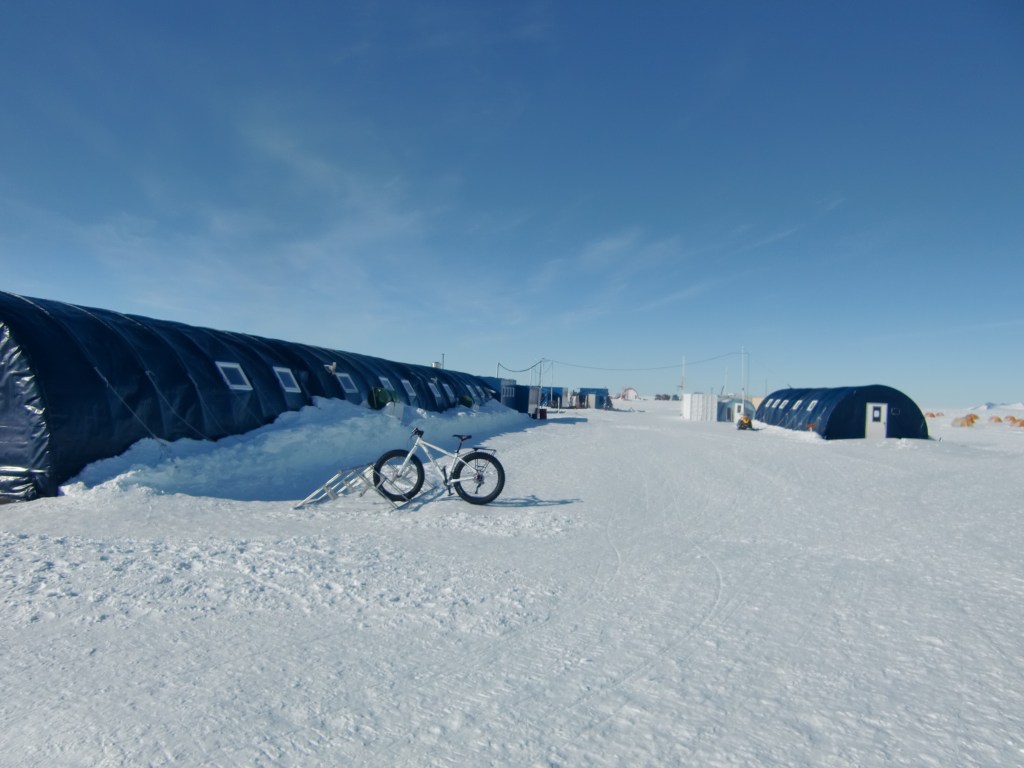
…including cycling on one of the flat-tyre bikes, on the 10 km loop around the camp. When I end up in the nursing home and start claiming that the last time I got on a bike was to go cycling on Antarctica – please remember I’m not actually making it up 🤣
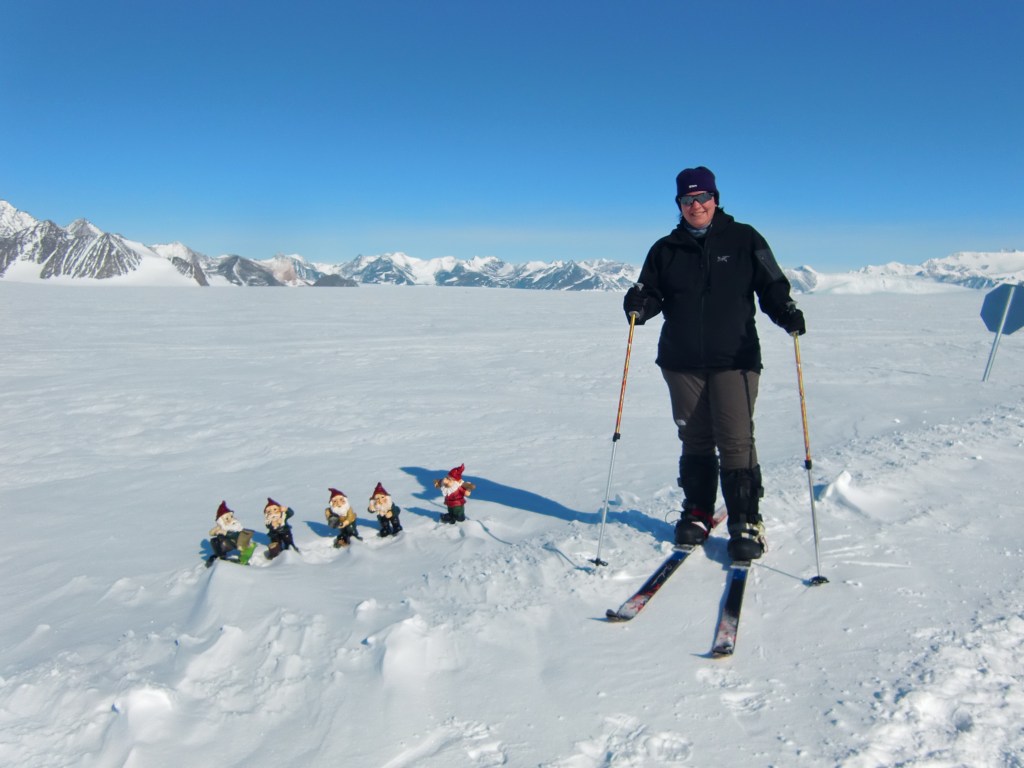
This was the first and last time I ever went cross country skiing – it turns out that I can walk faster than I can ski.
Less than an hour away from the camp are some of the most breathtaking destinations on the continent (on the planet in my opinion). The Ellsworth Mountains is home to incredible glacial landscapes, fossils that are millions of years old and some of the most spectacular mountain vistas in the world.
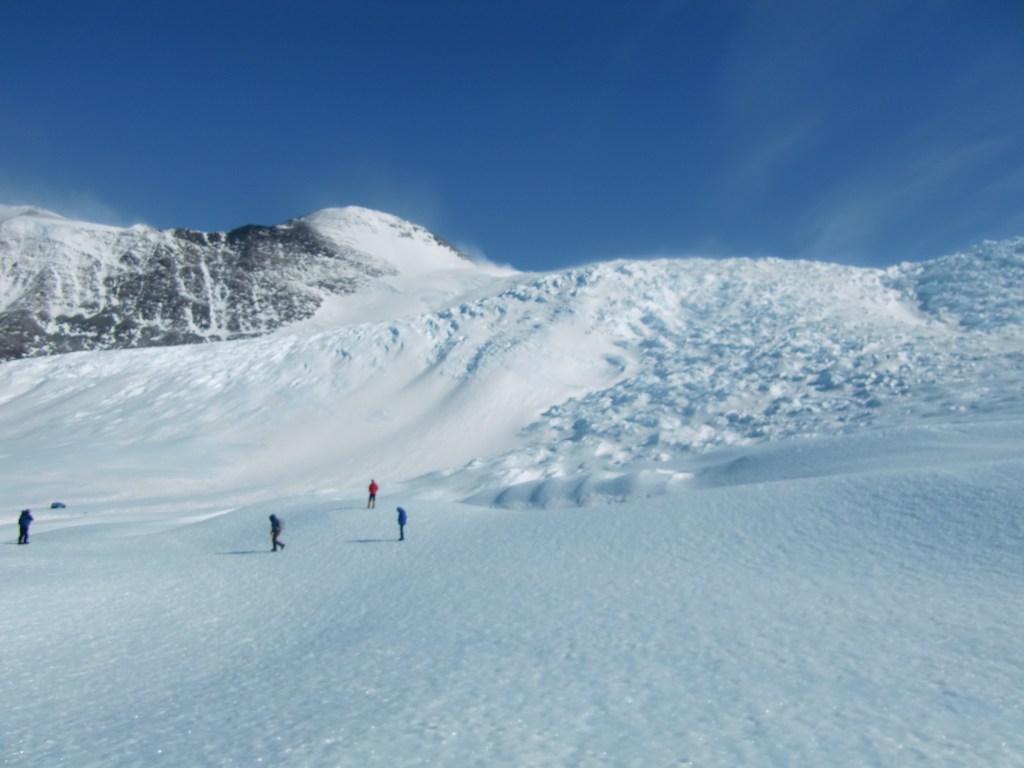
The photo above is of Drake Icefall. An icefall is just what it sounds like – a waterfall with ice instead of water – and of course moving much much much slower! The Drake Icefall is 4 km wide and one of the most beautiful things I’ve ever seen.
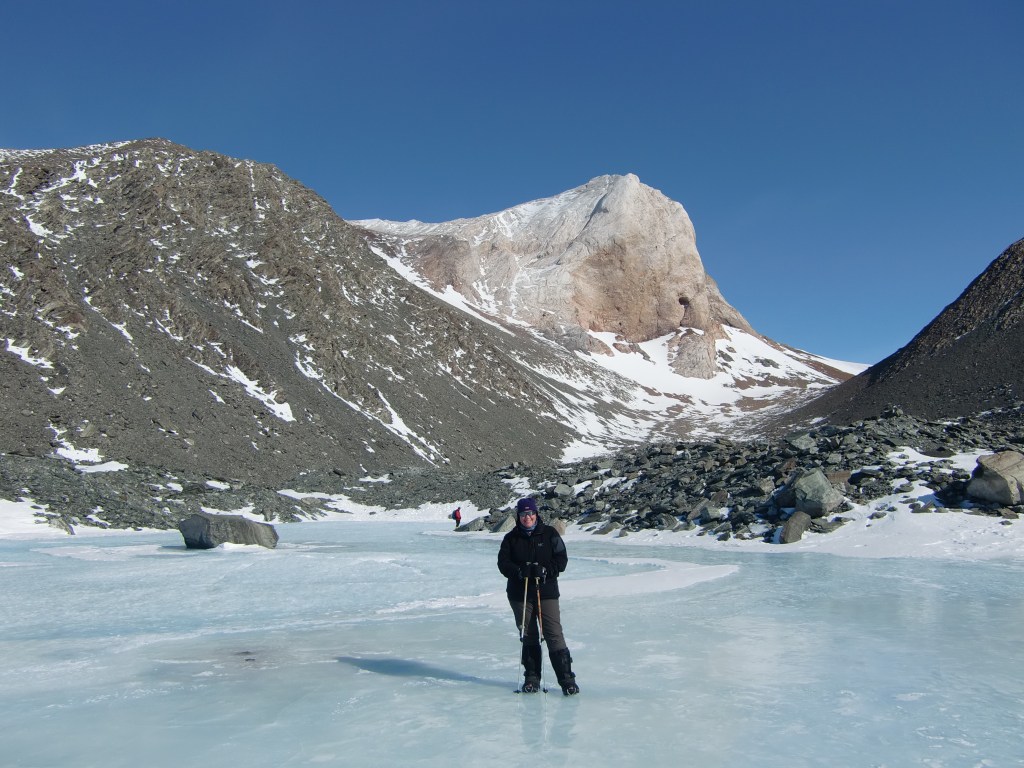
This is Elephant Head – we put spikes on our boots, walked across the glacier and then did a gentle hike up the hill.
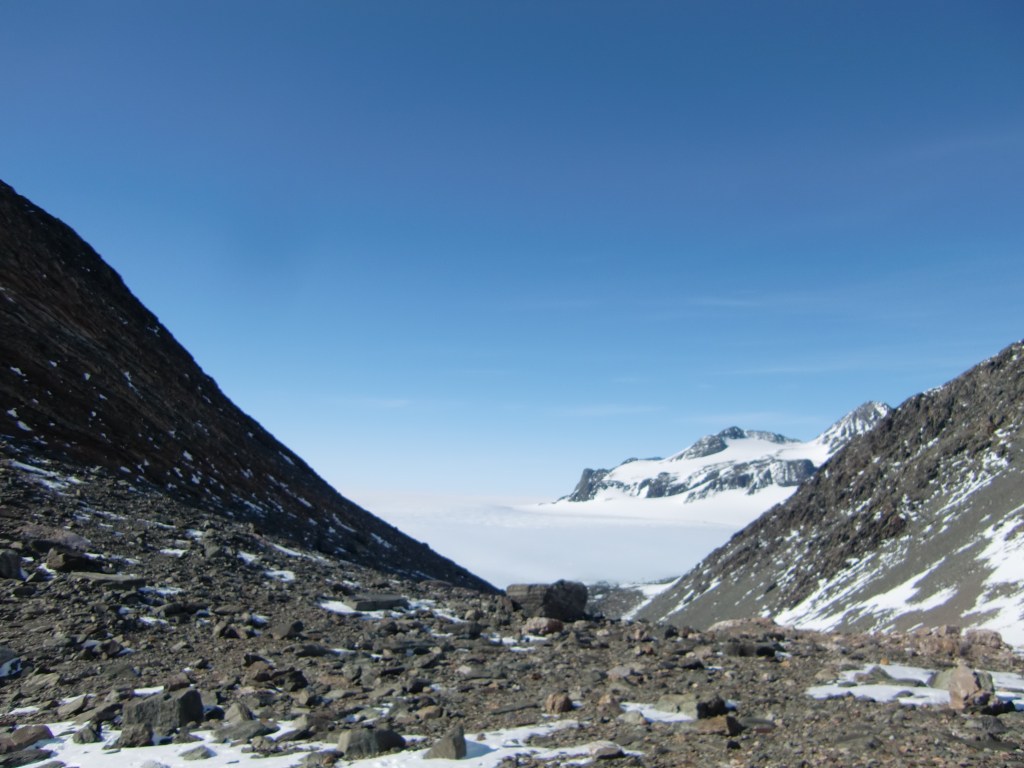
Here is the view back down from about half way up. It was hard not to just gaze out at the endless blue skies and beautiful mountains, but we were reminded to keep our eyes on the ground so we didn’t miss all the fossils.

In the interior of Antarctica, about 1000 m above sea level, I was frankly astonished to learn that these fossils were of sea creatures. I guess this was sort of a day at the beach, Antarctic-style!
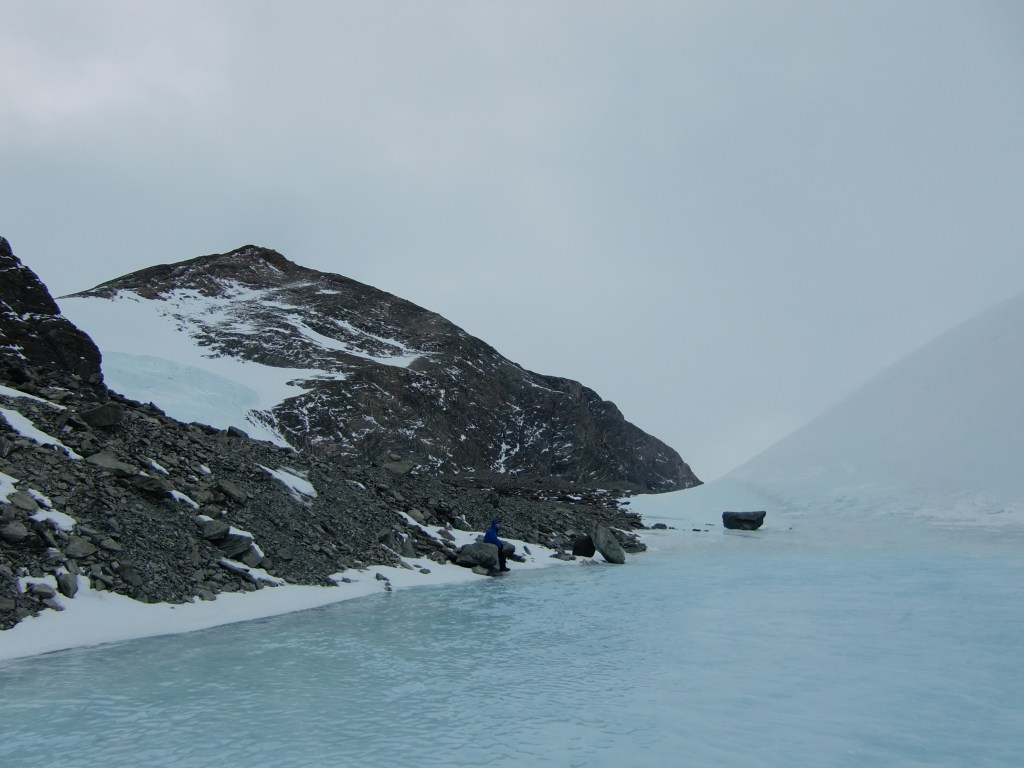
We also walked to Charles Peak Windscoop. The windscoop is a huge corridor created by the power of wind on the ice, and on a clear day is sparkling turquoise in colour. But it wasn’t such a clear day, and as you might expect from a feature that’s been created by wind, it was pretty bloody windy! This was the only decent photo I got because I was just too cold to take off even one of my three layers of gloves 🥶
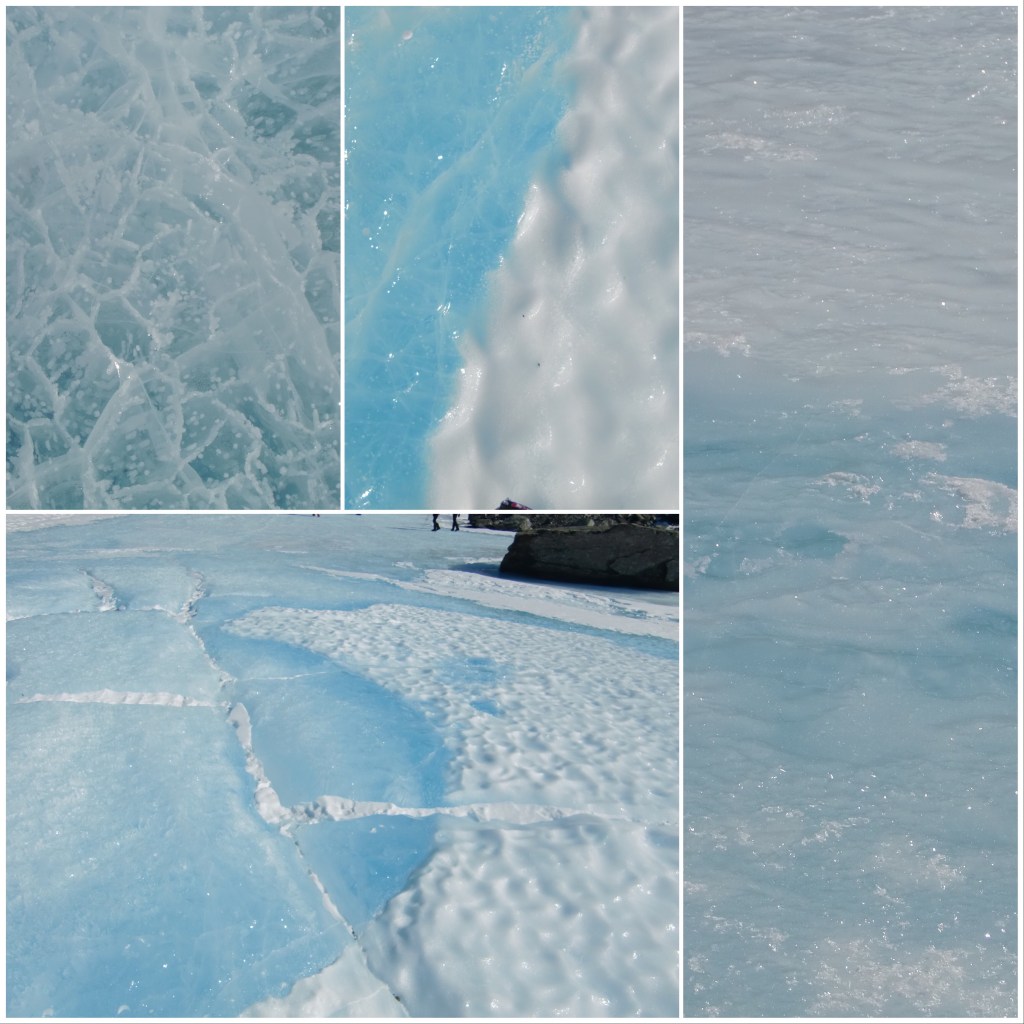
One of the very many things that surprised me about Antarctica is the colour – it’s called the white continent, but I don’t think it is – my overwhelming memory of Antarctica is that it’s a dozen different shades of blue.
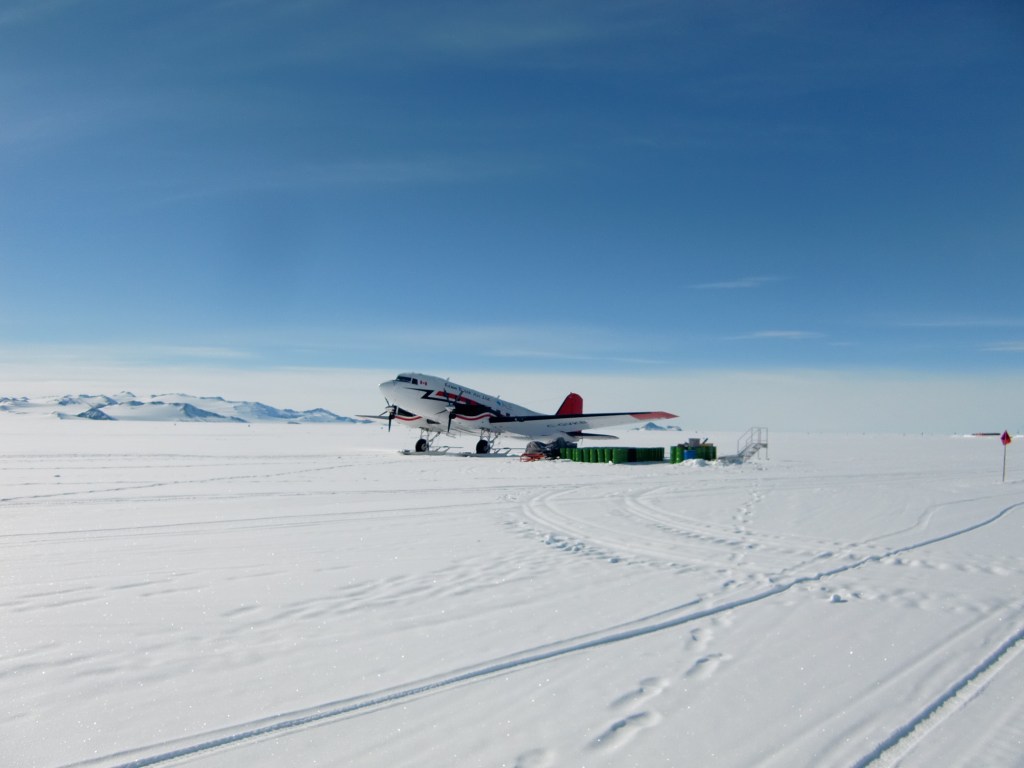
At this point on the trip, I kept having to remind myself that I hadn’t even done the most anticipated bit of the holiday yet! But on one beautiful clear blue morning, we boarded the Basler BT-67 – a ski aircraft – and set off on a 5.5 hour flight to the South Pole itself.
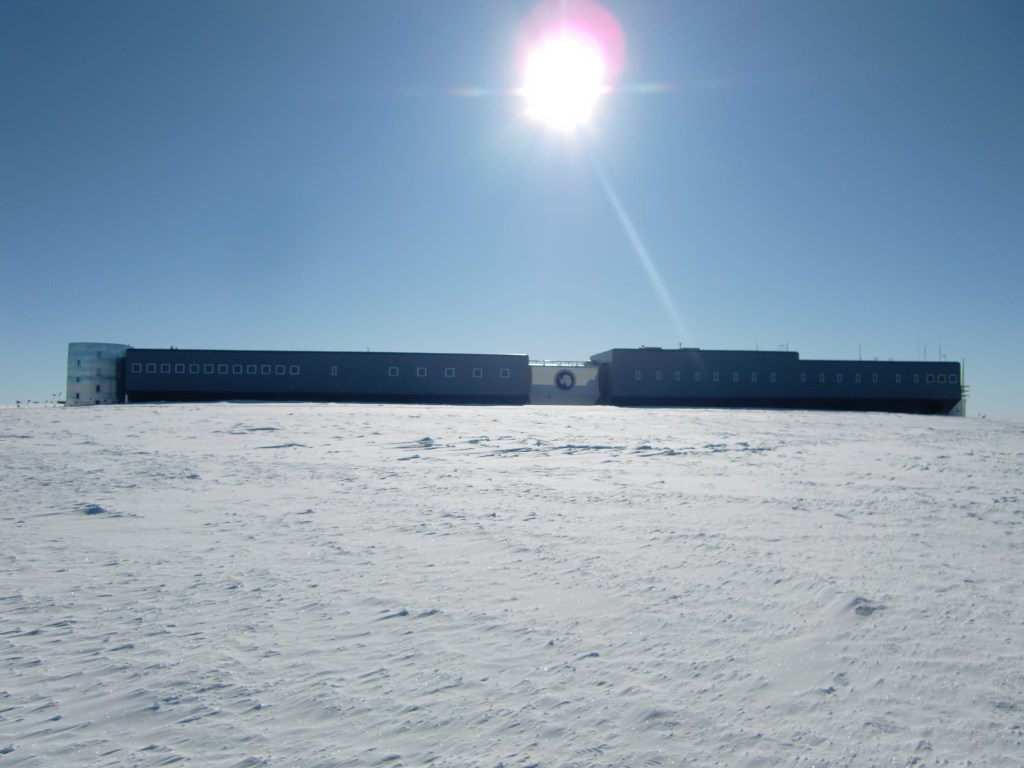
First stop on arrival was a tour of the Amundsen–Scott South Pole Station, which is a US scientific research station. There are up to 250 people here during the summer, made up of fire fighters, bakers, doctors, carpenters, cooks, plumbers, IT techs and waste handlers as well as the researchers themselves studying glaciology, geophysics, meteorology, upper atmosphere physics, astronomy, astrophysics and biomedicine.
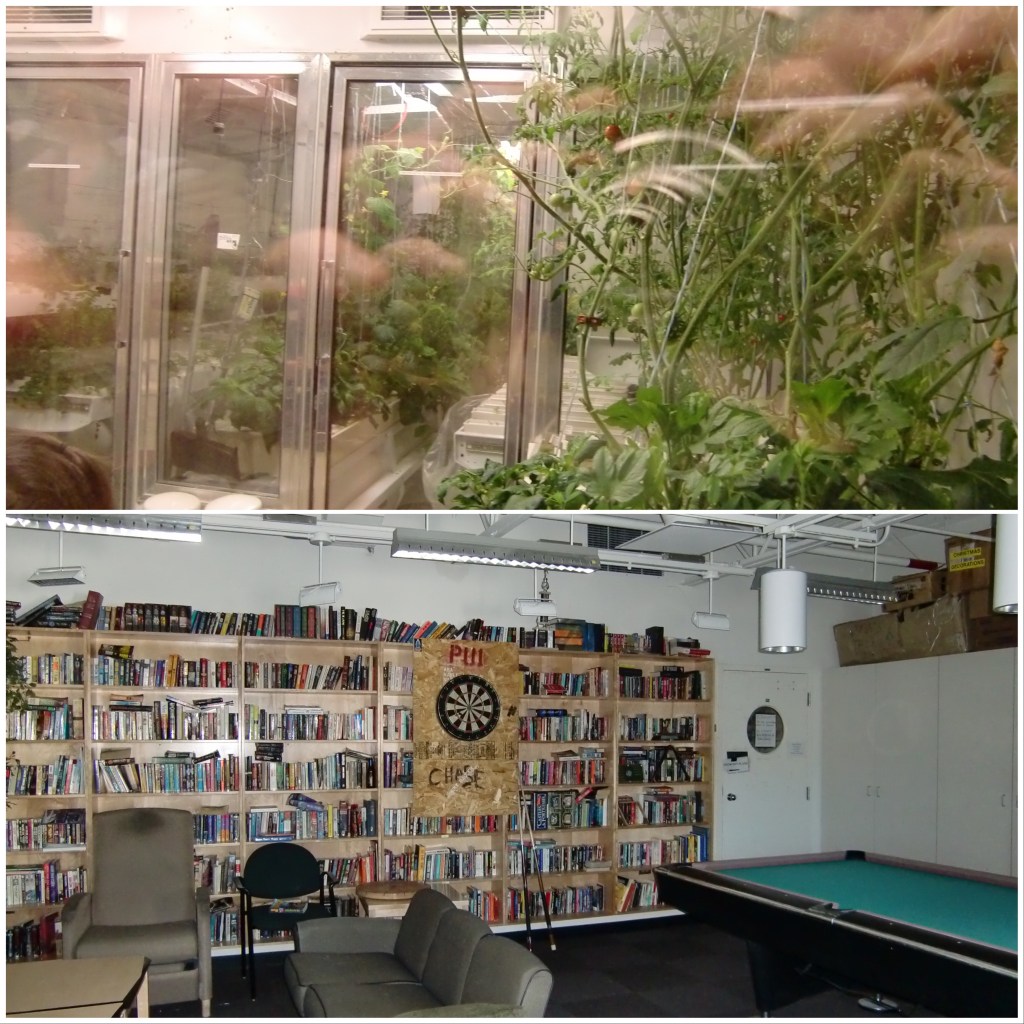
This is the station’s greenhouse and rec room. What an absolute treat it was to be invited to look round the station!
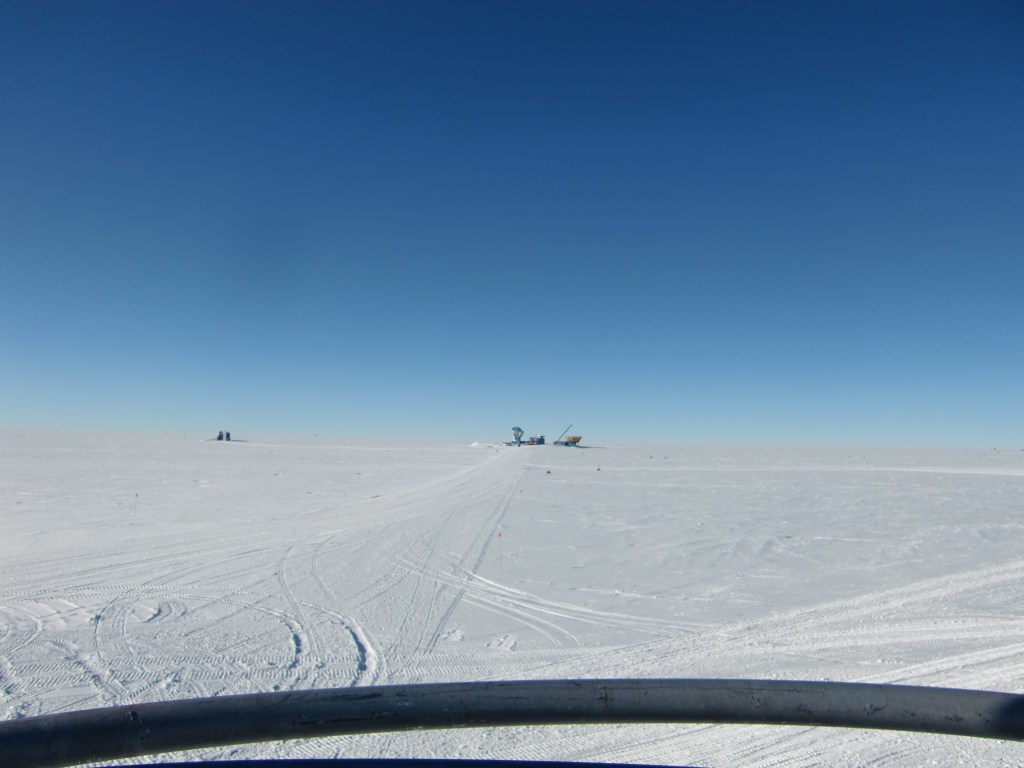
And here we are looking out from the station on to the IceCube Neutrino Observatory. But you’ll have to find someone a lot cleverer than I am to tell you what they do there! I think it’s something to do with neutrinos though, not ice cubes 😉
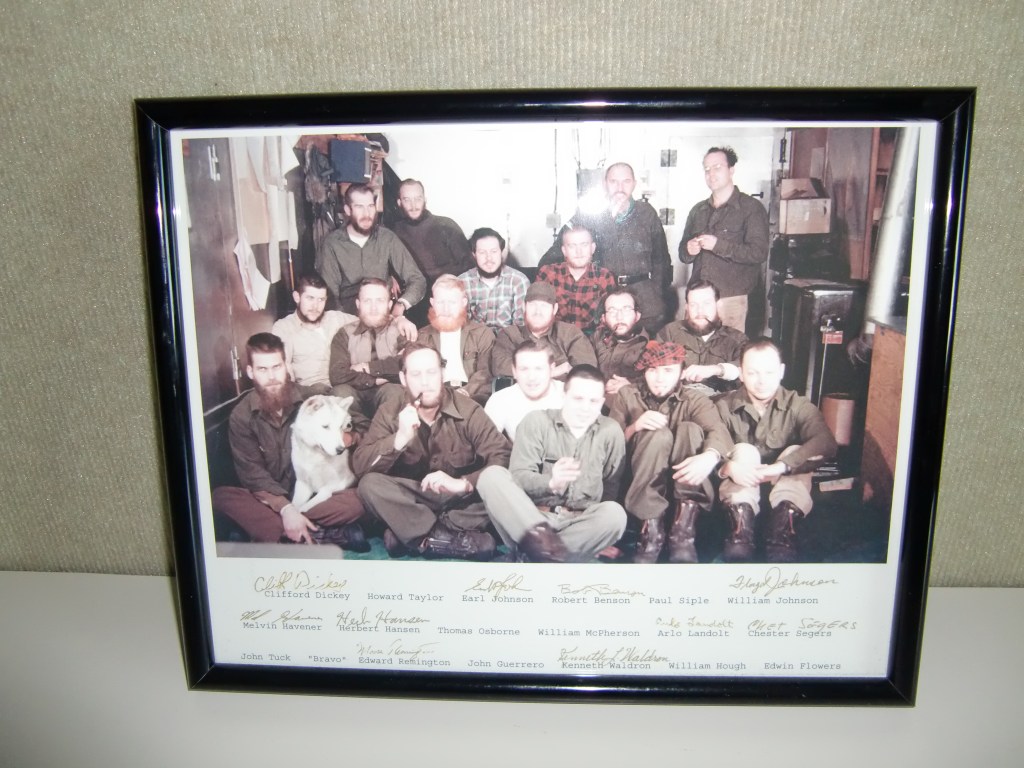
Around 50 people these days stay at the South Pole over the winter, which is a pretty hard-core job since nothing and no one can get in or out until the summer season comes round again.
Above is a photograph that I took at the Amundsen-Scott centre of a photograph of the first people ever to “winter-over” – and if you’re not thinking “The Thing”, then you really need to widen your cultural references 😜

As if all of this wasn’t exciting enough, the next stop was the ceremonial South Pole. This is basically an area set aside for photo opportunities, and consists of a metallic sphere on a short barber pole, surrounded by the flags of the original Antarctic Treaty signatory states, and is some distance from the Geographic South Pole.
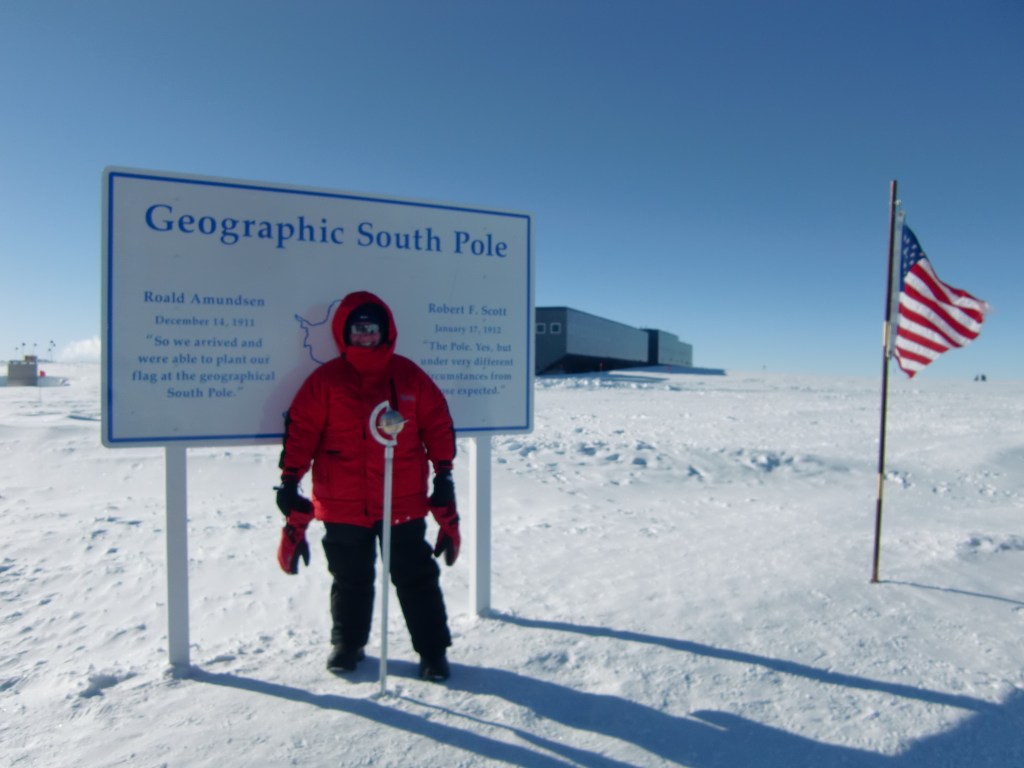
And there I am now, having the time of my life at the Geographic South Pole – 90°C South – where all 360 lines of longitude meet and where dancing round this particular pole means you’ve danced around the whole world.
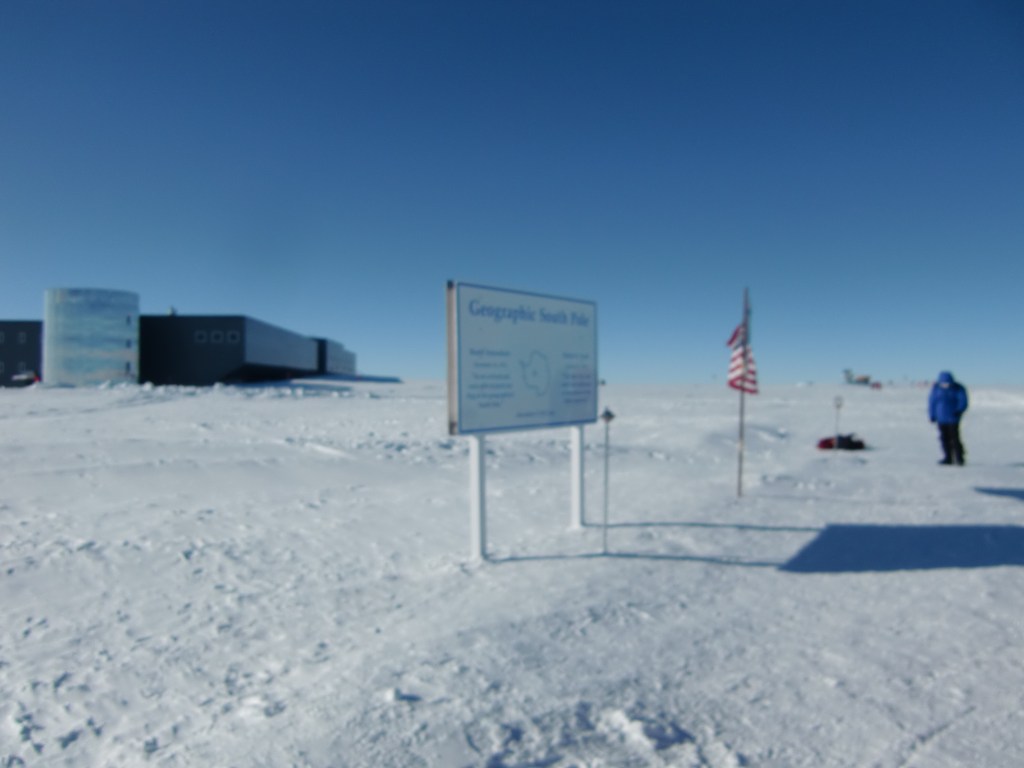
One of the very many things that I didn’t know before making this trip is that the Geographic South Pole moves. Finding and marking the accurate geographic South Pole is an annual New Year’s Day tradition for those staying at the station.
Every year since 1959, South Pole residents erect a new temporary marker at the spot and retire the old one into a display case inside the station. Because I was at the South Pole on 5th January, they hadn’t yet taken away the 2015 marker, which you can see in the photo above, just along from the flag and adjacent to the person in the blue coat; there’s a distance between the 2015 and the 2016 markers of about 25 metres.
I spent as long as I could at the Geographic South Pole just taking in the atmosphere and marvelling at the wonder of it all. It was a pretty special moment and I doubt I’ll ever experience anything quite like that again. I don’t have a lot of photos though, because it was so cold that both my phone and my camera stopped working until they’d spent a good few hours back in the warmth of the dining tent!
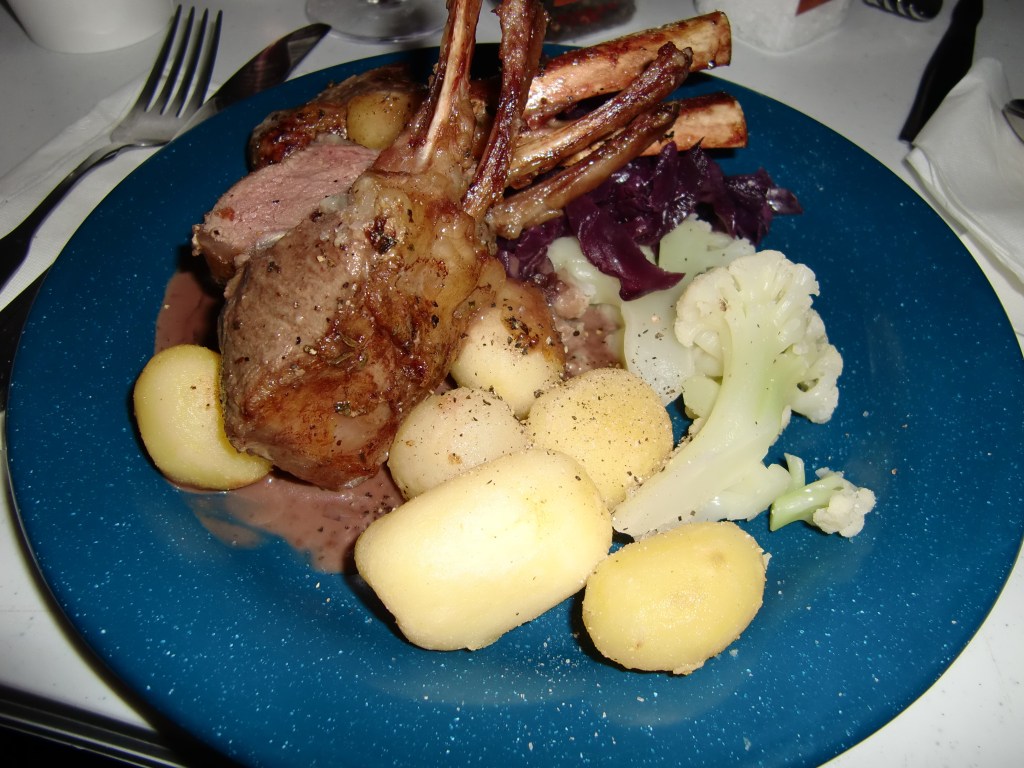
The incredible but small team of people who run the South Pole camp rustled up this most amazing dinner for us all, complete with champagne. As the eagle-eyed among you will have noticed from the photo of my kit, I had a full bottle of Henderson’s Relish with me both for dinner and for my bacon sandwich the next morning!
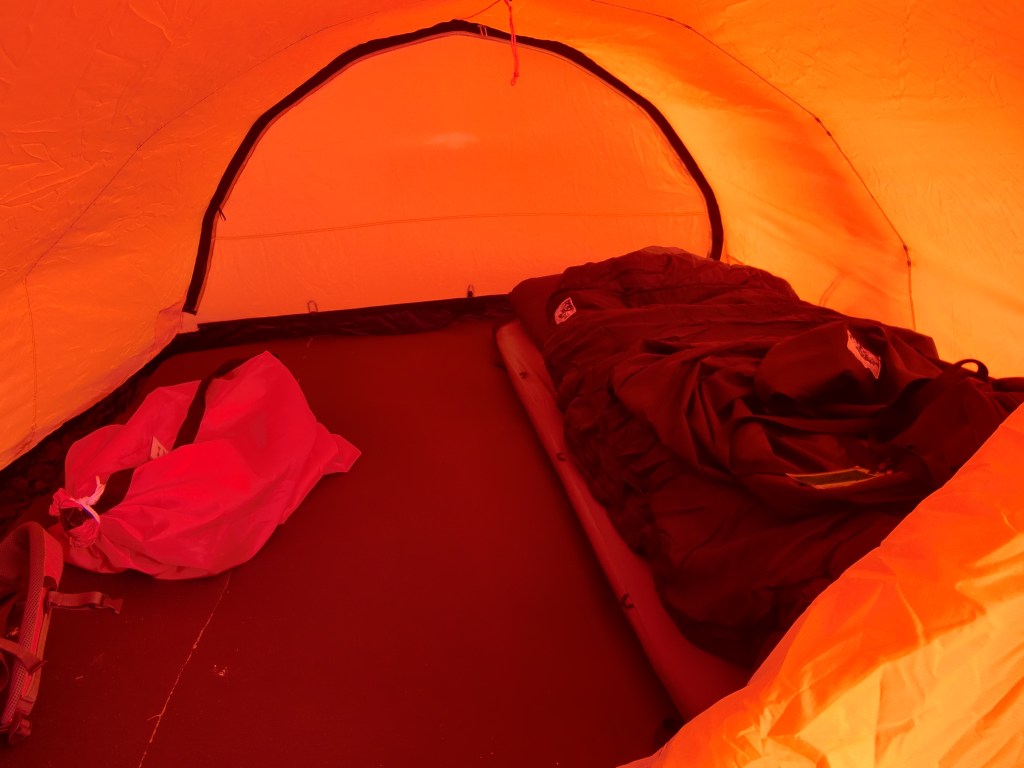
Here’s the inside of my tent at the South Pole campsite. It was cold outside – the temperature ranged between -26°C and -30°C and with the wind-chill factor, it officially felt like -42°C. But inside the tent, heated by the 24 hour sunlight, it was so hot that throughout the night that I had to keep opening the tent flap to get a blast of cold air!
And here’s another thing I didn’t know before I booked this trip – the South Pole is more than 3000m above sea-level because the South Pole stands on about 2.8 km of ice! There’s a serious danger of altitude sickness, so you genuinely have to be careful.
So there we are – my once-in-a-lifetime trip to Antarctica and the South Pole.
In reality, there’s absolutely no way of conveying in photographs how utterly amazing it all was, and I simply don’t have the words to bring it to life in a way that it deserves.
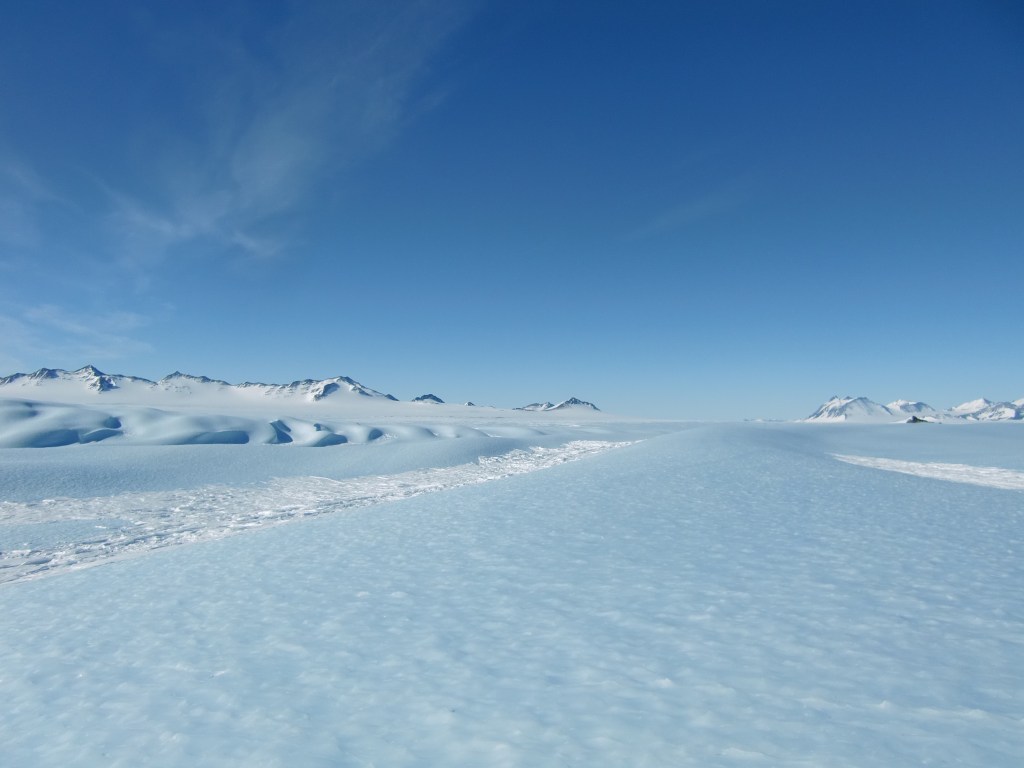
The photo above was taken with my back to Drake Icefall, looking out over the vast expanse of glacial ice field ahead of me with the Ellsworth Mountain range in the background.
I stood in this spot for about 25 minutes, silently and alone, totally mesmerised by the colours, the freshness of the air, the peacefulness all around me and the general magnificence of Planet Earth.
And I’m not ashamed to say that it moved me to tears.
I know that one day, when I’m in that nursing home, I’ll be muttering over my afternoon gin to anyone who’ll listen – “I once went to the South Pole you know!”.
They probably won’t believe me. But I did. And it was bloody brilliant.
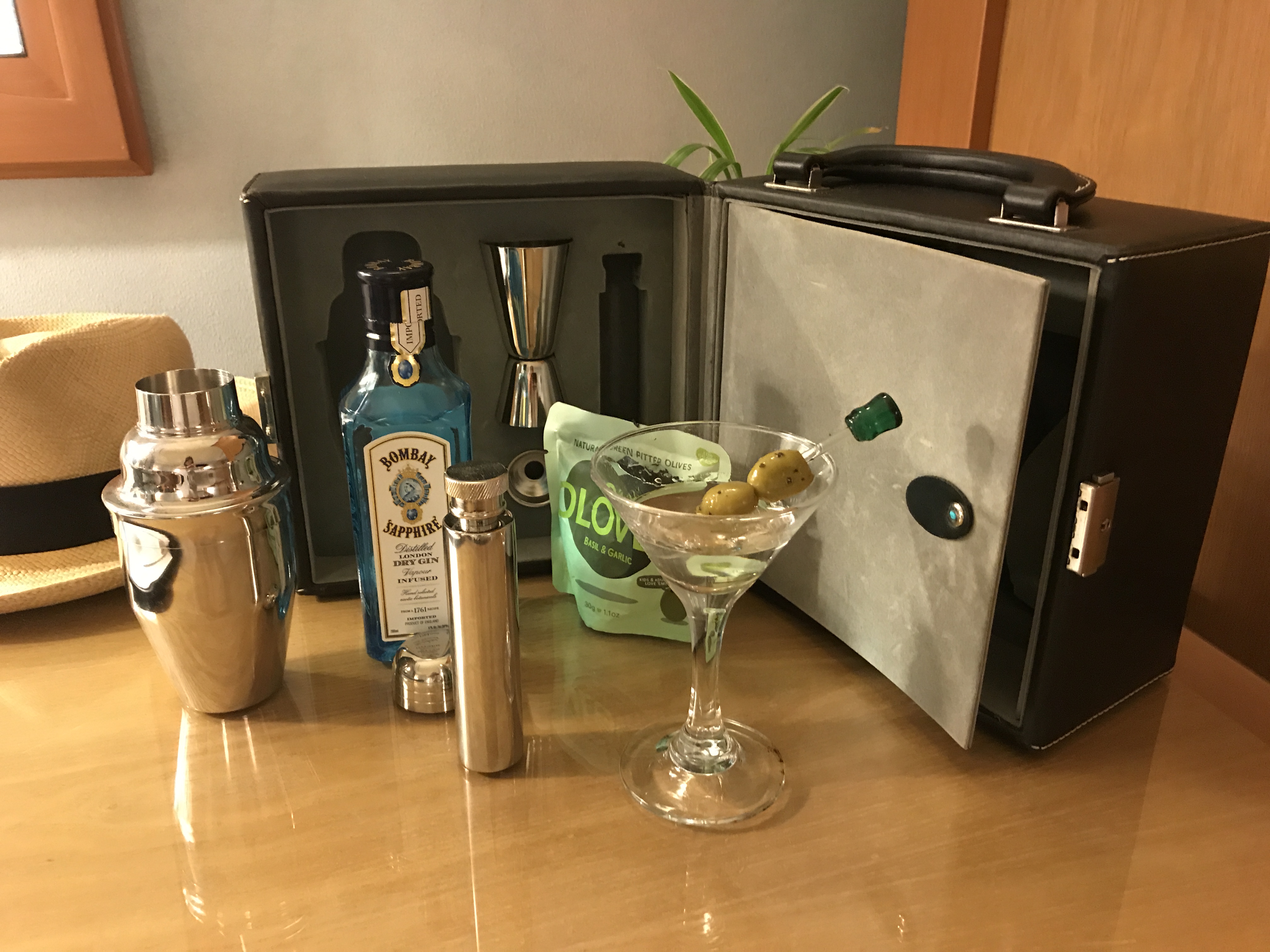
 cheeky gin travels