According to Human Rights Watch, Turkmenistan remains “an extremely repressive country. The government severely restricts all fundamental rights and freedoms, including freedoms of association, expression, and religion” and it is “…closed to any independent scrutiny.”
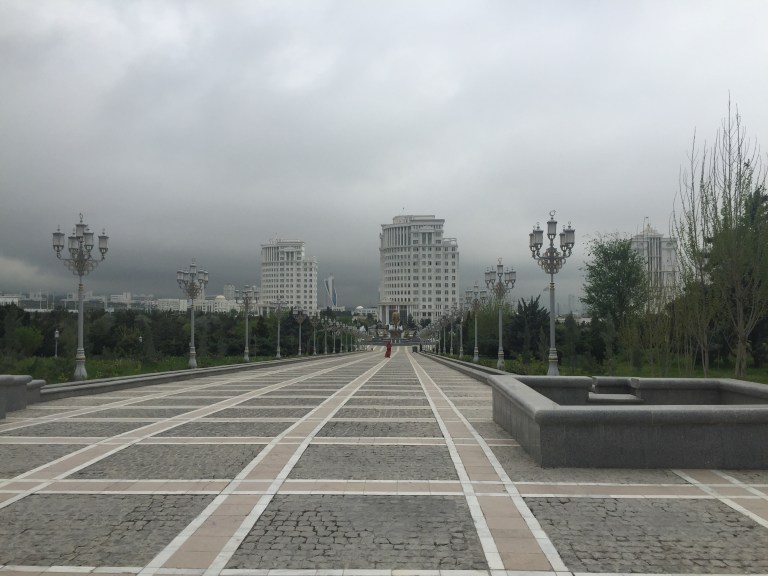
Which may lead you to wonder if I was actually brainwashed during my holiday there, given how much I absolutely loved the place. Everyone was super-friendly and hospitable, the place was completely barking mad and I swam in a sulphur lake 80 metres under ground and ate bear stew for the first time. There’s the magnificent archaeological site of the City of Merv, a not-to-be-missed visit to the Gates of Hell, the famous Akhal-Teke racehorses, and the capital city Ashgabat, which holds the record for having the highest concentration of white marble buildings in the world. And as you’ll see, Ashgabat isn’t just weird, it’s eerily empty all the time too!
After independence from the Soviet Union in 1991, Saparmurat Niyazov became the totalitarian leader of the country giving himself the title Türkmenbaşy, meaning Head of the Turkmen. He did some classically despotic things, including banning opera and ballet, long hair and beards, make-up for news anchors and lip syncing at public concerts. He also banned smoking outside after having to give up himself for health reasons. It was mandatory to read his autobiography, the Ruhnama, and you might be tested on it at job interviews and driving tests.

You are kindly requested to memorise Turkmenbashy’s book of spiritual guidance of the nation.
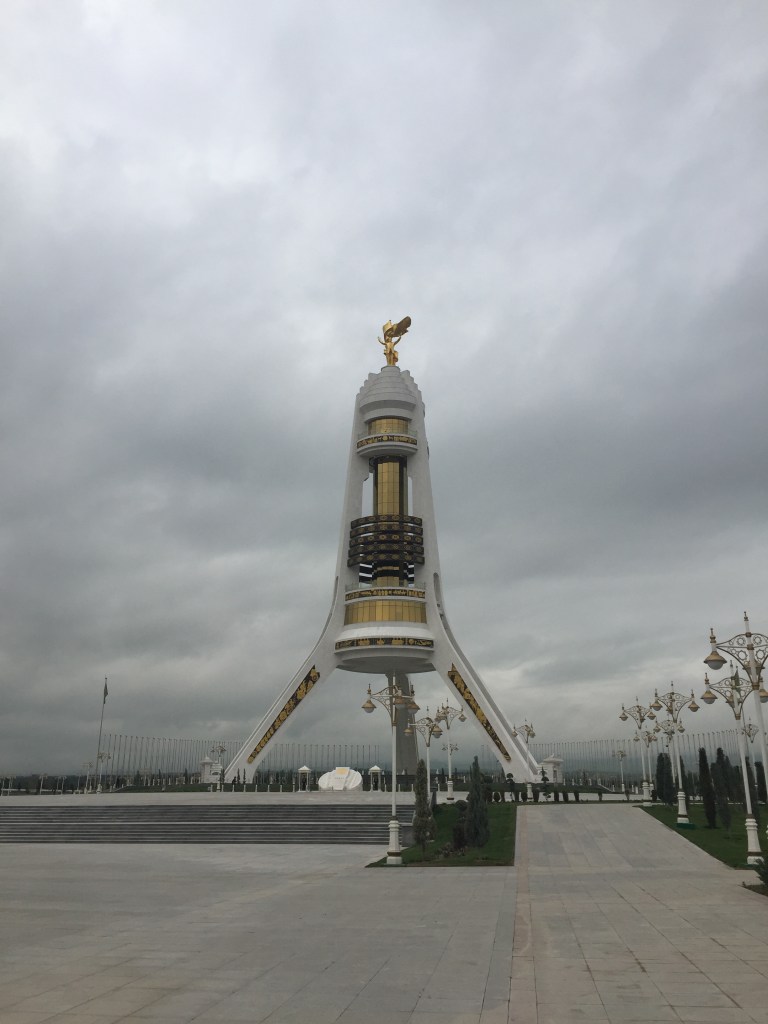
He even had a gold statue commissioned of himself which rotated to always be facing the sun throughout the day.
He died in 2006 and Gurbanguly Berdimuhamedov took over as President. He rolled back some of Niyazov‘s more eccentric policies, but still manages some of his own, As recently as 2018, he impounded all black and dark looking cars in the capital Ashgabat, forcing their owners to respray them silver or white, because he likes the colour white so much more. Berdimuhamedov moved Niyazov’s statue from the centre of the city, and graciously accepted the building of a monument to himself after “public clamour”.

This isn’t actually a photo I took, and I don’t know whose it is, but I think it shows you just how humble he is 😜
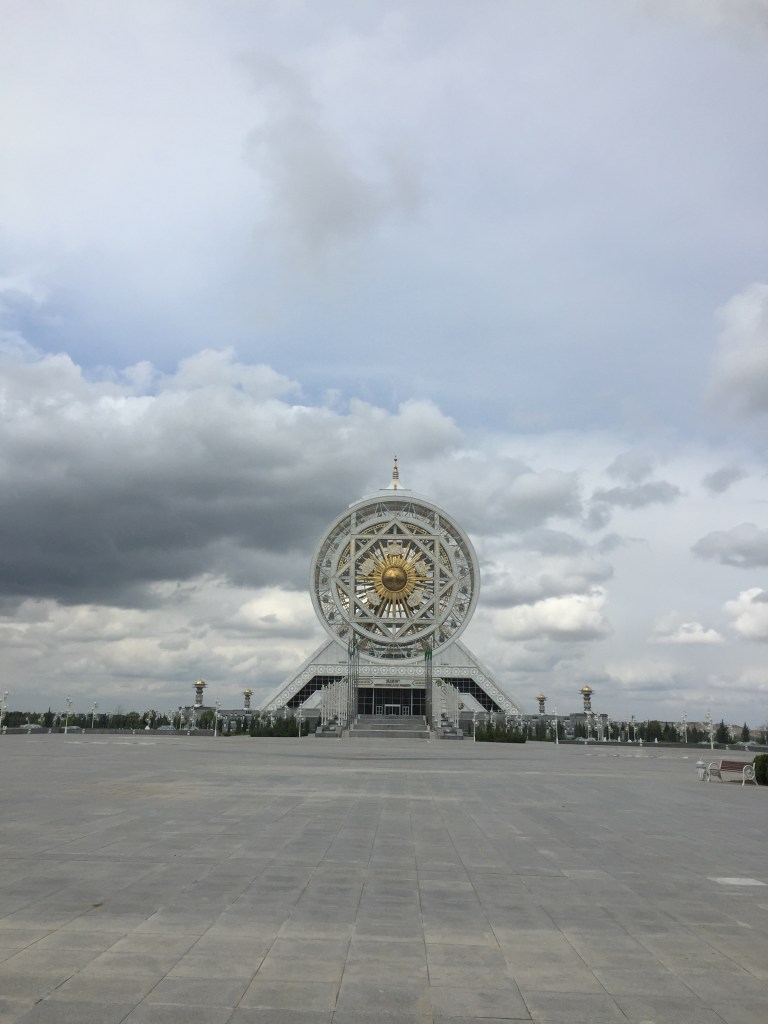
The largest indoor Ferris wheel in the world. No, I don’t know why either.

This is the Turkmenbashi Ruhy Mosque in the village of Gypjak, which is the home village of Niyazov, and houses the mausoleum in which he is buried. It has a capacity of 10,000 but is not totally popular with all Muslims because the walls inside are adorned with quotes not only from the Quran, but also from the Rhunama, implying equal importance.
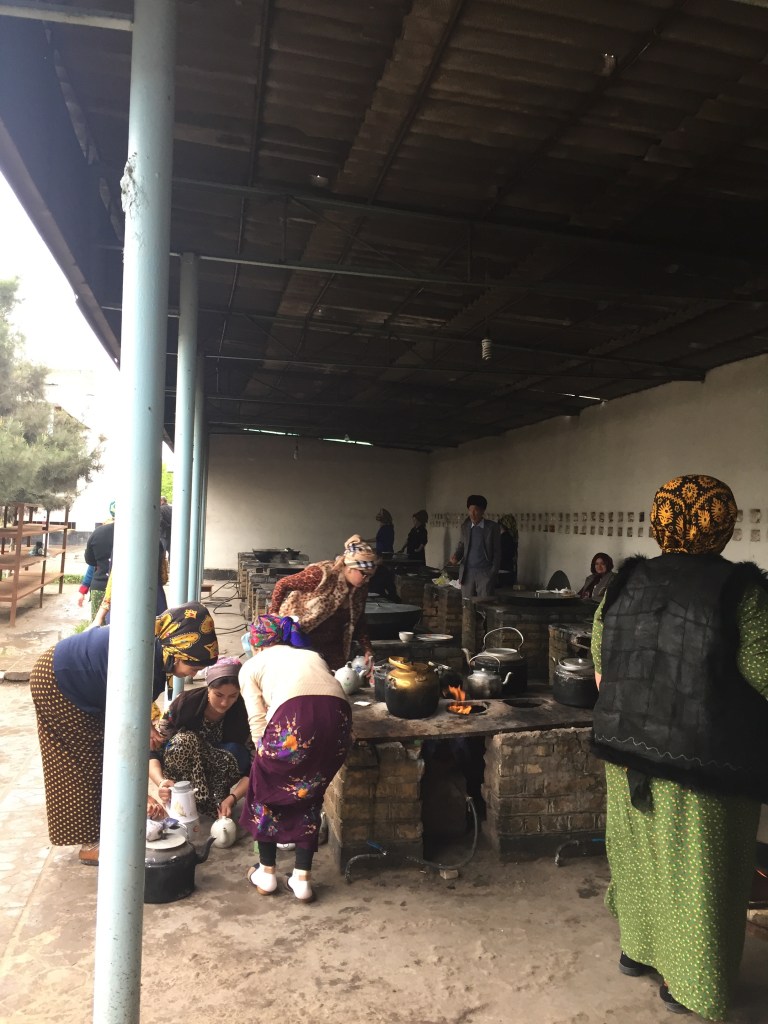
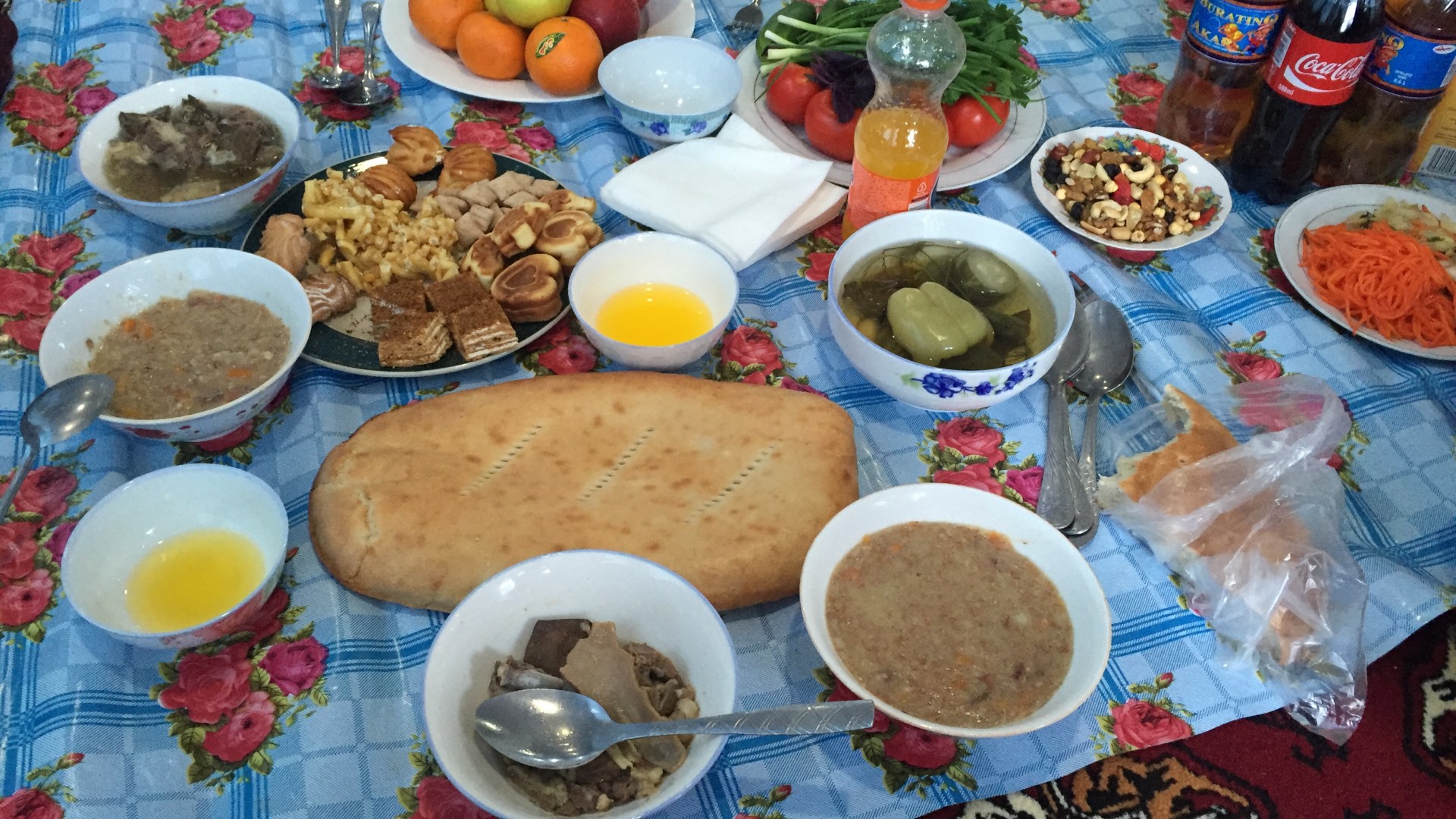
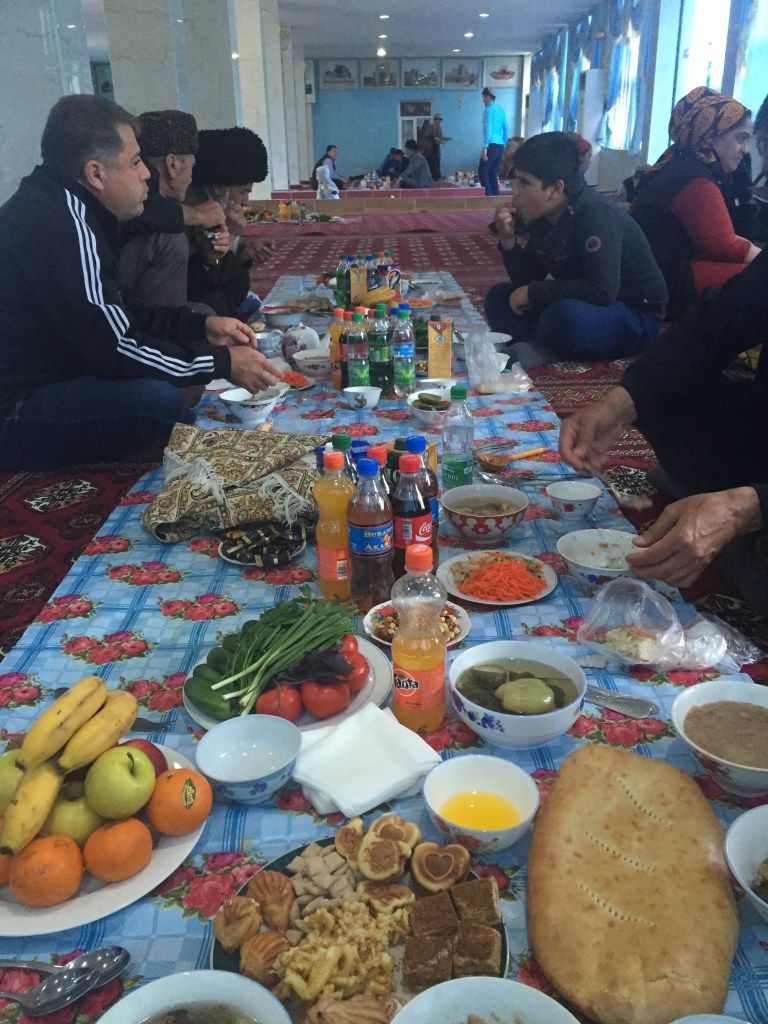
On a visit to a pilgrimage site outside of Ashgabat, I was fascinated to see all the facilities available to the pilgrims, including this kitchen where these people were preparing and cooking big pots of food that they had brought with them on their pilgrimage. They then invited us to join to join them for lunch which you can see in the main image as well as here below:
And it doesn’t matter who you are, what your religion or nationality is, whether you live in the most oppressed society or the last bastion of western democracy …

… the best way to keep any child entertained is with a mobile phone!!
The famous Akhal-Teke horses are the national emblem of Turkmenistan, and you can go to the breeding and racing centre for a look round.

Apparently, I was the first visitor ever to ask if I could stroke the horses. They thought I was quite mad.
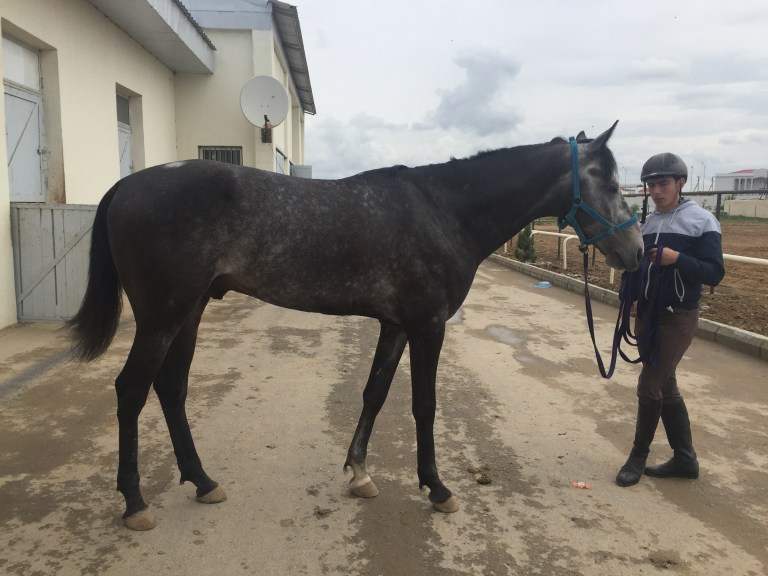
They are magnificent creatures, but there’s some controversy about just how purebred they are these days and whether or not they’ve been quietly interbred with Thoroughbreds for speed….
Another brilliantly weird thing in Ashgabat is the Walk of Health. There are two parts to the trail of 35 kms and 8 kms, and I walked the shorter section one morning.
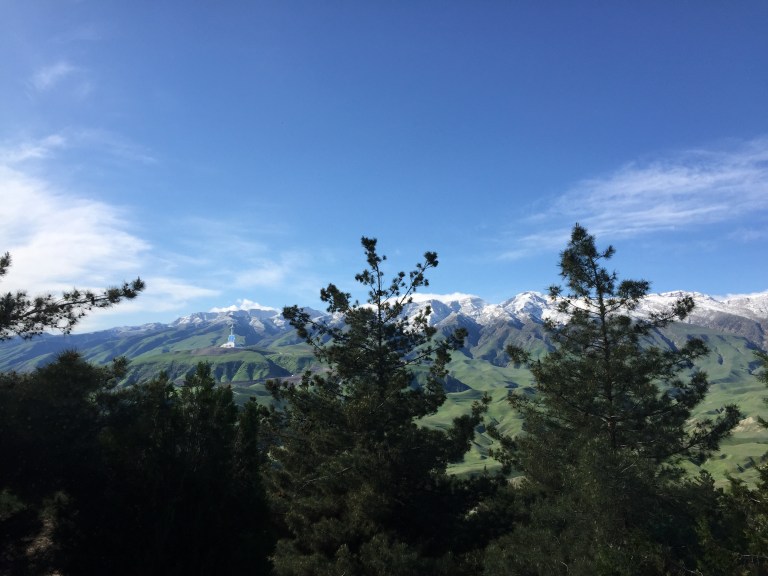
This was built under Niyazov as a way to improve the health of the Turkmen people. Niyazov apparently made all the politicians and civil servants complete the whole walk once a year. He used to see them all off at the start, then fly his helicopter to the end to greet them as they completed it!
It’s really a very beautiful walk – above you can see the hills that form the border with Iran.

And there are some wonderful views of Ashgabat as well as Nisa- the remains of a Parthian settlement.
And so out of Ashgabat and a flight to the City of Merv. Merv is another UNESCO World Heritage Site, and is situated on the Silk Road. In the 12th and 13th centuries, it was one of the largest cities in the world with a population of about 500,000.
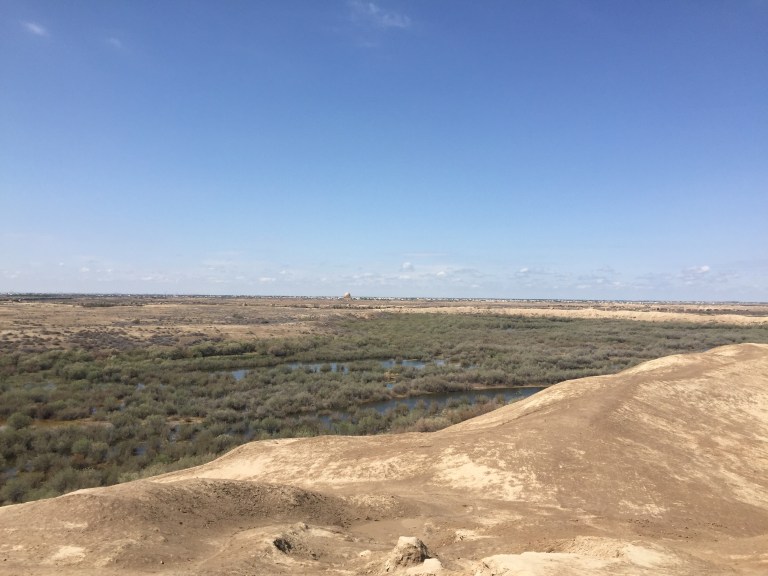
It’s hard to describe how fantastic Merv is. It’s very very empty; no one seems to want to go. There is a very small amount of archeological work going on here, but it’s a drop in the ocean compared to how vast the place is, but there’s just no money and seemingly no interest in what was historically a major strategic and cultural site. If you can make out the dome of the ruins of a building in the centre on the horizon there, you might start to get an idea of the scale of the city.

This is the remains of the 12th century mausoleum of the Sultan Sandzhar.

The pigeon house.
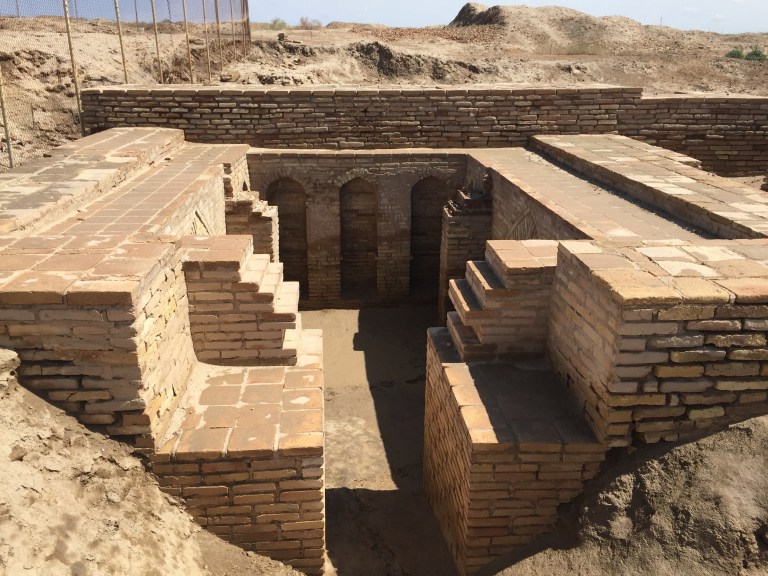
 Hopefully someone who has influence will realise how important this place is and start to research and look after it properly.
But now back to the crazy. Perhaps the most touristy thing you can do in Turkmenistan is drive 90 minutes outside of Ashgabat to go to the Kow Ata Underground Lake. The Lake is about 80 metres underground and reached by a long metal staircase. There are plenty of minerals in the water, but the most prominent is definitely sulphur, so after your swim you’re going to smell of that all day!
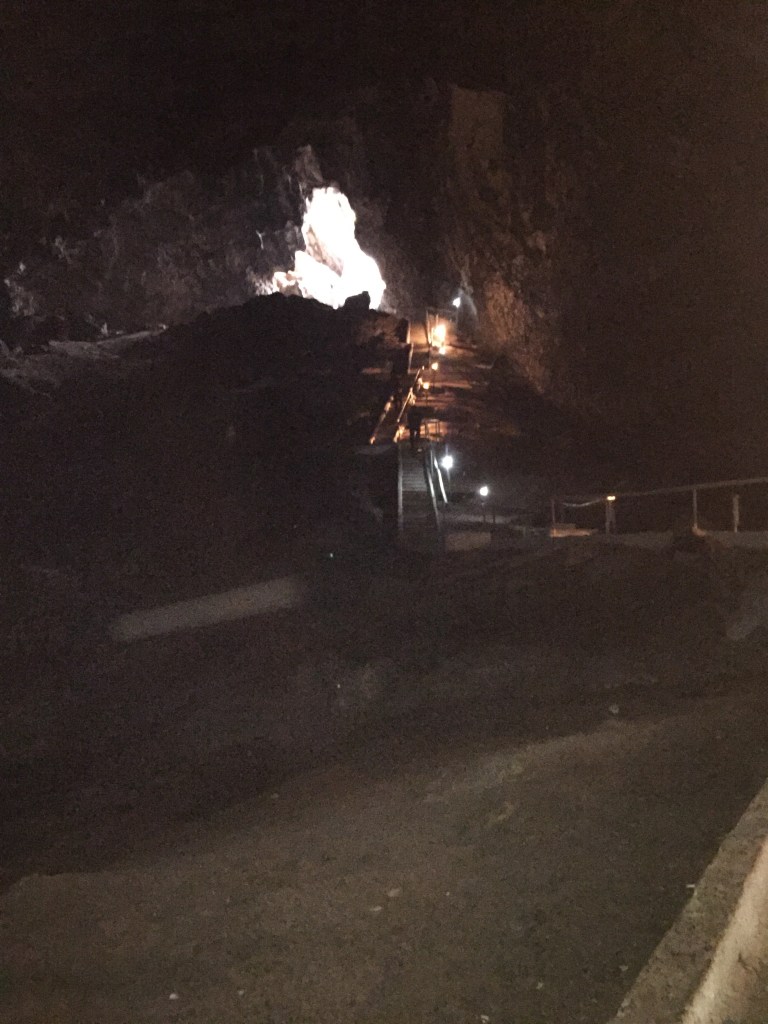


When we emerged from our slightly mad sulphery spa afternoon, we discovered that there was a wedding taking place at the surface!
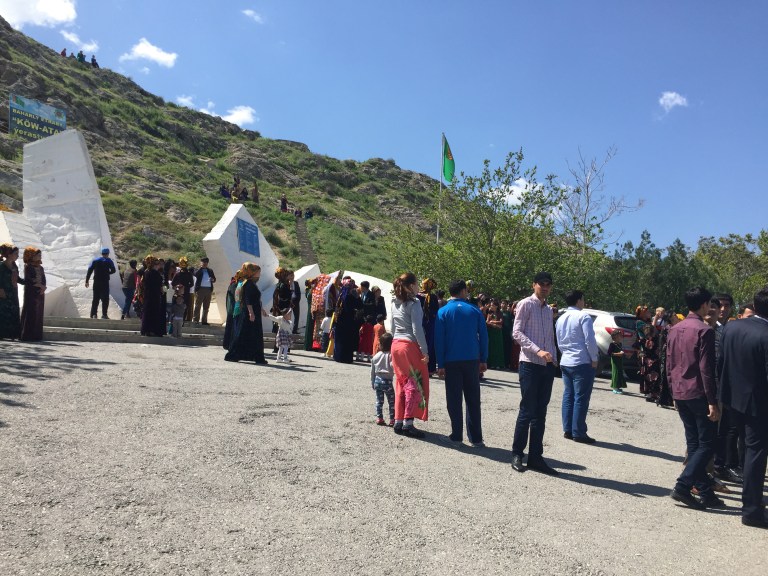
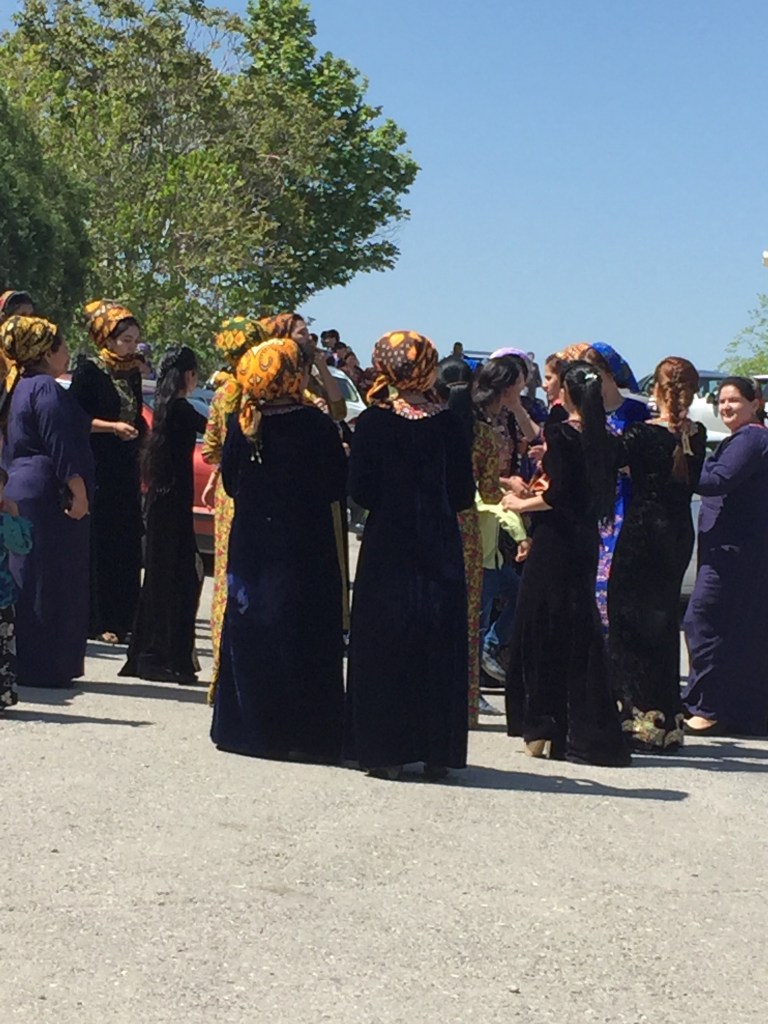
Isn’t the national costume just wonderful!? Especially those headdresses which remind you of ancient Egypt. You may be wondering like I did why so many women were holding the end of their headscarves in their mouths. The driver told me that women aren’t allowed to speak in the presence of their husband’s father or older brothers, so they hold the scarf in their mouth to show their respect of this tradition. To this day, I don’t know whether he was taking the piss out of me or not.
But now to the thing that Turkmenistan is best known for – the Darvaza Gas Crater, otherwise known as the Gates of Hell. In the Karakum desert, it’s a natural gas field that collapsed in 1971. At the time, it was deliberately set alight to try and burn off the spewing gas, but it turns out there’s a lot more gas than they thought, and so it’s still burning to this day!

It’s a six hour round trip from Ashgabat, so I guess you’ve really got to want to go, but I can’t see why you’d go to Turkmenistan and not visit Darvaza. It’s really much bigger than you think, there’s nothing else around at all, and there’s no barriers stopping you getting as close as you feel comfortable with.

Make sure you get there in time to see the sun set, so you can experience it in day light as well as in total darkness.
This is a very short video, but just to try and give you an idea of the scale, if you look carefully you can see someone walking along the far side of the crater from right to left.
Turkmenistan: a rich history, beautiful countryside, great beer, hospitable and funny people and a touch of delusional megalomaniac dictator – an incredible holiday experience.
 cheeky gin travels