I’ve got a bone to pick with all my Aussie and Kiwi friends – why did no one ever tell me about Norfolk Island?! I had to discover it accidentally all by myself, but now I’m going to share with all of you what a fantastic place it is, and hope that you get the chance to visit yourselves some day.

In case you’ve never heard of it before either, Norfolk Island is in the South Pacific Ocean between Australia, New Zealand and New Caledonia, and it’s tiny – only around 14 square miles in size with a population of fewer than 1,800 people.
There’s plenty of opportunity for water sports, including surfing, snorkelling, fishing and diving, as well as a golf course (and mini golf), hiking, boating, picnics and bird watching.
But given the choice, I’m always more interested in stories, myths and legends about people, both past and present, and Norfolk Island doesn’t disappoint with its fascinating history of convict settlements and Bounty mutineers, as well as its ongoing struggles for self-sufficiency and self- determination.
So going right back to the start, there is some evidence of early settlers from east Polynesia (they’d brought a species of rat with them to eat, which is still on the island threatening the native green parrot population), but the people themselves were long gone by the time the British arrived.
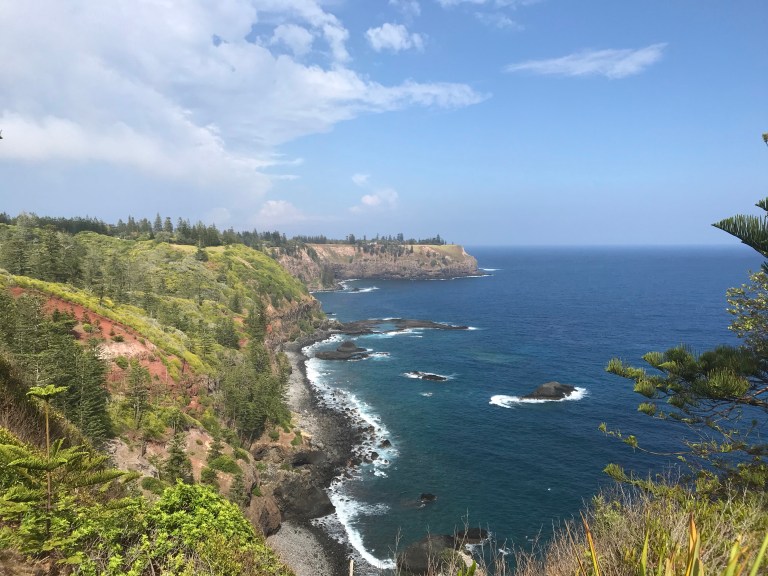
Captain James Cook has the honours again here, being the first European known to have come to the island in 1774; the photo above shows the spot where he came ashore. They were adventurous folk in those days – I mean, it’s one helluva climb up that cliff!

And then, just six weeks after the first European colony was established in 1788 at Port Jackson on mainland Australia, Lieutenant Philip Gidley King arrived with 15 convicts – 9 men and 6 women – and 7 freemen, and established a penal settlement.
They made a go of it, but in the end it was so remote and too expensive to maintain, so the island was abandoned again in 1814.
It wasn’t long before they were back and a second penal settlement was established between 1825 and 1856.
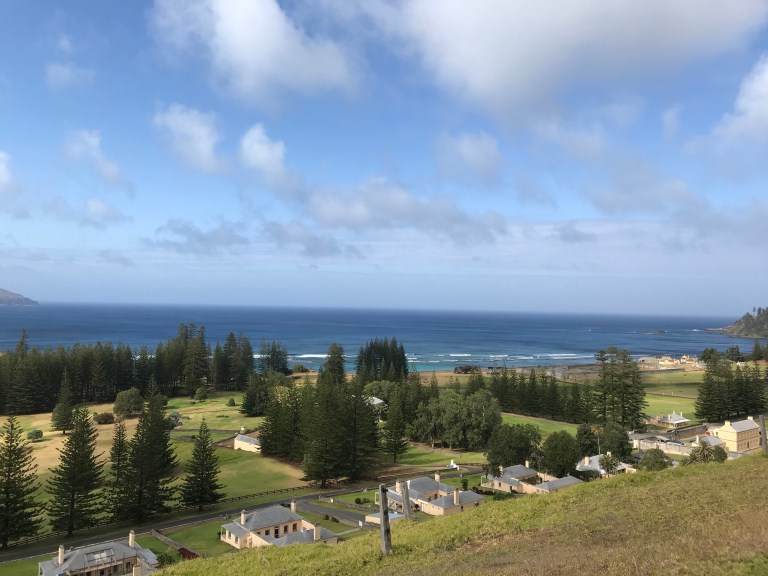
This settlement was mostly based in Kingston, which is the capital of Norfolk Island to this day and a World Heritage Site – deservedly so, as you can see from the photo above.
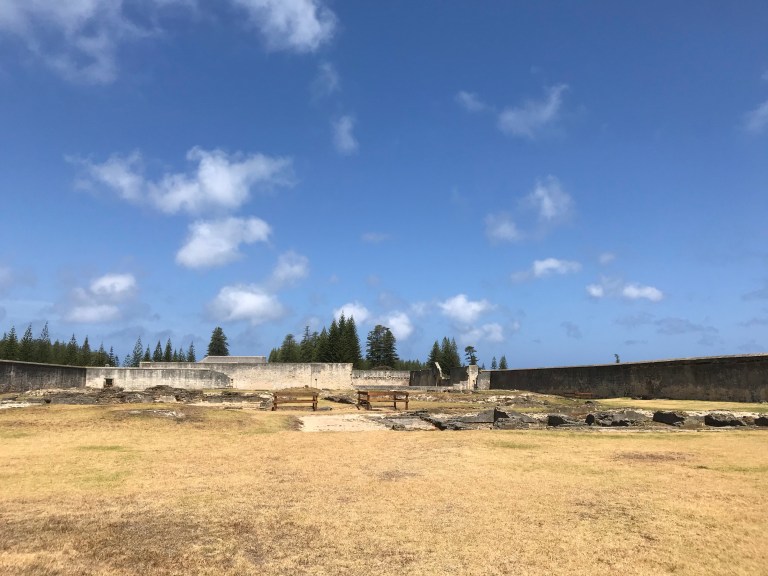
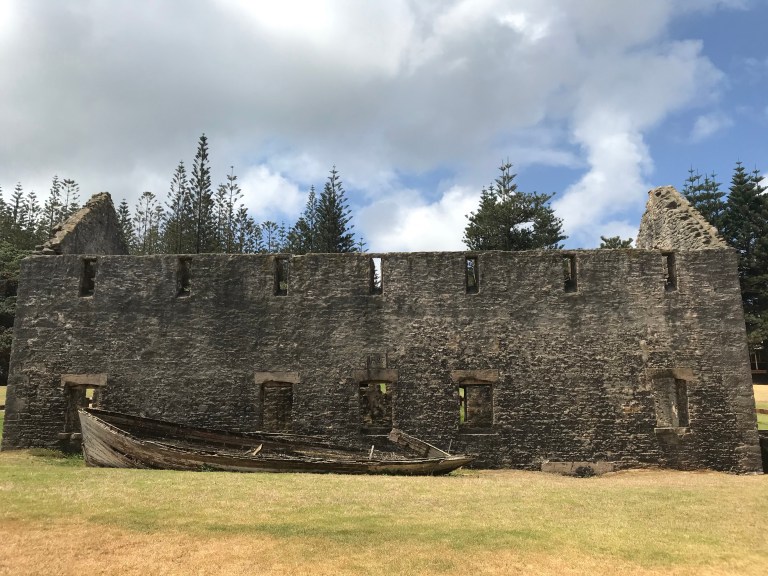
Across Kingston, there are lots of buildings and ruins from this second penal settlement, including the remains of the prisoner barracks above, and there is a really fantastic and informative museum to help put it all into perspective.
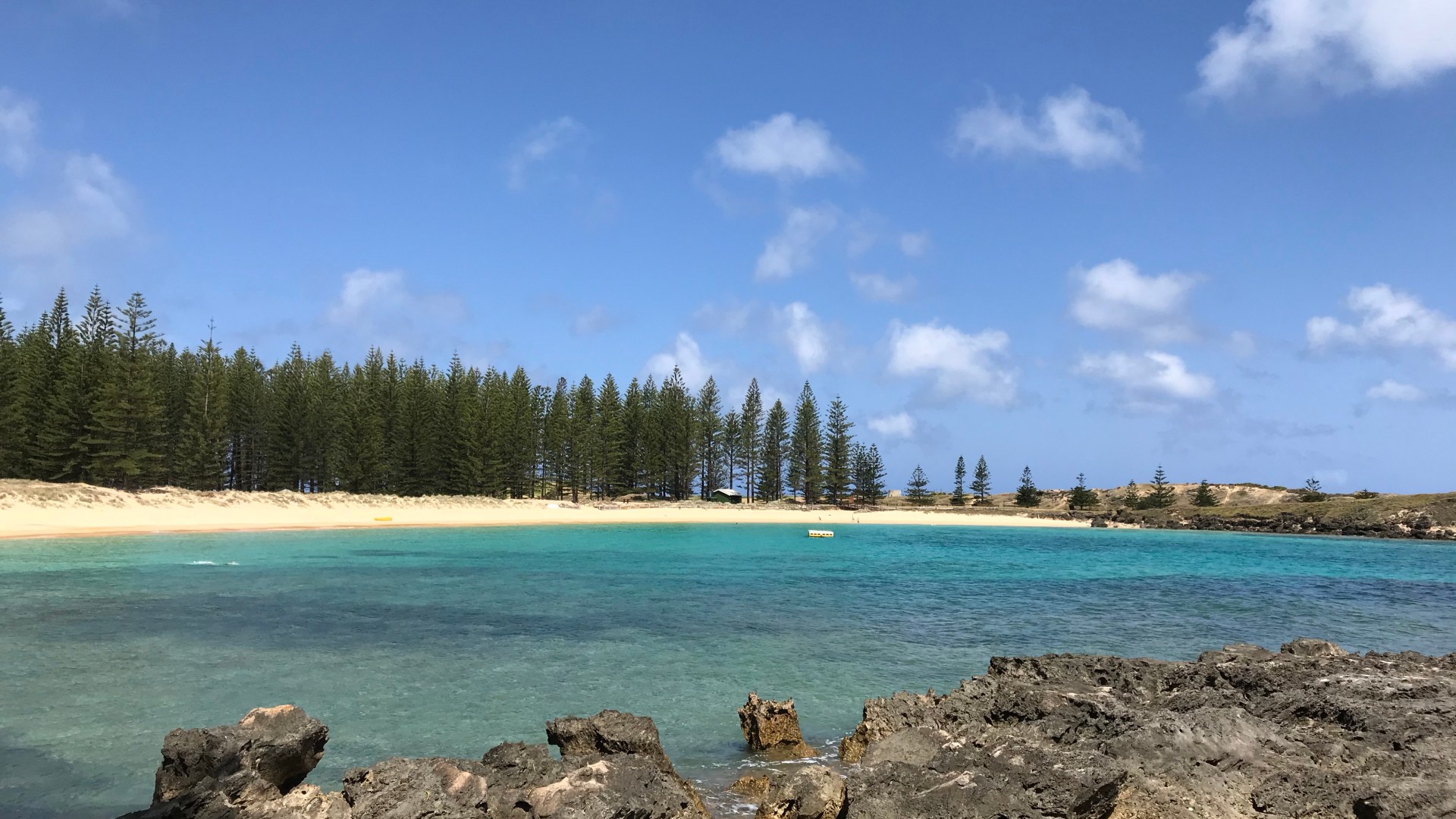
Emily Bay (below) is here too – a beautiful spot for sunbathing, swims and picnics, as well as for jazz during Norfolk Island’s annual jazz festival.
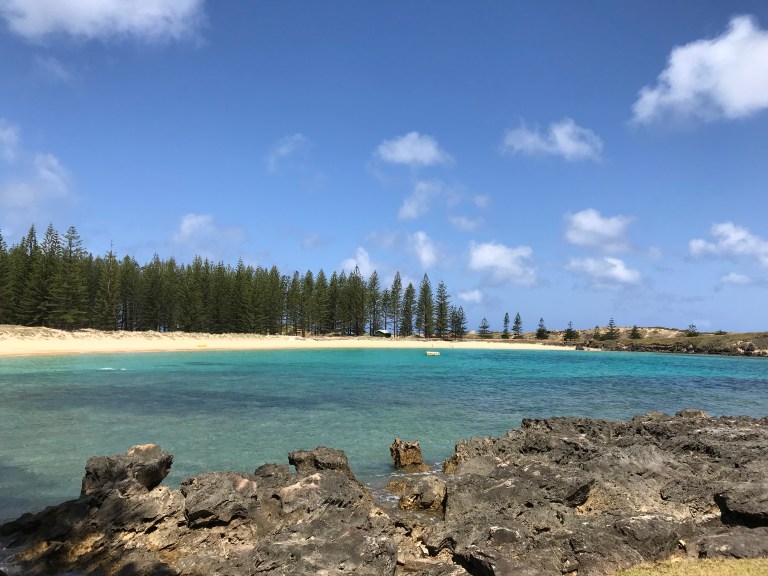
And there are also ghosts. A lot of ghosts. Apparently Norfolk Island is the world’s 4th most haunted island and the most haunted place per square kilometre in Australia.
Every single islander I asked told me they’d had at least one spectral experience, so it would have been rude not to join a late night, lantern-lit ghost tour of Kingston.
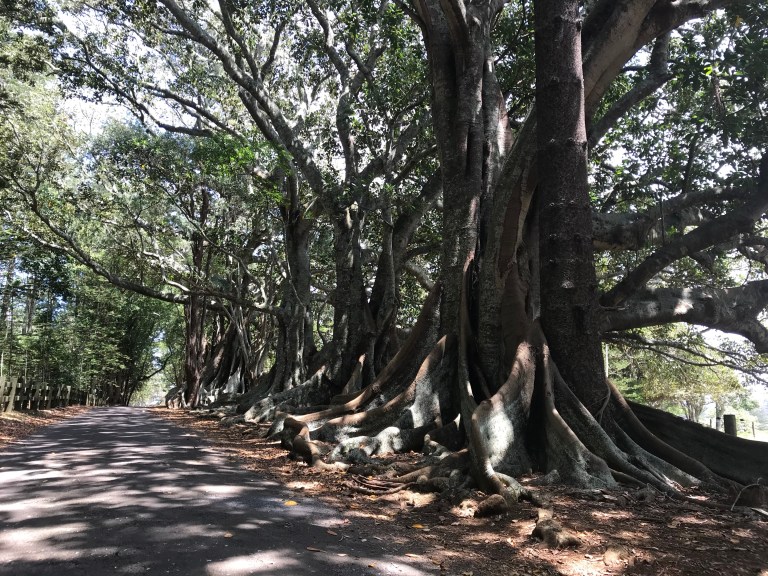
I mean, even Norfolk Island’s trees look like extras from a horror film…
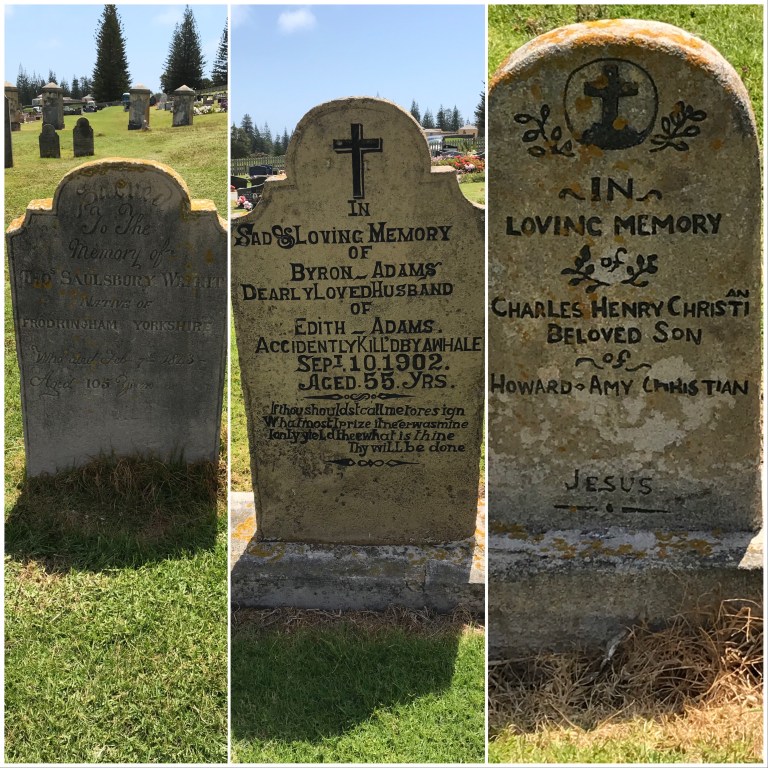
…and the cemetery is full of grave stones telling of pretty tragic and often violent ends throughout the years – chilling during the day, let alone at night.
And then there are the houses on Quality Row – beautiful Georgian houses by day…

…the crumbling locations of ghouls and spooky tales at night. It’s a really rubbish photo below, but the ghost tour was pretty atmospheric; on a moonless night, it’s pitch black and everyone has a little lantern that doesn’t really shed enough light. iPhones to the rescue to stop us all tripping over the spooks 😉.
👻 👻 Even though (or perhaps because?) the tour guide refused to go into one of the houses because of its resident ghosties, and a couple of kids were literally scared to tears, the ghost tour was really good fun. But I’m personally no believer and I didn’t see or hear a thing. Maybe you’ll be luckier when you go 😜
But hey – enough of the fun and back to the history lesson. If you recall, it’s 1856 and the last of convicts from the second settlement are moved off the island. And so we come to the story of the Bounty mutineers, which defines Norfolk Island to this day.
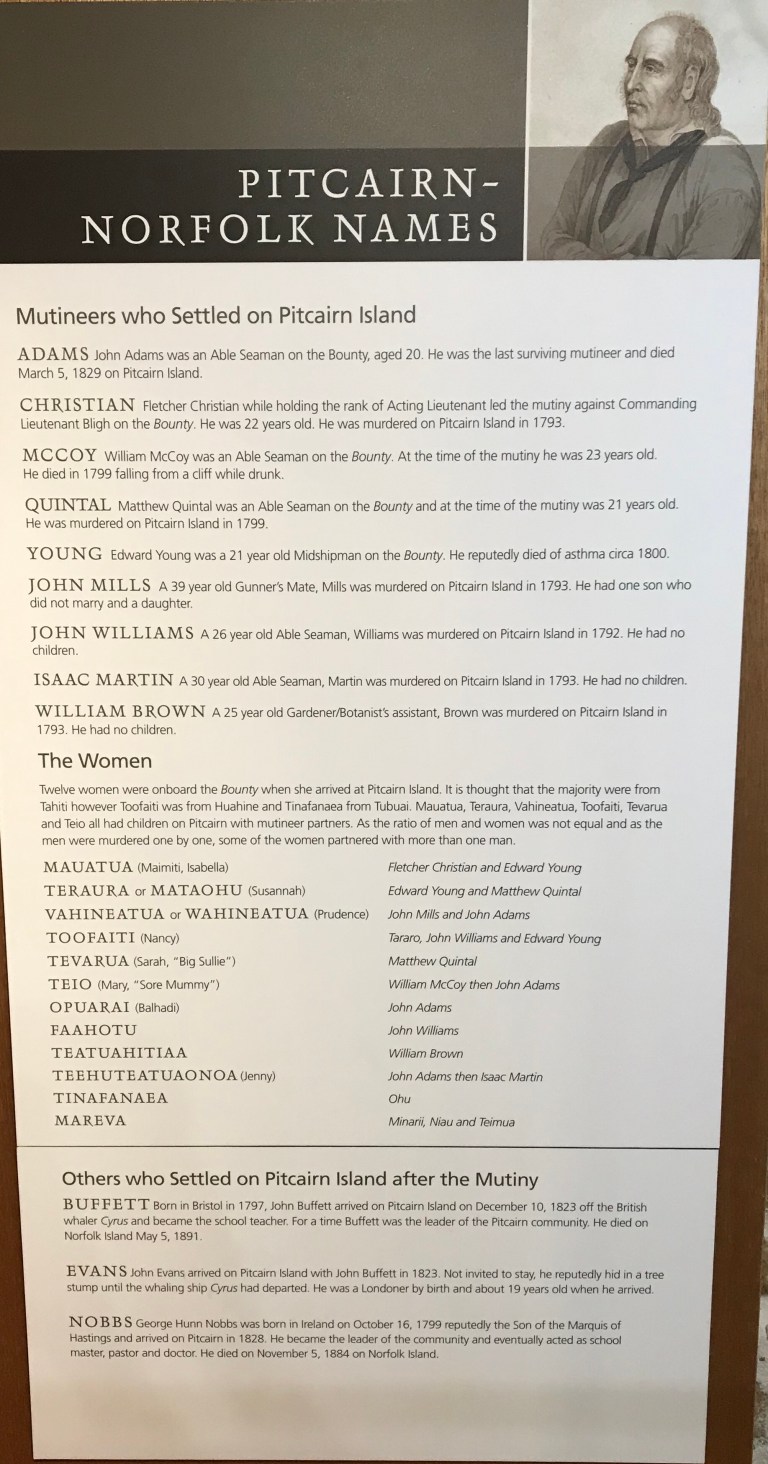
By the mid 1850s, the descendants of the Tahitians and the HMS Bounty mutineers had outgrown the Pitcairn Islands where they had originally settled, and by order of Queen Victoria, were transferred to a permanent home on Norfolk Island.
On 8th June 1856, 194 Pitcairners arrived (193 had set off on the voyage with a baby born en route). Some of the families returned to Pitcairn a few years later, and other settlers have arrived over the years, but many of the islanders still bear those famous surnames six and seven generations later.
Norfolk Island was established as a separate settlement, and passed as such from Great Britain to the Commonwealth of Australia on its establishment in 1901. The Island had a limited amount of self-governance for many years, but even this has recently eroded over the years, due in part to financial problems and a reduction in tourism income, in part to the federal government’s lack of confidence in their ability to deliver necessary government and state functions, and perhaps in part to other reasons that the islanders themselves don’t really know or understand.

A solid 68% voted against any changes, but contrary to their wishes and those of the Norfolk Island government, since 2016 the territory is run by an Administrator and advisory council, with the same laws, welfare and taxation as applies to mainland Australia. The above photo shows Hands Up for Democracy and a movement opposed to these reforms and the ‘hostile takeover’ of Norfolk Island by the Australian government.
A petition was sent to the United Nations claiming a breach of civil and political rights, which has been formally lodged and is awaiting the official response from Australia, so perhaps things might change again in the future.
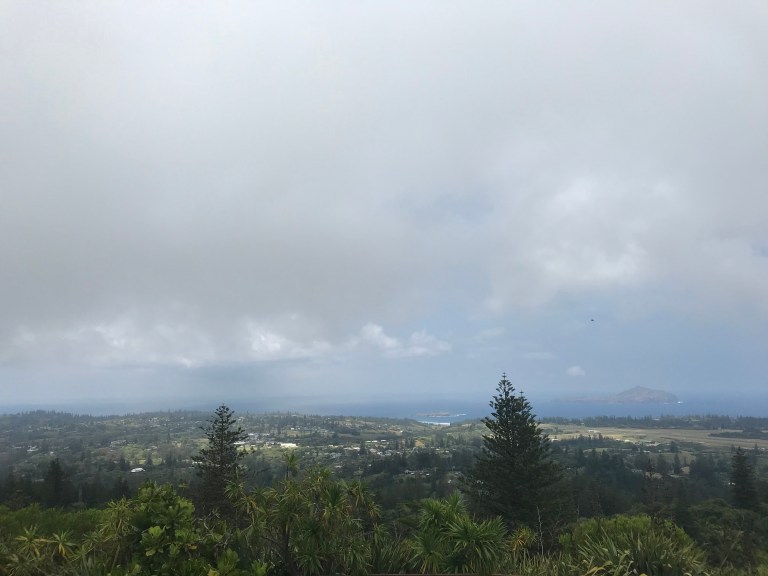
Here’s a view from the top of Mt Pitt with Philip Island in the background. It seems that tourism almost exclusively makes up the islanders’ income and the country is set up to make this work as well as possible.
Everyone is picked up at the airport and taken to their accommodation, and there’s a free tour of the island to help you get your bearings and work out what else you want to do. It’s well worth hiring a car to get yourself around, it’s cheap and the island is small and easy to navigate, but for no other reason than how heartwarming it is that every single other driver on the road for your entire stay will wave hello when you pass them ☺️
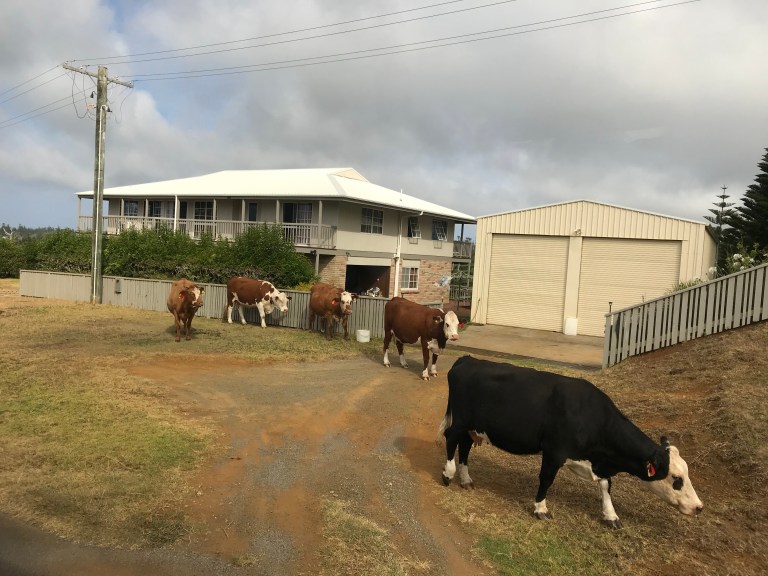
There are cows wandering around everywhere, so be sure to have some beef while you’re there – it doesn’t get much more organic and free-range than this.
There are dozens of activities and tours that you can join which help you get a good understanding of local life – all the tours are run by local people, with refreshments and even dinners in their own homes, and everyone is really happy to talk to you about the history of the island and their day to day lives.

One of the best tours for me was a cheese tasting. It’s early days yet for the Christian brothers and their cheese business, but I hope it takes off because all these cheeses were amazing!
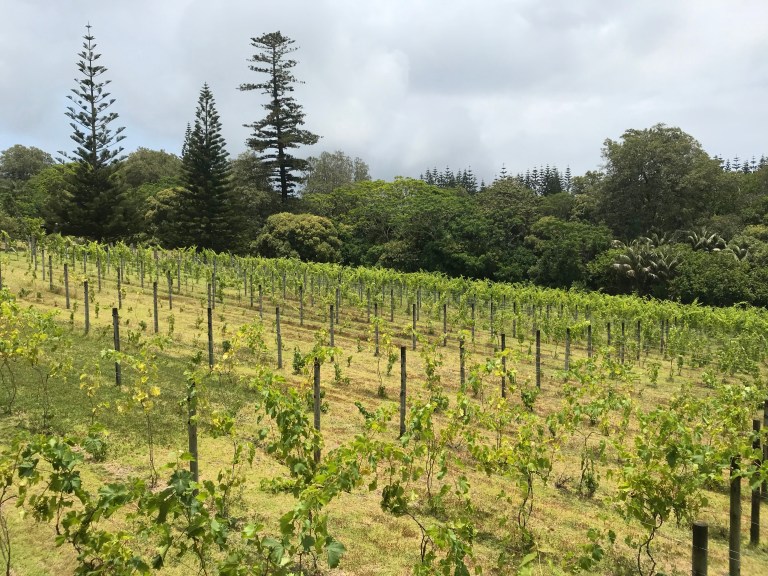
Two Chimneys winery also supplied me with some quality port and wines – a long lunch here would have been ideal if I’d had someone to drive me home 🍷
There’s so much to like about Norfolk Island. Everyone was incredibly friendly and helpful, and they make it so easy to do things and have a good time with both locals and other tourists. It’s an ideal place for families and for older travellers, and of course for solo travellers because everyone is looking out for you.
If I haven’t persuaded you already to go and check it out for yourselves, maybe one of these will change your mind:
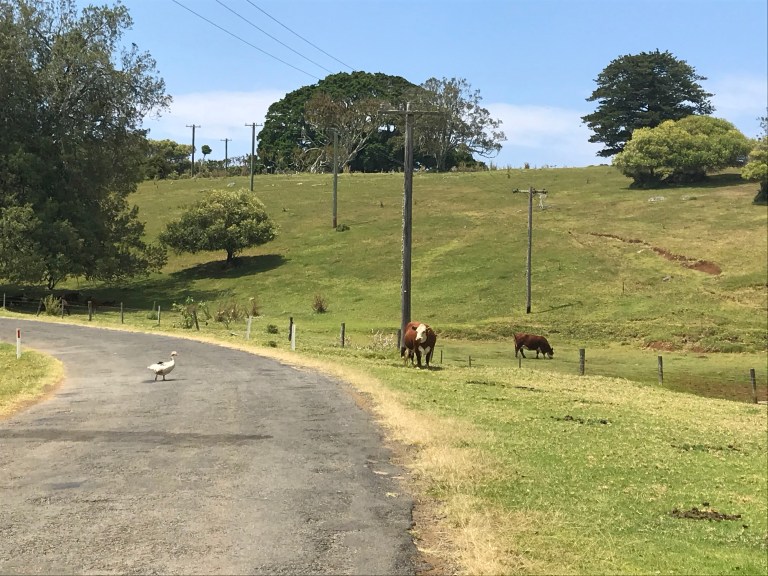
The cows have right of way.

Everyone has a sense of humour.
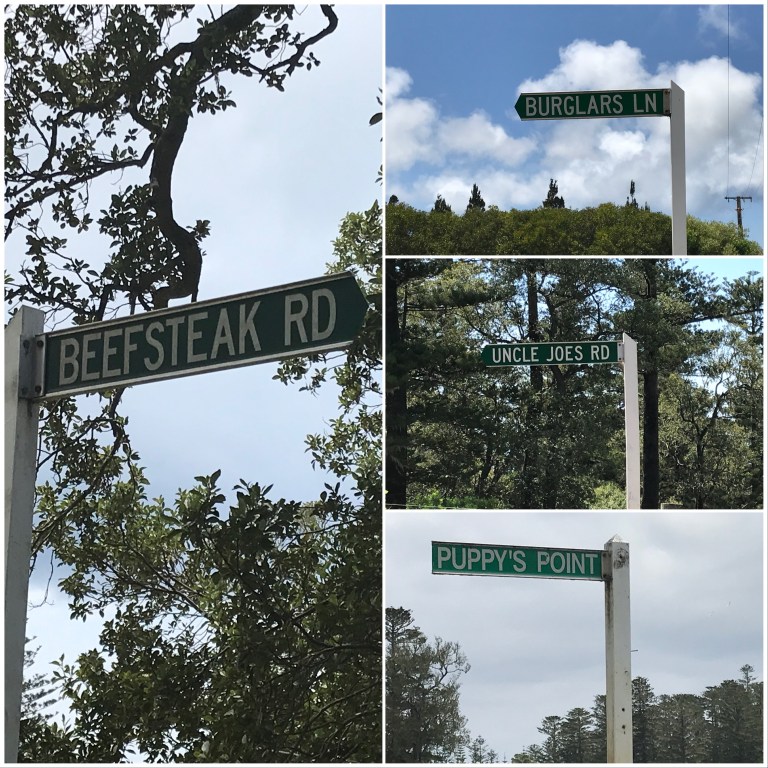
There are some fabulous street names.

The phone book lists people by their nickname.
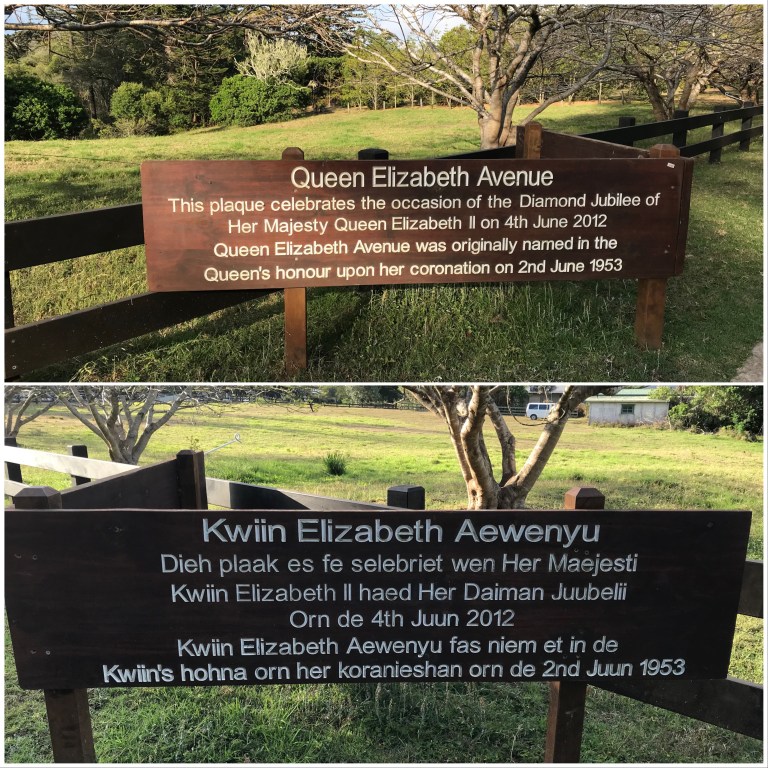
And they have their own language. It’s impossible to understand because they talk too fast, but once they slow right down, or if you see it written down, you realise just what a wonderful language it is.
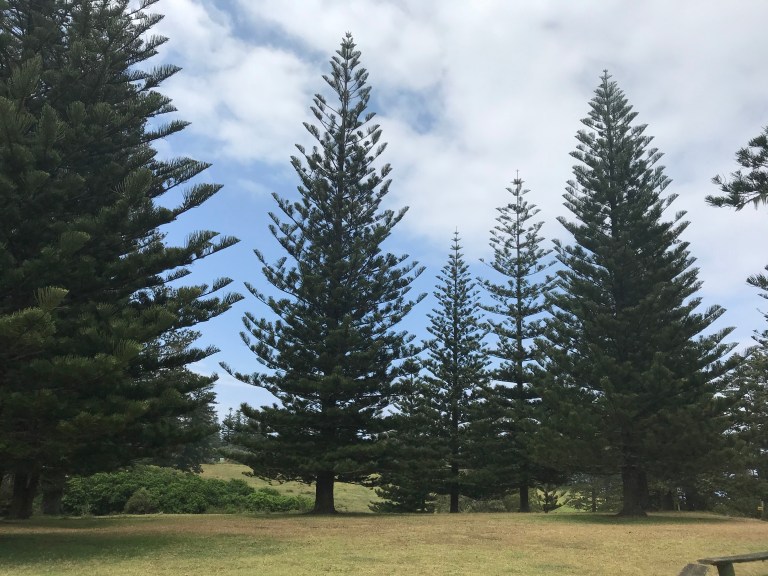
Norfolk Island, home of the Norfolk Pine. Go – you can’t say no one told you about it!
 cheeky gin travels