I should start by saying that I won’t have a word said against Bangladesh 😍
It now holds a place in a small group of countries that currently can do no wrong in my eyes. (The others are Armenia, Kosovo, Lesotho and Montenegro, if you’re interested.)
More than the usual number of people had warned about the dangers of travelling to Bangladesh – as well as most western government travel advisories and even the (albeit non-Bangladeshi) staff at the consulate where I was getting my visa (“Are you sure you want to go?”)…
But I had a spare week between jobs, it was a spur of the moment decision, and I’d already hired a guide for the six day trip, so I wanted to go anyway. And I’m so glad I did – Bangladesh is a really fantastic place to visit and the people are unfailingly hospitable and welcoming.
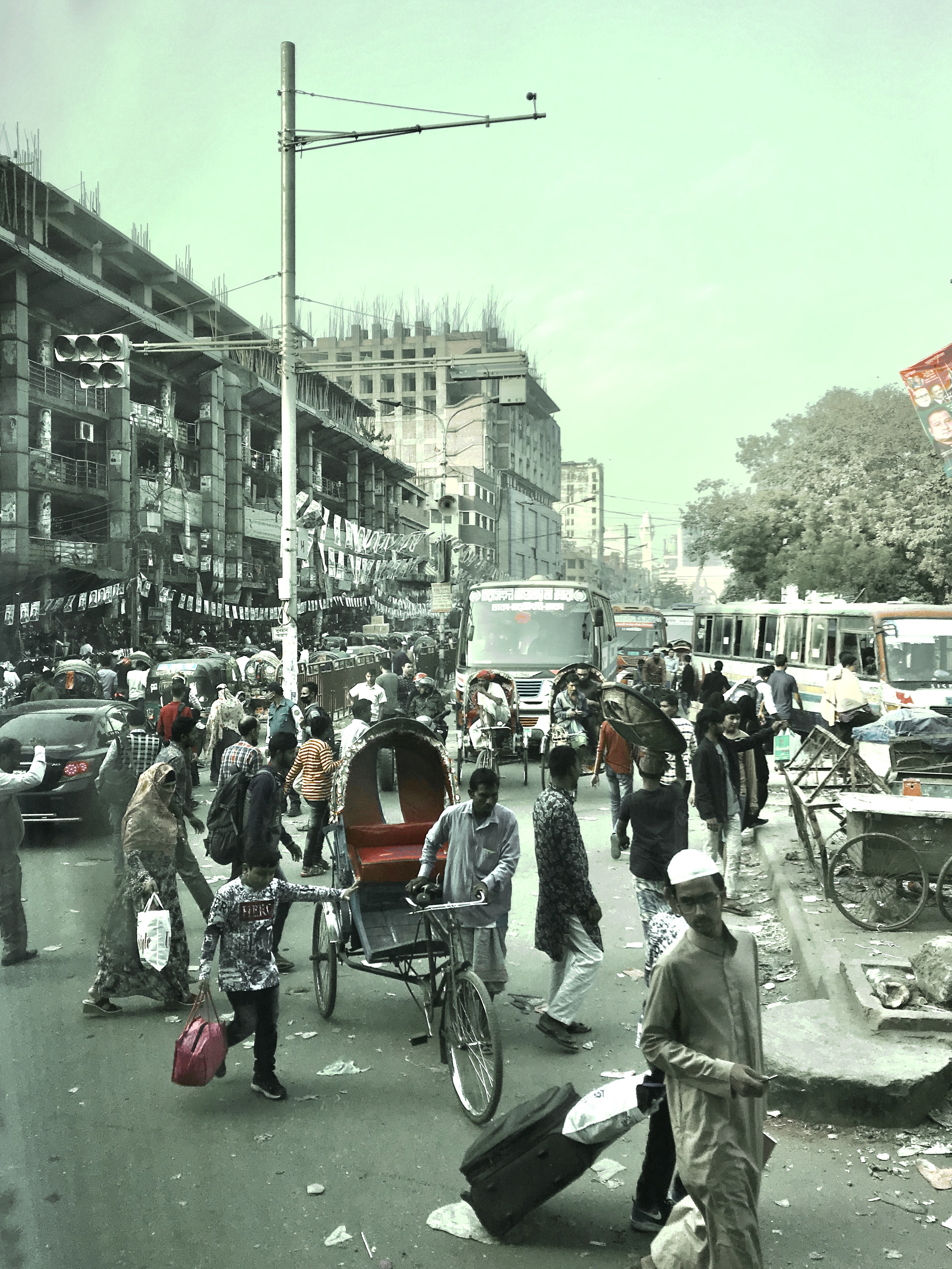
In Dhaka, Sonargaon and Srimangal, I got a taste of the culture, nature, the people and food of Bangladesh, and of course the transport, which frankly is an adventure in itself!
So let’s start with the people. I knew I was in for a treat when the immigration officer at Dhaka airport thought it was so funny that I’d come to Bangladesh for a “holiday” that he called over a couple of mates to come and laugh at me too!
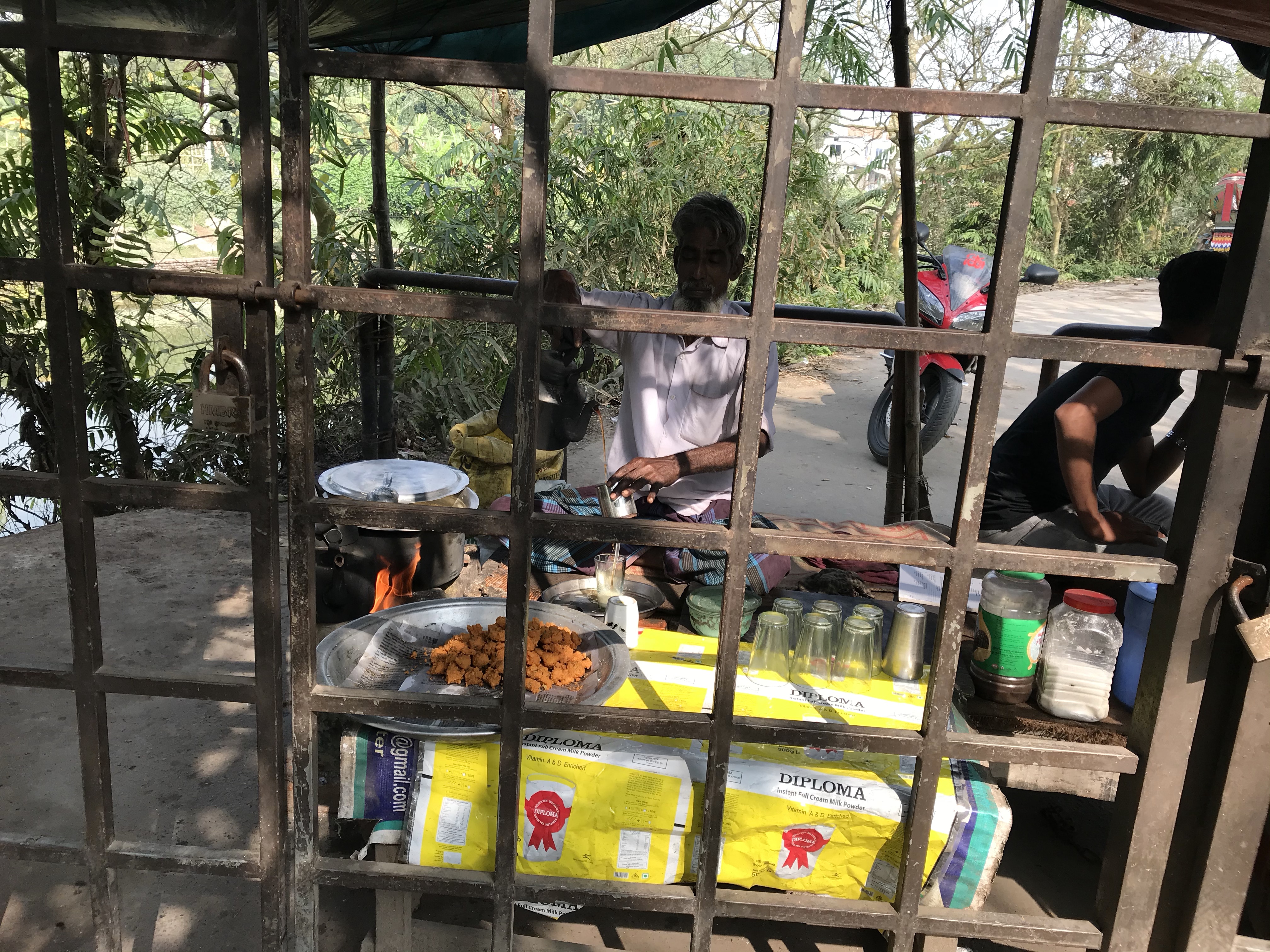
This happy gentleman below, who’s been serving milk tea and deep fried snacks outside Panam Nagar for the last 30 years, said I was the ninth foreigner, and first non-Chinese, this year to visit this ancient historical city (as at 22nd January 2020).
I don’t know what the official tourist numbers are, but I was enough of a curiosity to cause several comedy double-takes and one rickshaw collision. Mostly they just wanted to stare, but lots of people also wanted to talk, take selfies with me, give me cups of tea or snacks to try. Maybe this is what it feels like to be a famous celebrity?

Here I am accidentally holding up a local school trip to Sonargaon Folk Art and Craft Museum.
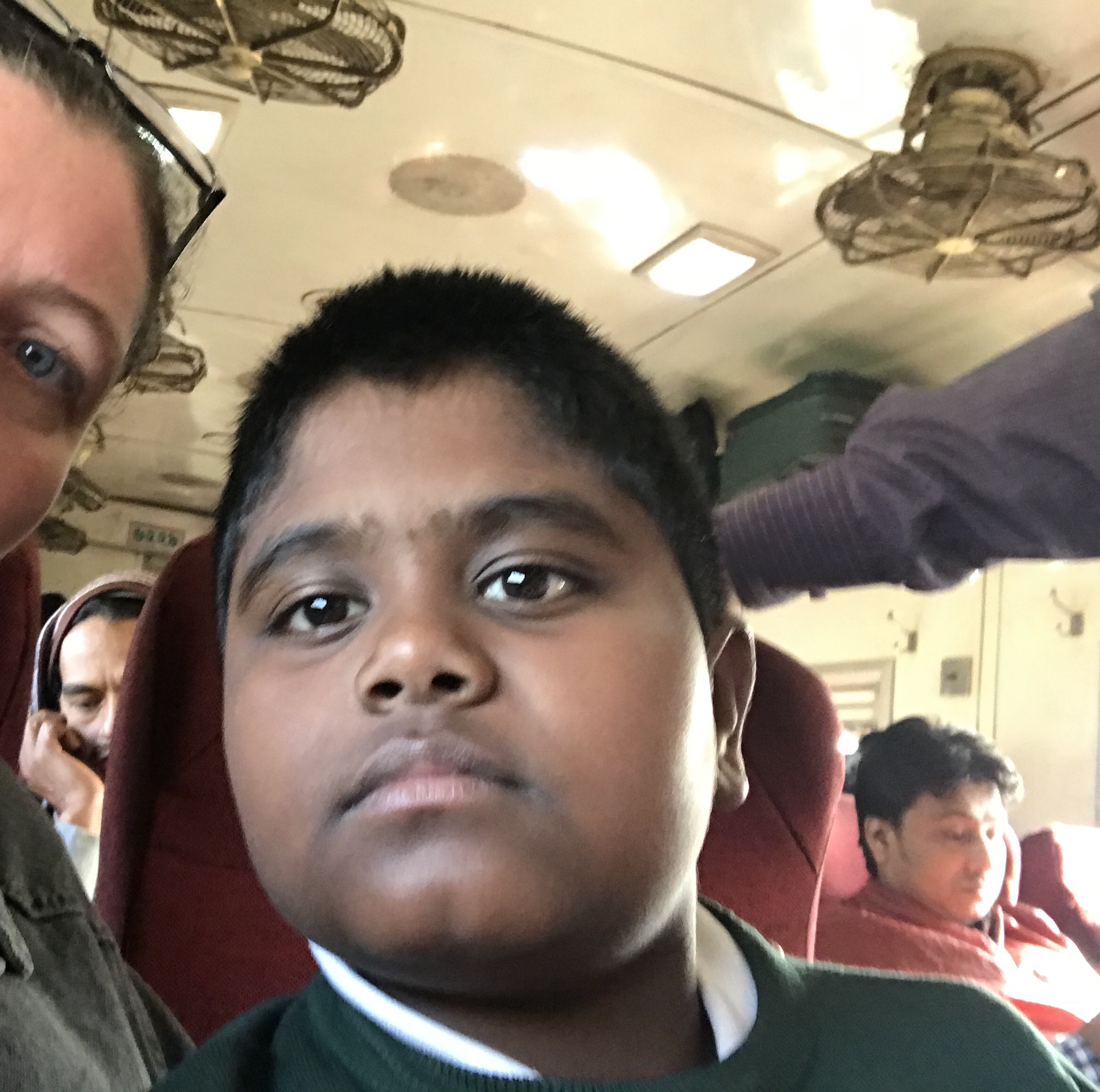
This nine year old chap gamely attempted to translate questions from the other train passengers on the Parabat Express – what’s your name, where are you from, how old are you, why don’t you have a husband? Et cetera.
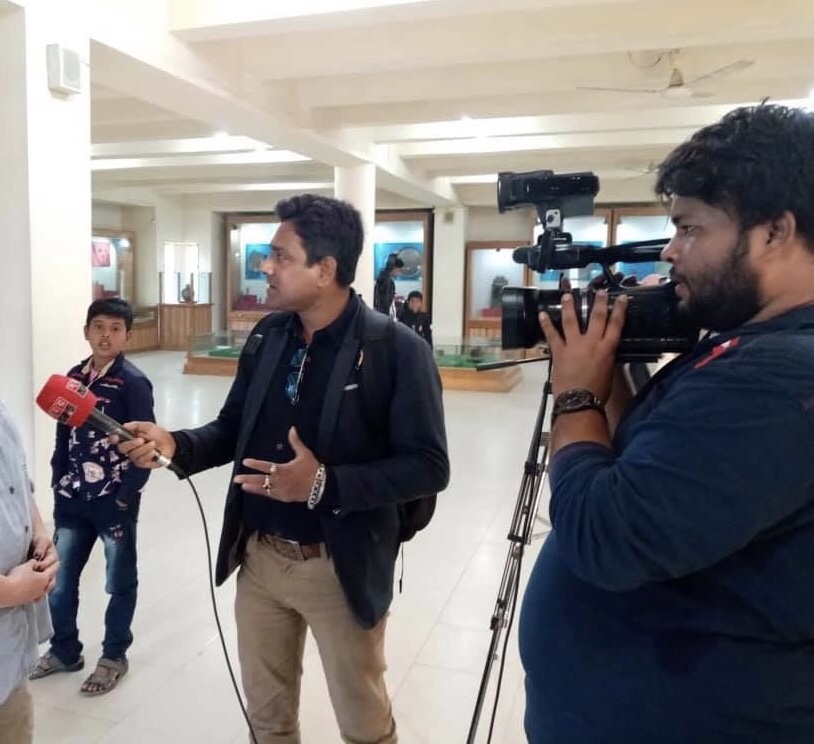
I was even interviewed for the local telly! Sadly for you lot, you’ll never know just how totally natural and definitely-not-at-all-wooden I am in front of the camera 😬
When you’re from the UK, you can never tell how you’re going to be received overseas given Britain’s colonial history, but people in Bangladesh seem to really like us – especially in the north east, where every other person I spoke to had at least one relative living in England.
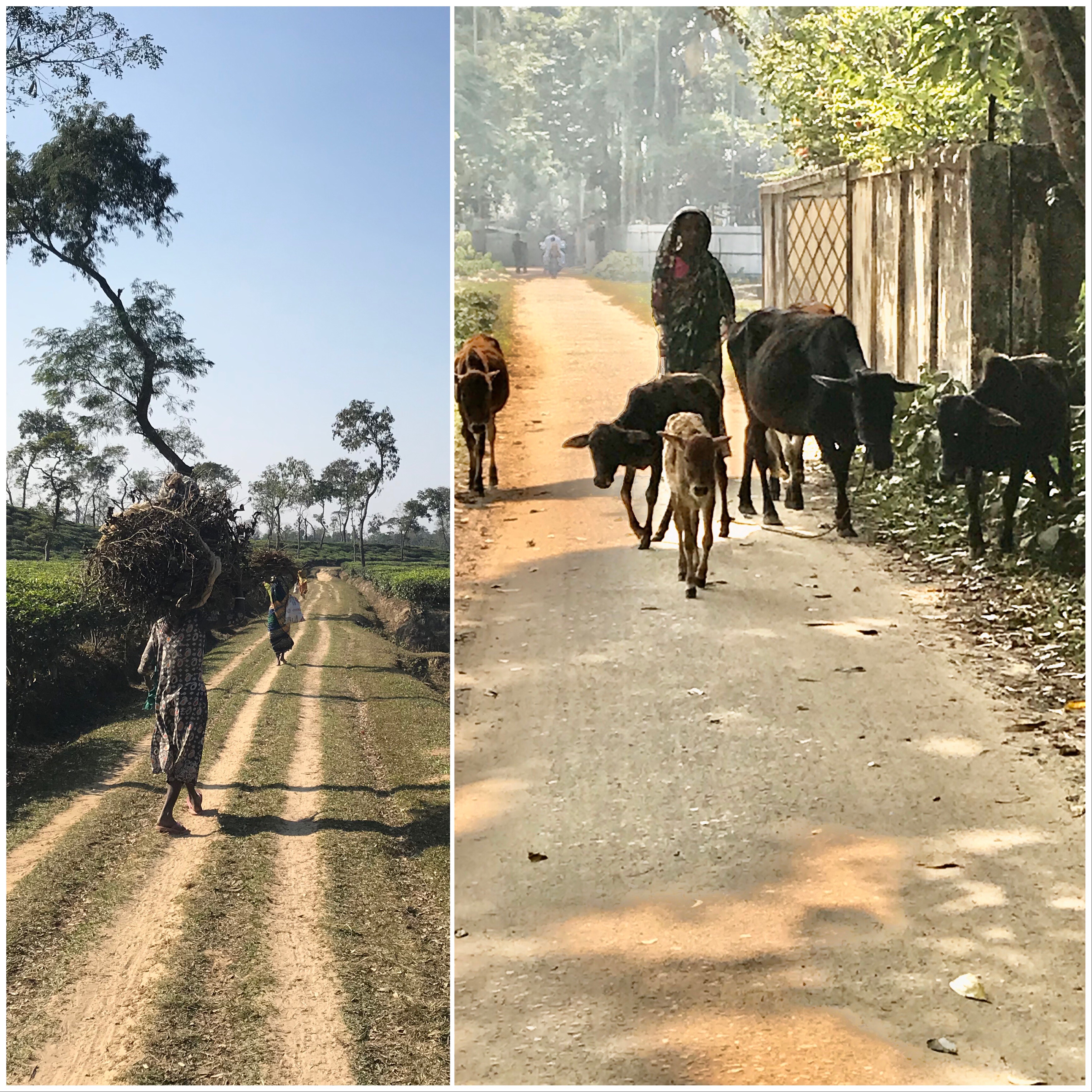
When everyone is so friendly and welcoming, and there seems to be an abundance of food around, it’s too easy to romanticise a more simple, rural way of life.
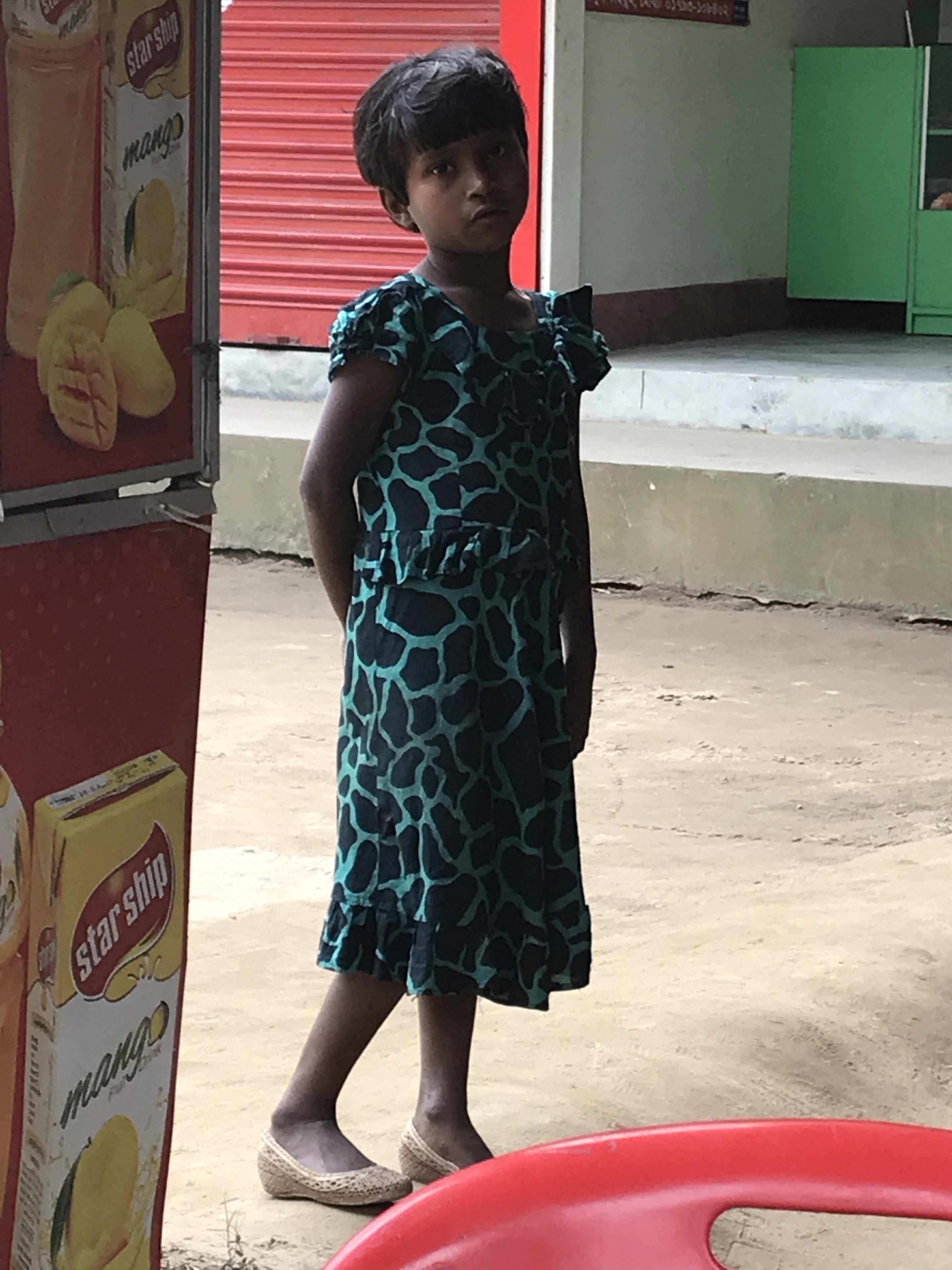
But Bangladesh still has a long way to go – the World Bank reports that almost 1 in 4 Bangladeshis lives in poverty, and 12.9 percent of the population live in extreme poverty.
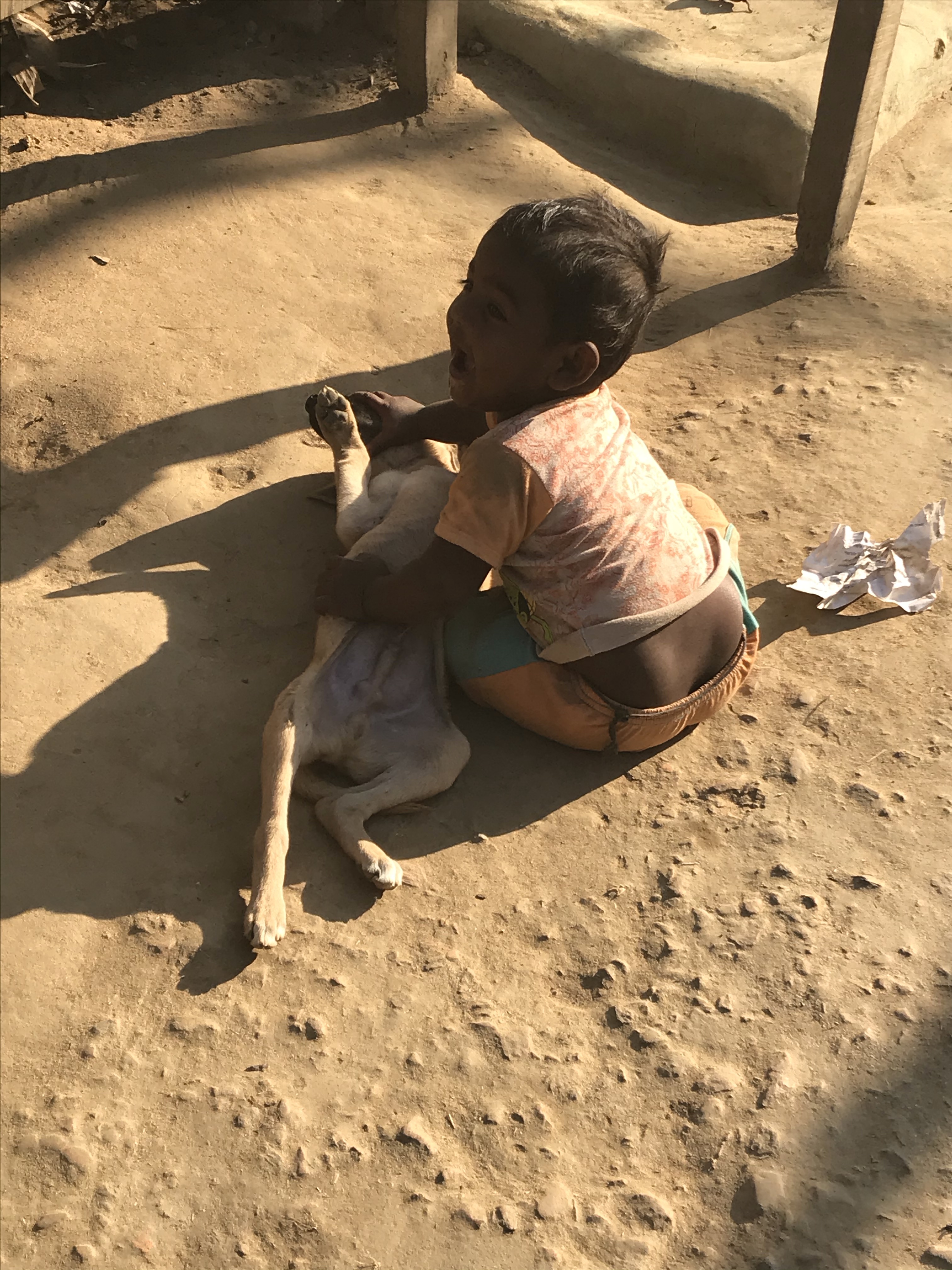
The pickers on the tea estates, where this young man comes from, earn Tk100 (about US$1) per day.
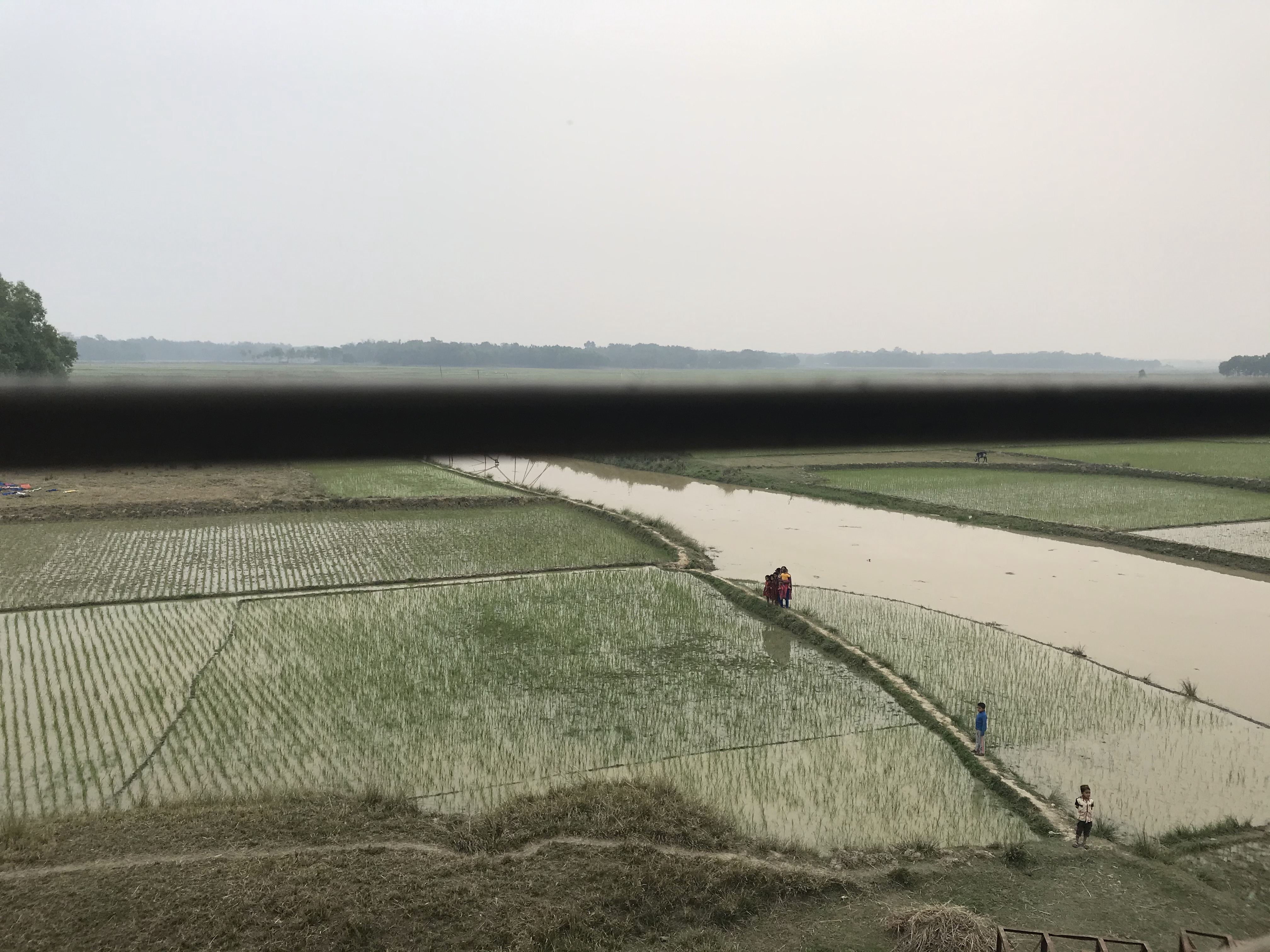
Ignore the black line; this photo was taken from the train window between Srimangal and Dhaka, which leads me nicely on to Bangladeshi transport.
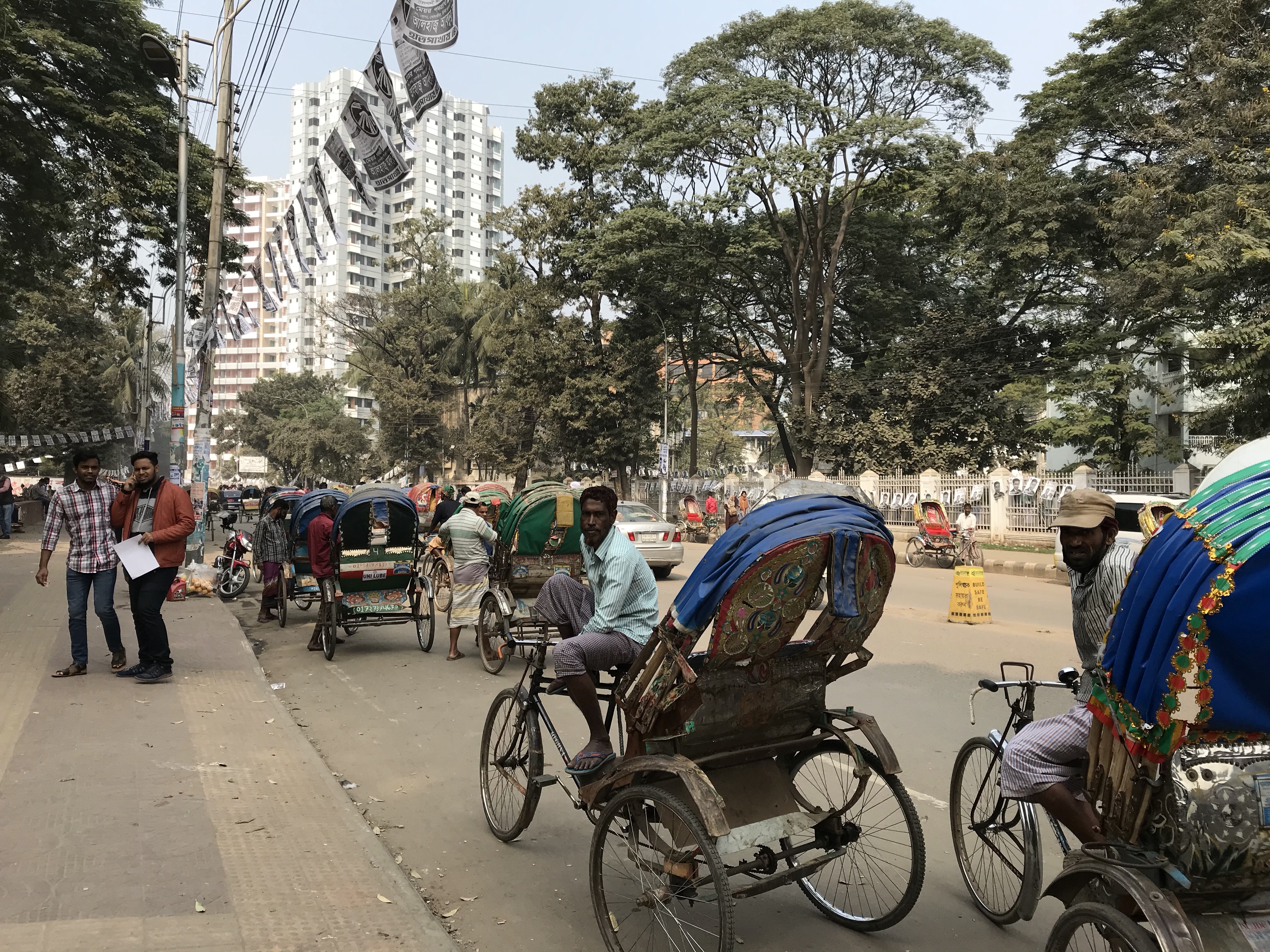
I think it’s fair to say that transportation is the most dangerous thing about Bangladesh. I was told that you don’t have to have a licence or take a test to drive any vehicle on the road – for sure, driving standards and maintenance of vehicles are extremely poor, and there’s constant competition between buses, cars, taxis, tuktuks, manual and electric rickshaws, as well as pedestrians, making it dangerous even to cross the road, let alone move along it.
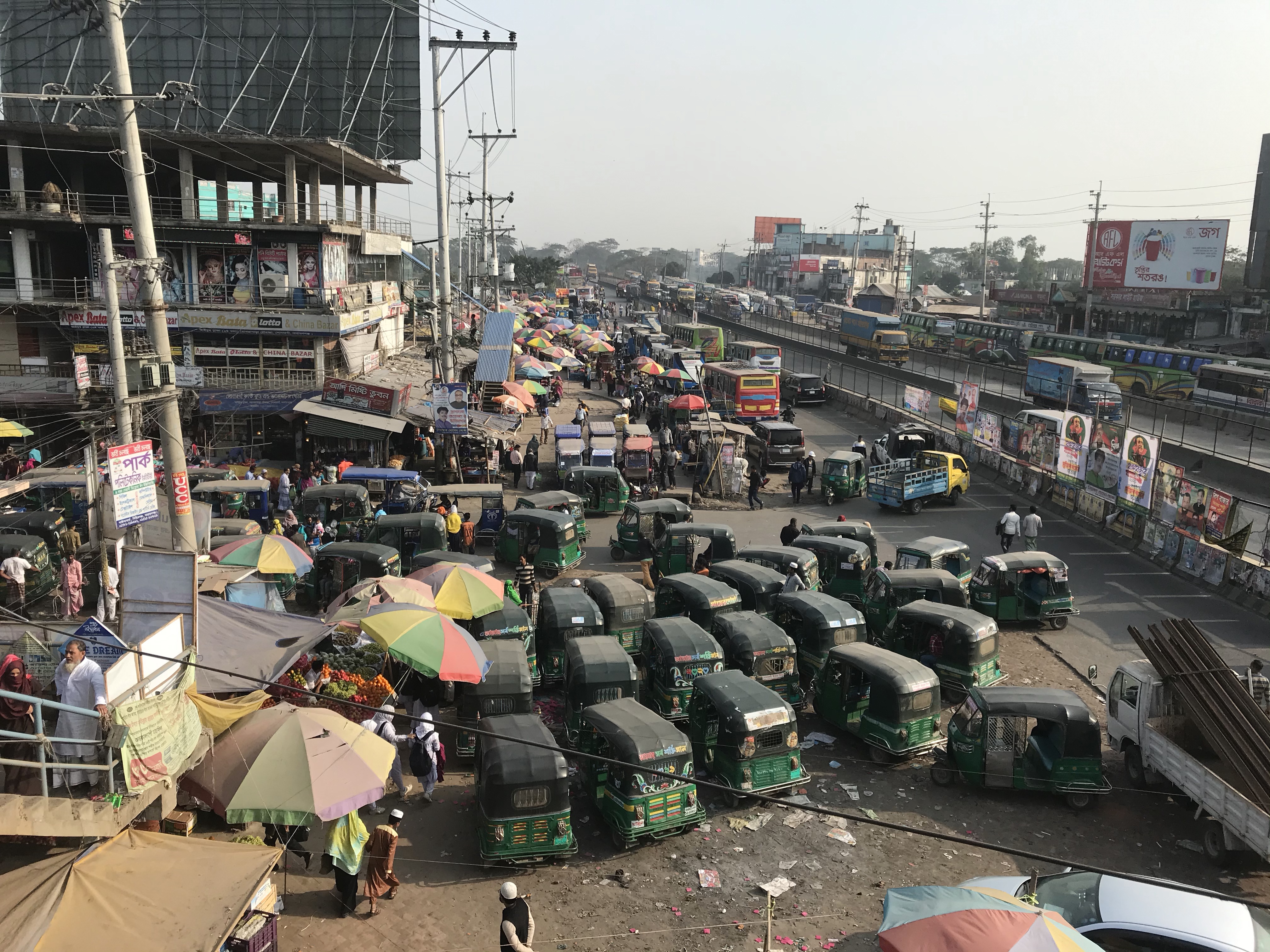
Dhaka is chaos. The roads are totally overcrowded, which leads to the sort of pollution you can feel between your teeth. And you need an abundance of patience – it took 2.5 hours to go 15 km one night.
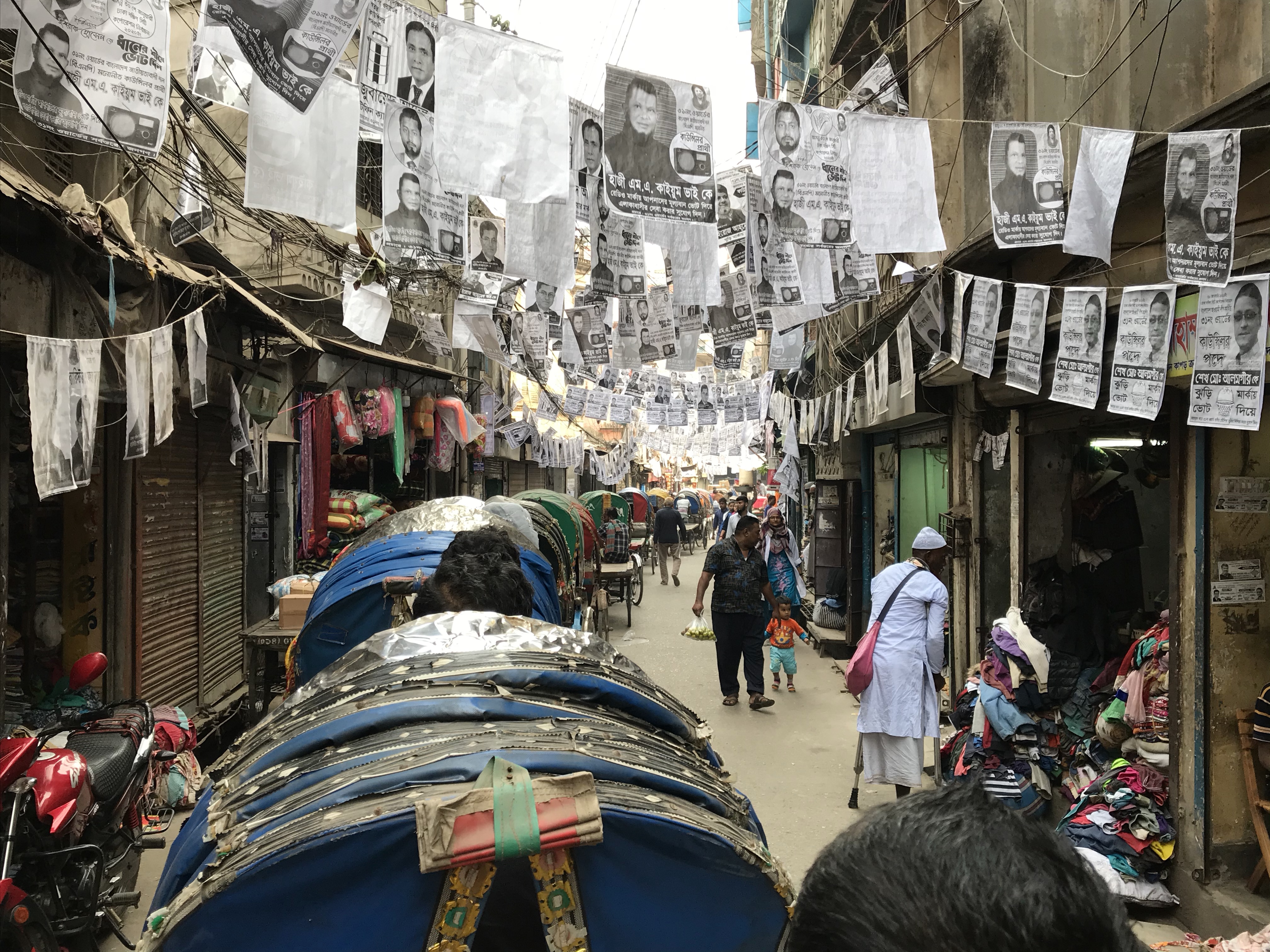
Rickshaw traffic jam in old Dhaka.
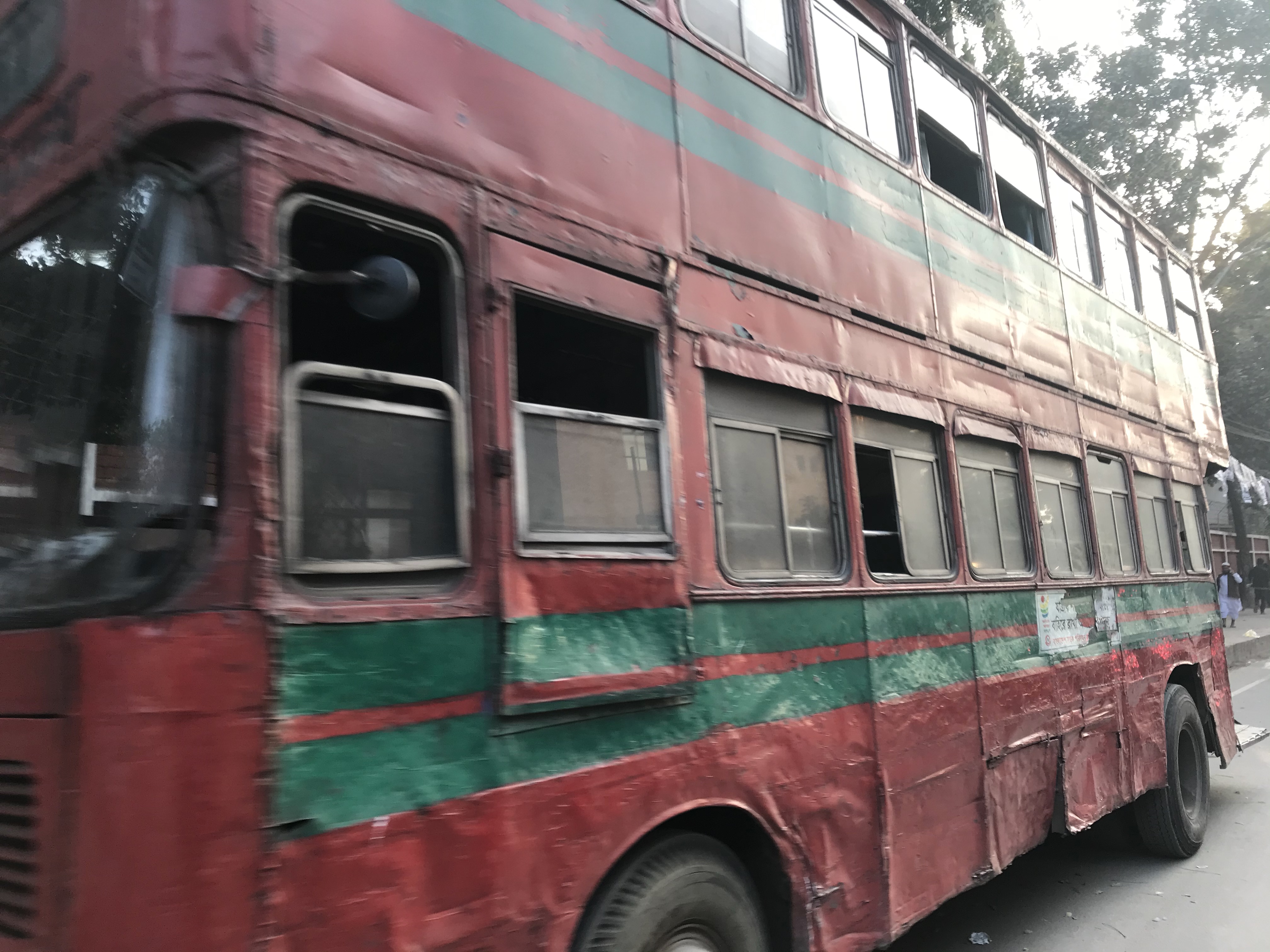
There are a lot of London Routemaster-type buses around, and they all look a bit like they’ve either had a number of crashes over the years or been thrown together by someone who doesn’t know how to build buses. Or possibly both.
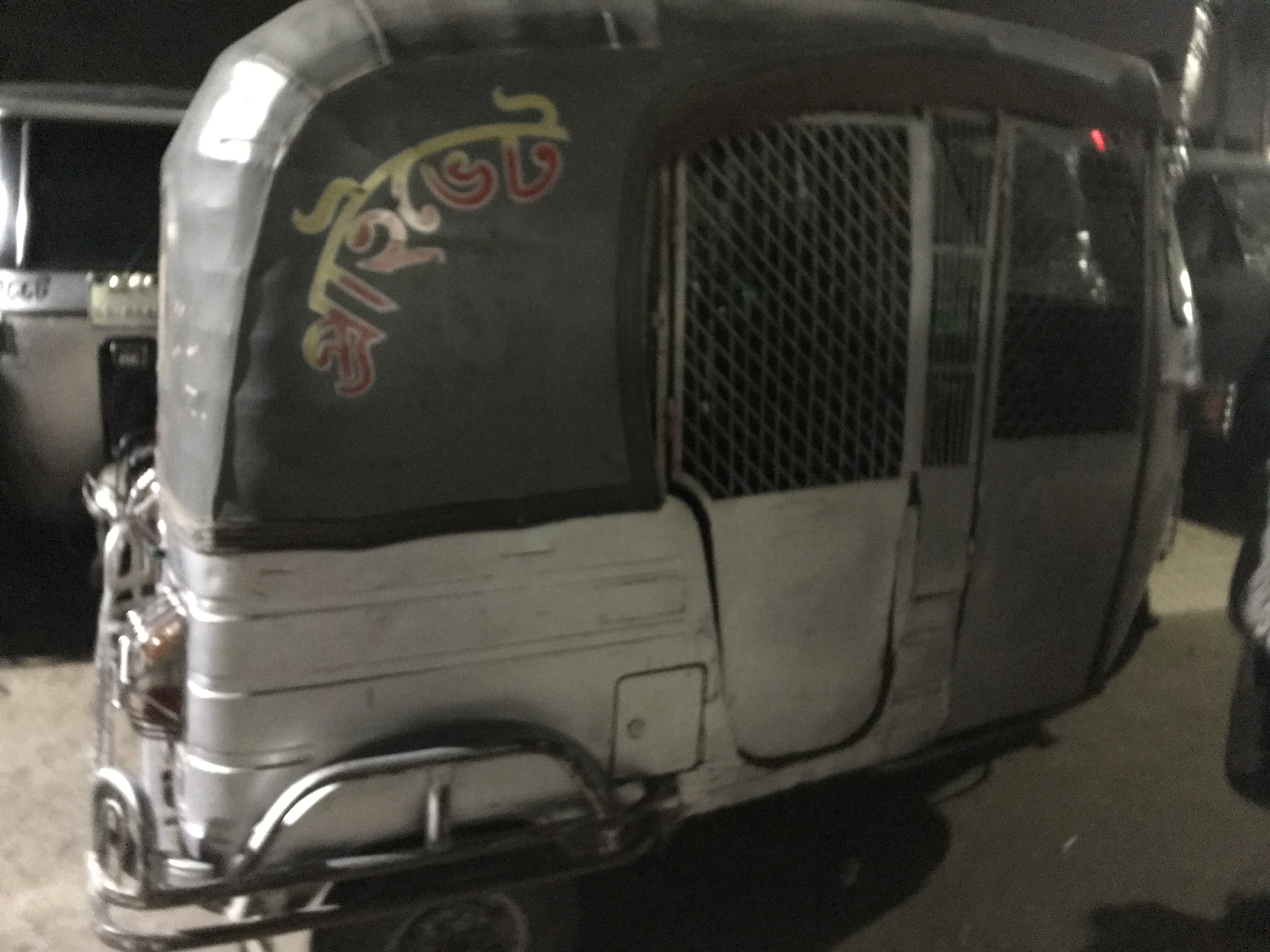
Most of the tuktuks look like little cages on wheels. I didn’t personally experience anything on my trip, but I guess this tells you something about petty theft and bag snatching in Dhaka.
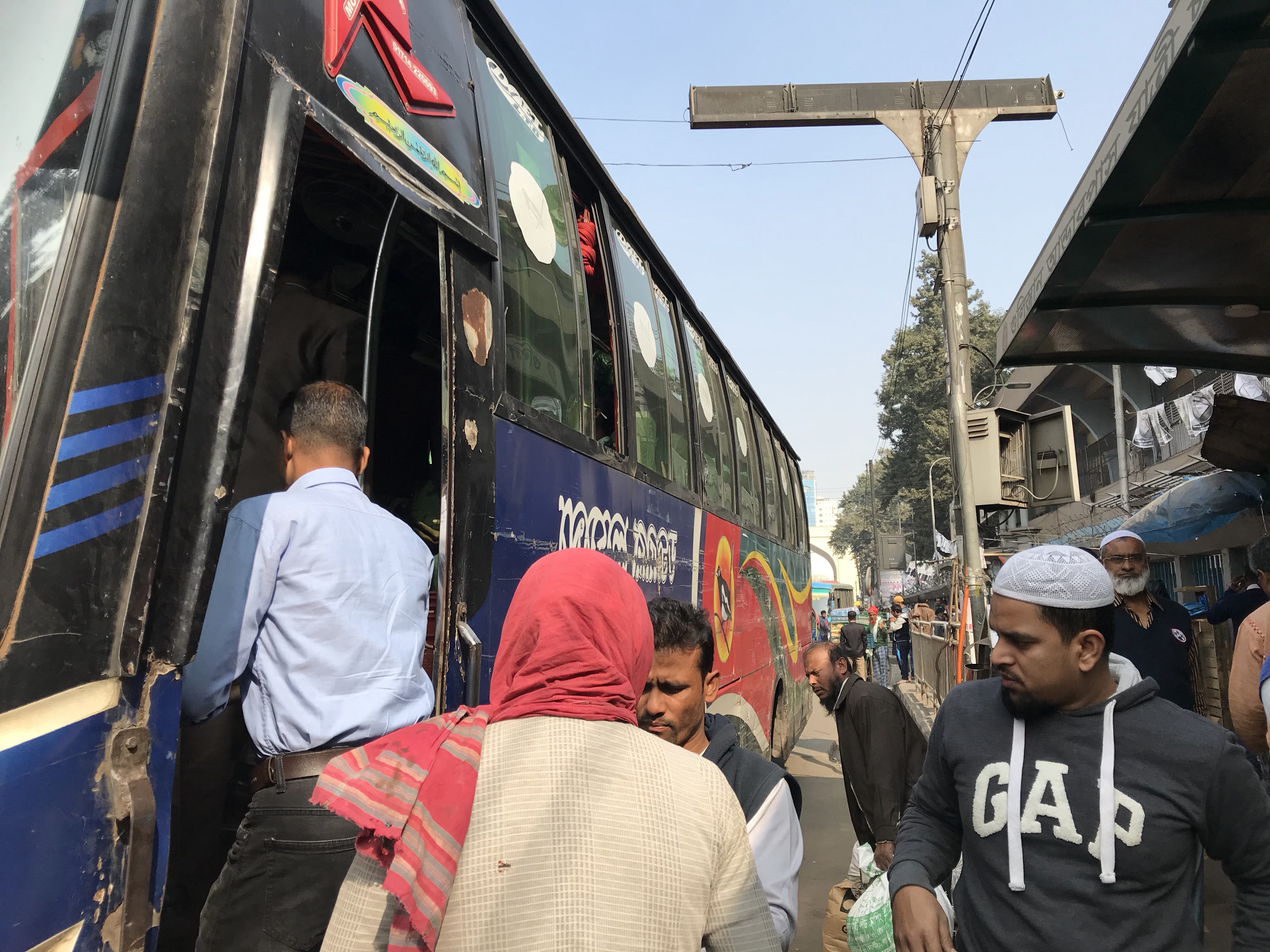
Here’s the local bus that I took from Dhaka to Sonargaon, and I’m not going to pretend it was anything other than…well, it was somewhat disconcerting! At one point, I found myself wondering which side of the road they actually drive on in Bangladesh.
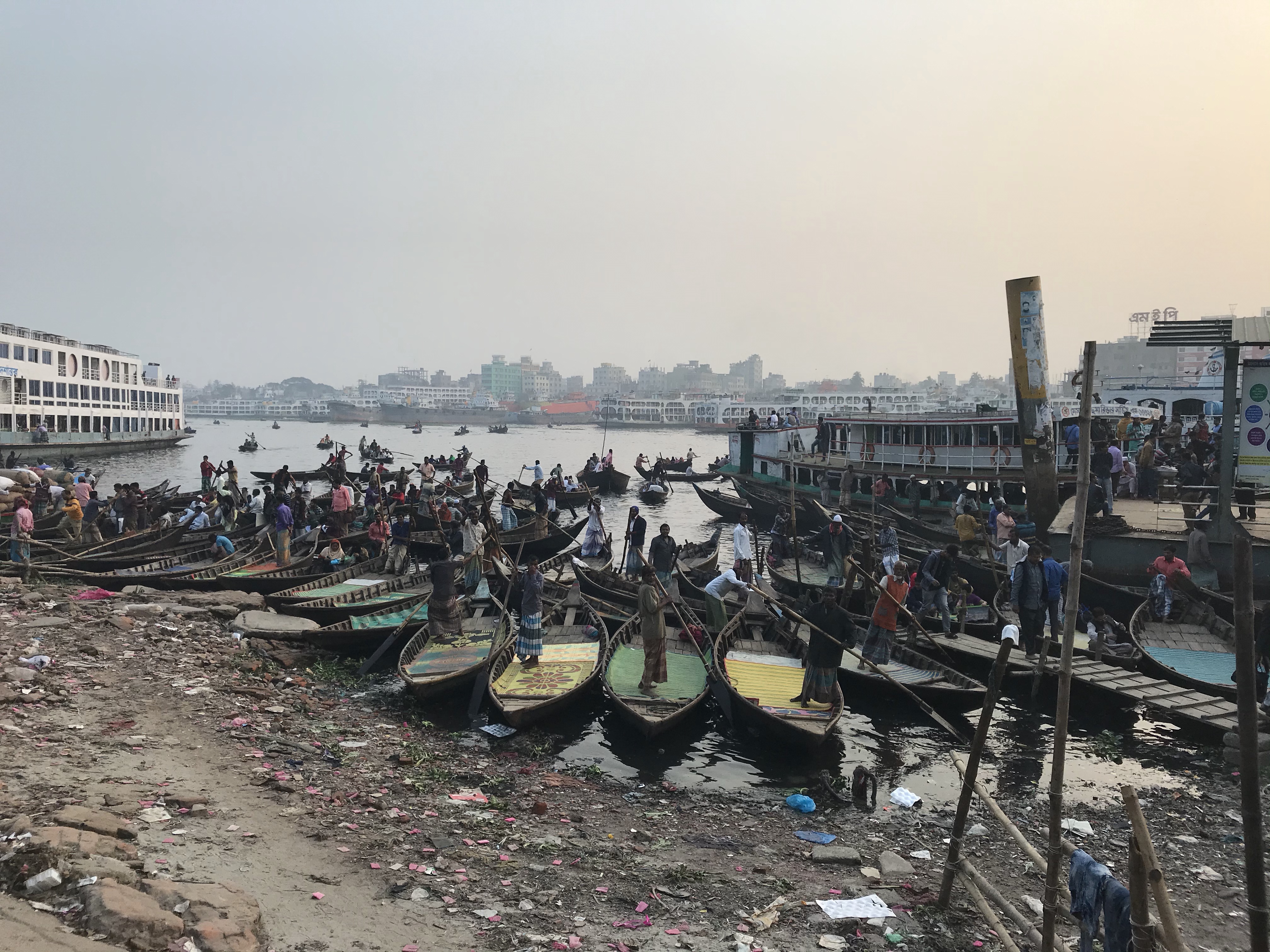
As well as road travel, there is a large water transport network throughout Bangladesh. I took one of these water taxis along this bit of the Buriganga River during rush hour to watch people crossing at the end of the working day. There are plenty of ferries that go all over Bangladesh, including the famous Rocket Steamer, which I didn’t get to try this time.
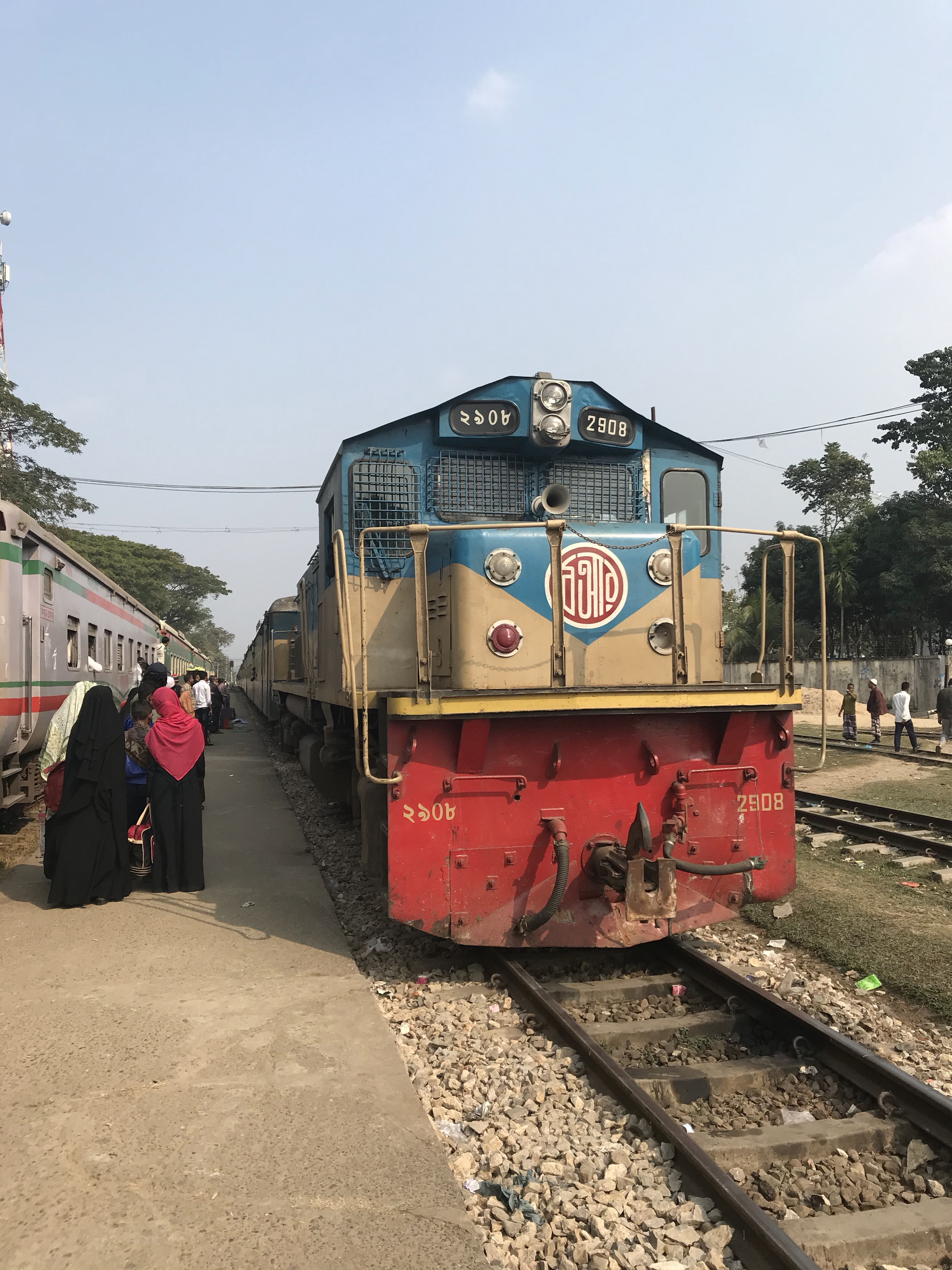
And of course, there’s the extensive rail network – Bangla Rail. Most of the stations – and sometimes it feels like even some of current rolling stock – were built by the British – along with the tracks, bridges and culverts along the way.
The fact is that there are frequent derailments and other accidents, and nothing looks properly maintained, including those bridges and culverts, which can sometimes be badly damaged by flooding. All of which I suppose means you need to be a bit philosophical about life when you get on the train, but I took a five hour each way journey on the Parabat Express from Dhaka to Srimangal and both journeys passed without incident.
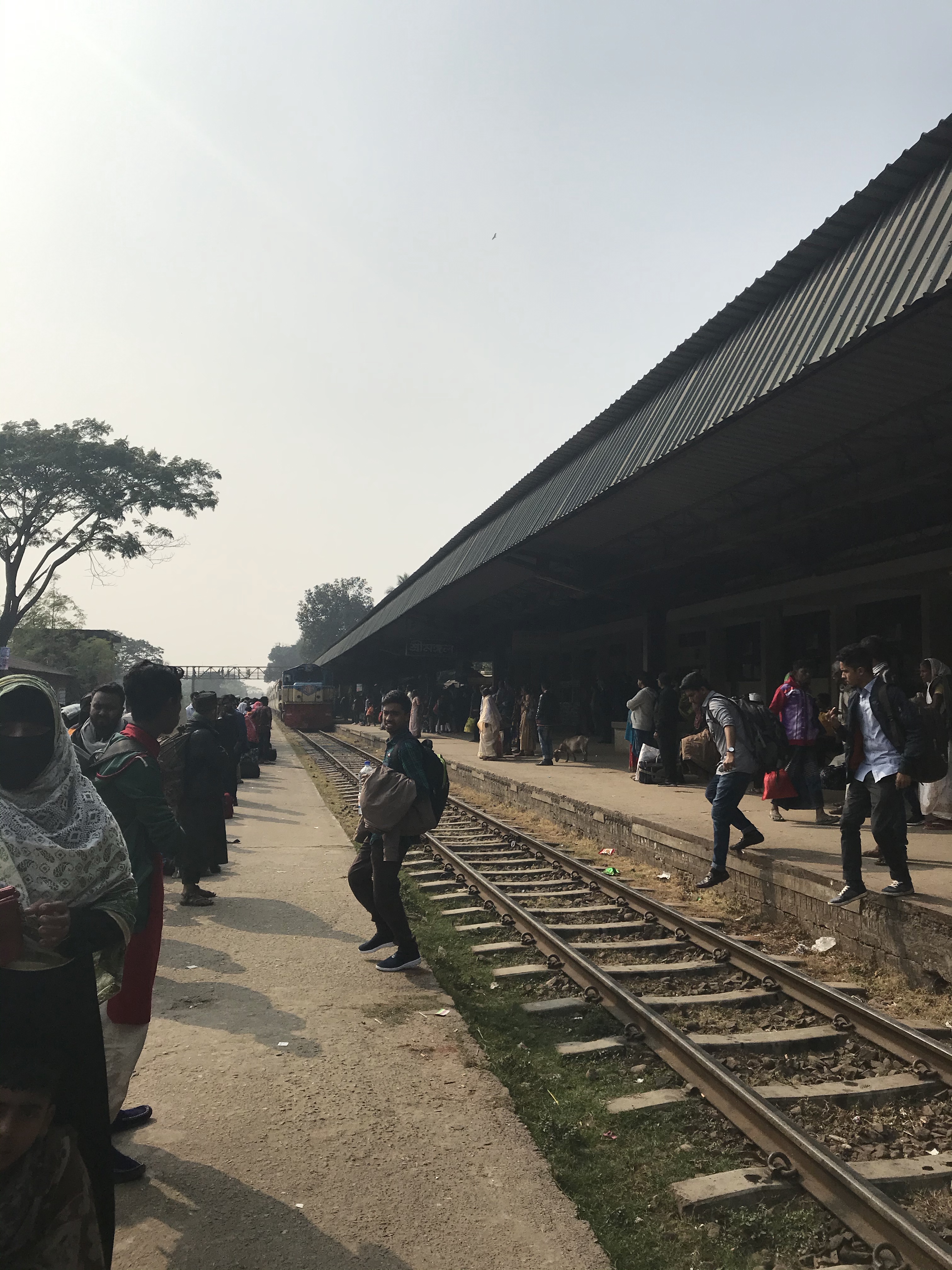
Crossing the track to get to the right platform.
I travelled ordinary class on the way there, which was an interesting experience for a lot of the other passengers as well as me! Lots of questions, lots of food sharing, and hawkers coming through frequently selling food and drinks, as well as a number of beggars.
As an aside, these beggars included a high percentage of Hijras – the transgender or third gender community seen across South Asia. Apparently there are between two and three million in Bangladesh, but their historically revered status has diminished, and they are now living at the edges of society.
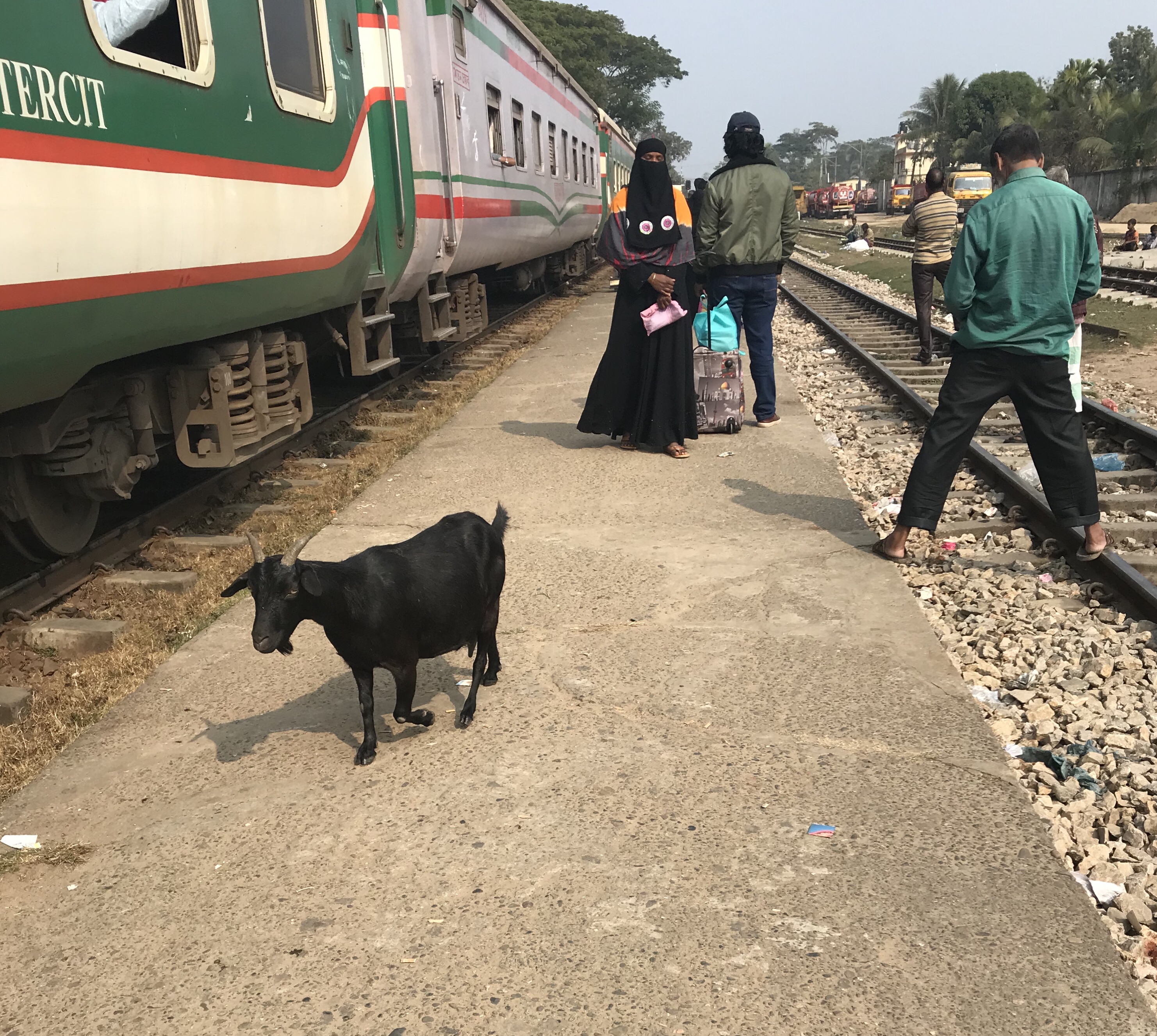
I had a seat in first class on the way back to Dhaka. The only difference was the number of people, which in my case comprised only me and my guide, plus a lovely couple (whose son works in Newcastle) and who bought me milky teas and snacks along the way. But it was the same hospitality, the same questions, the same beggars, the same hawkers, the same slightly disconcerting holes in the floor, and the same rubbish disposal system i.e. straight out of the window.
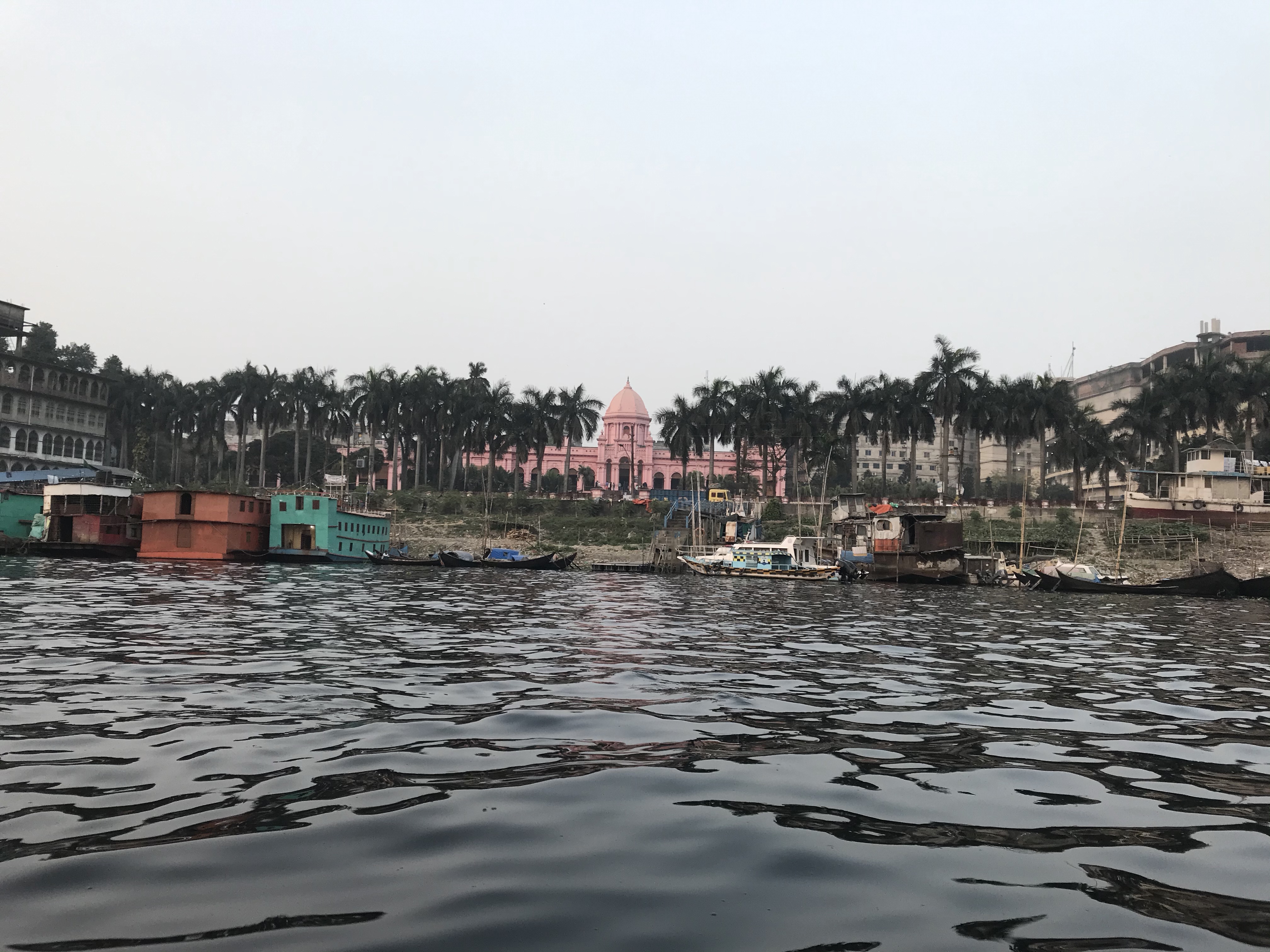
Bangladesh has a rich history involving Romans, Buddhists, Hindu and Islamic states, the Bengal Sultanate, the Mughal Empire, the British colonial period, Partition, union with Pakistan, and finally independence for the People’s Republic of Bangladesh in 1971. And I’m not going to tell you anything about it, because I think you should go and find out for yourselves. Top Tip: 2021 is the 50th anniversary of independence, and I expect there’ll be some fun celebrations 😉
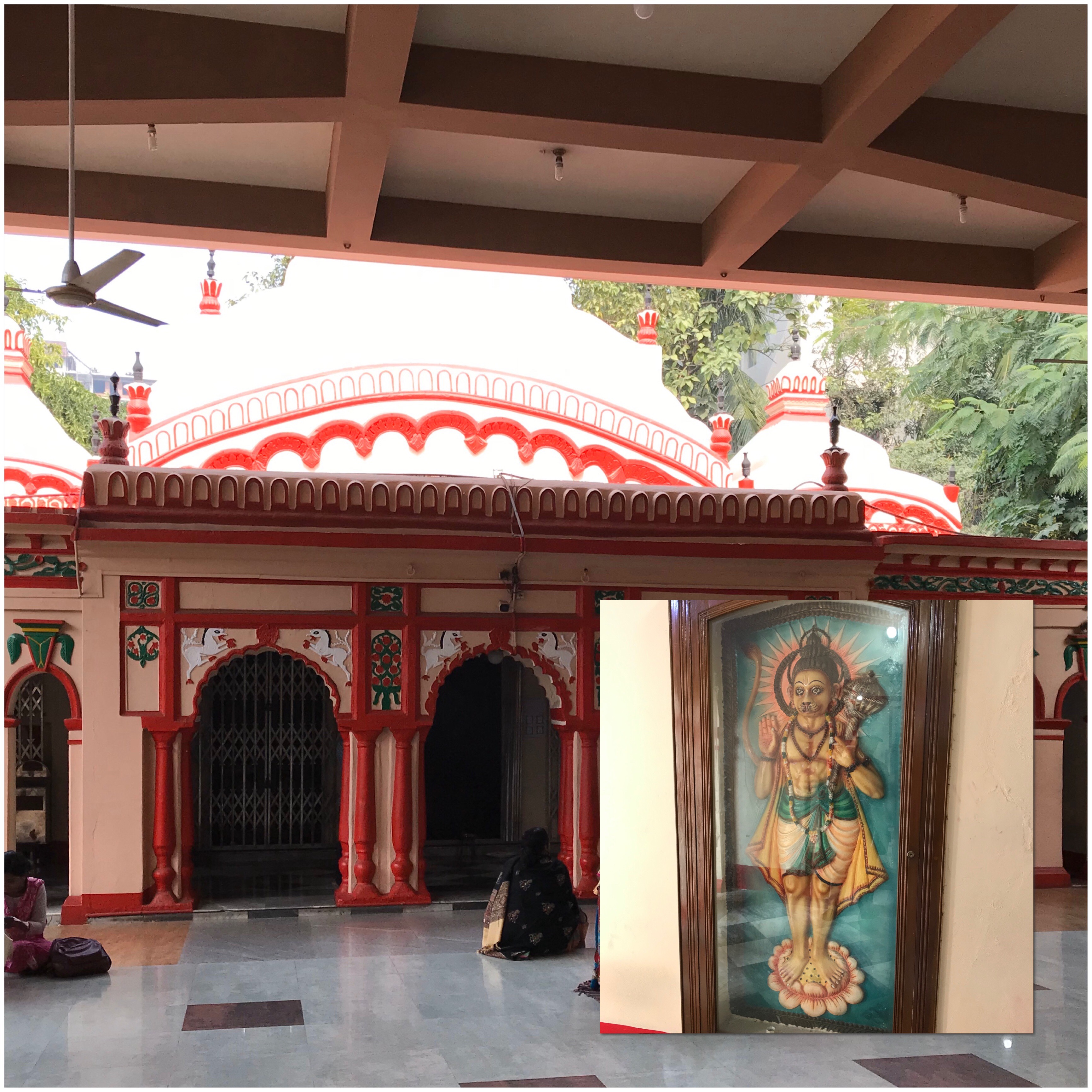
Across Bangladesh, there is evidence of this cultural mix, including Hindu temples,
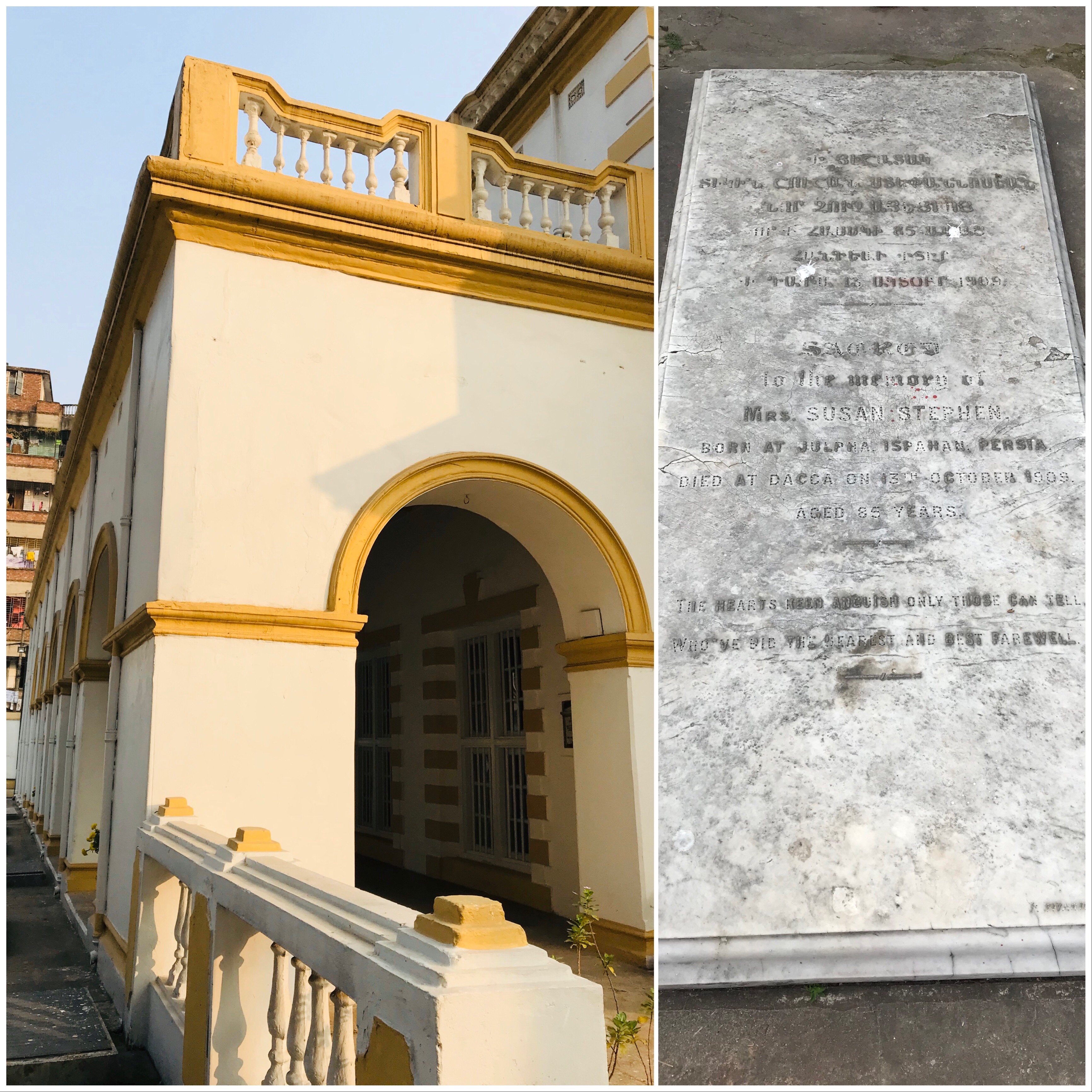 Armenian churches,
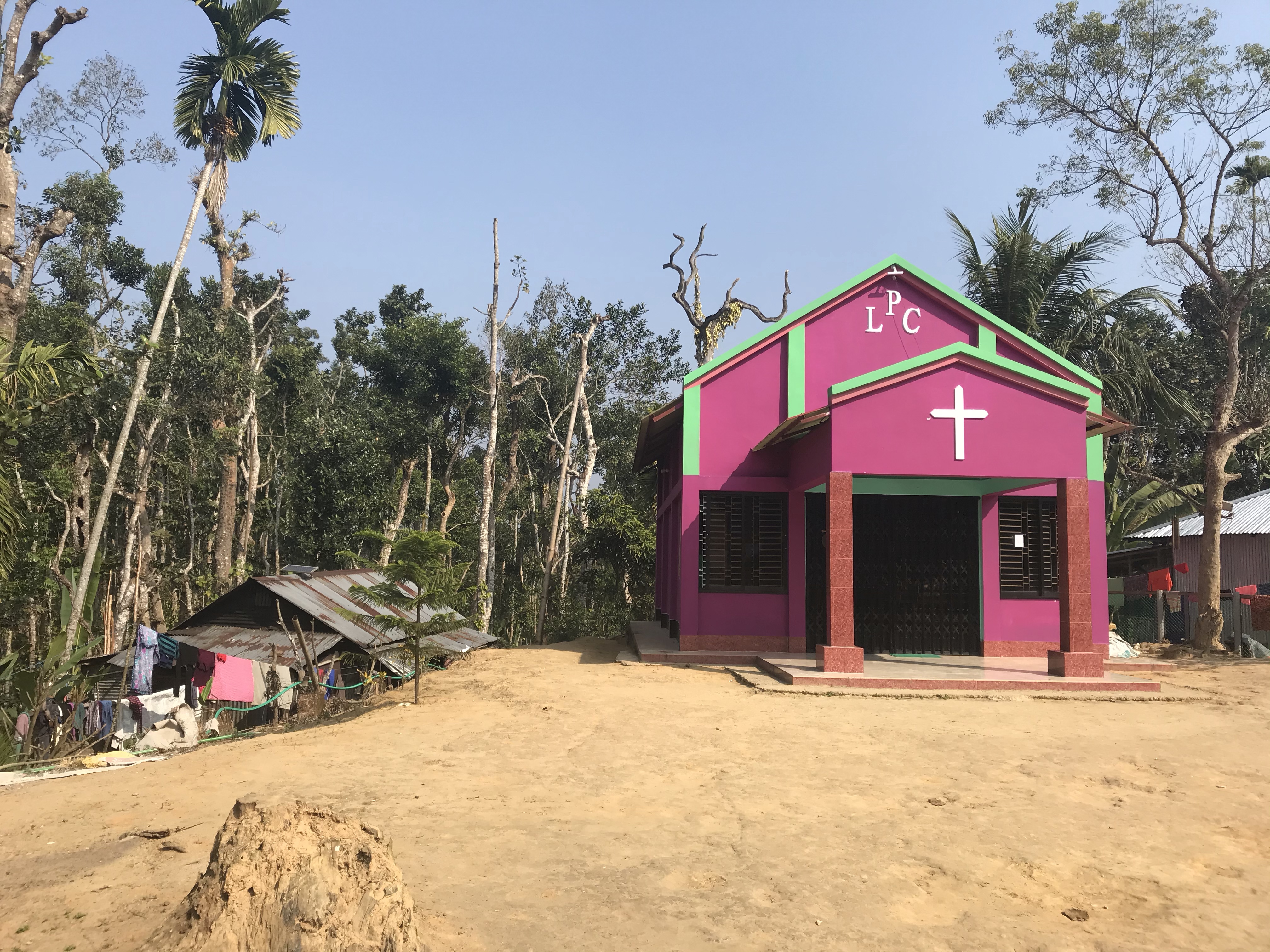
Other Christian churches,
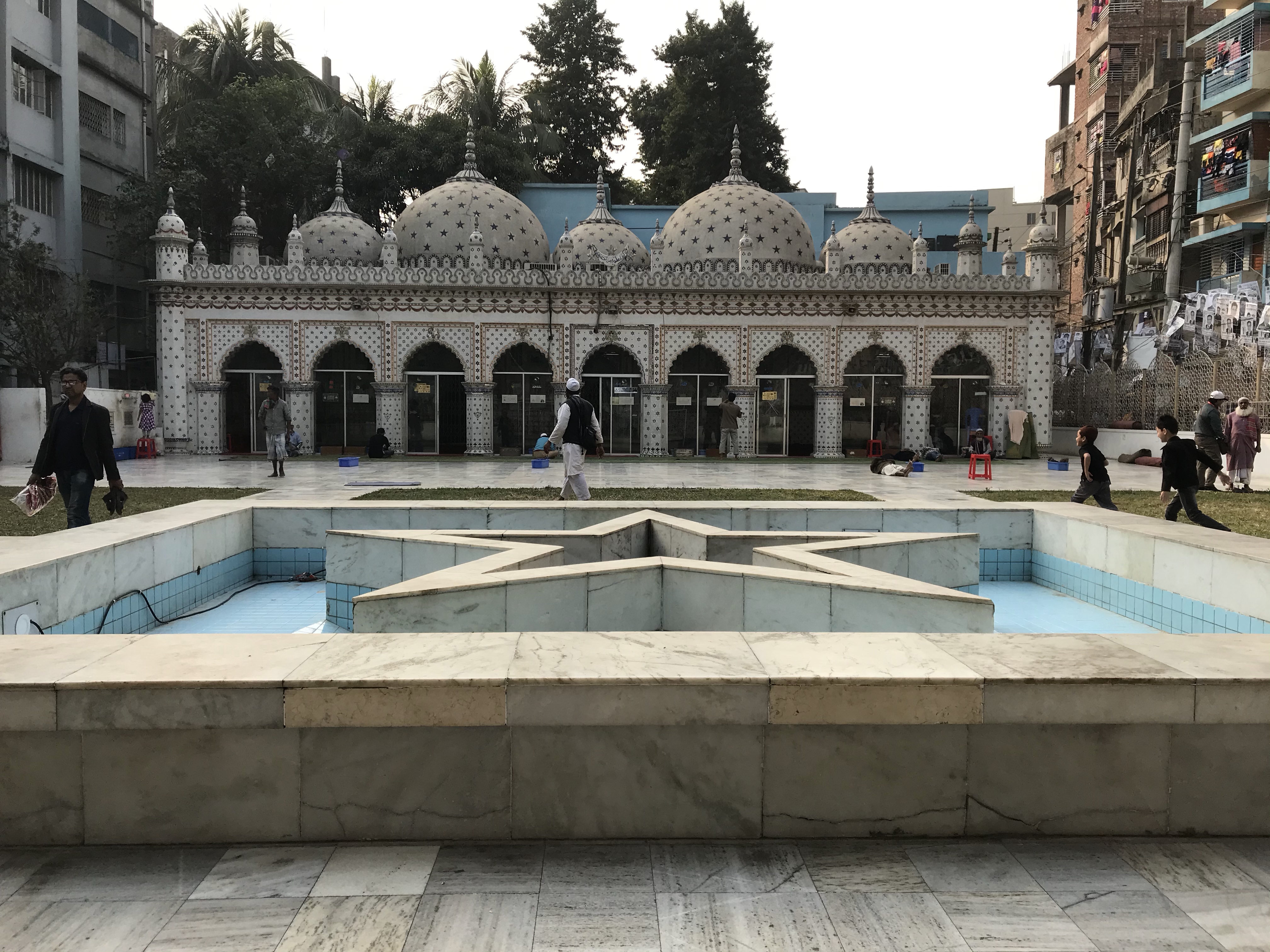
.and mosques, both old (the Star Mosque in Dhaka built in the late 18th century),
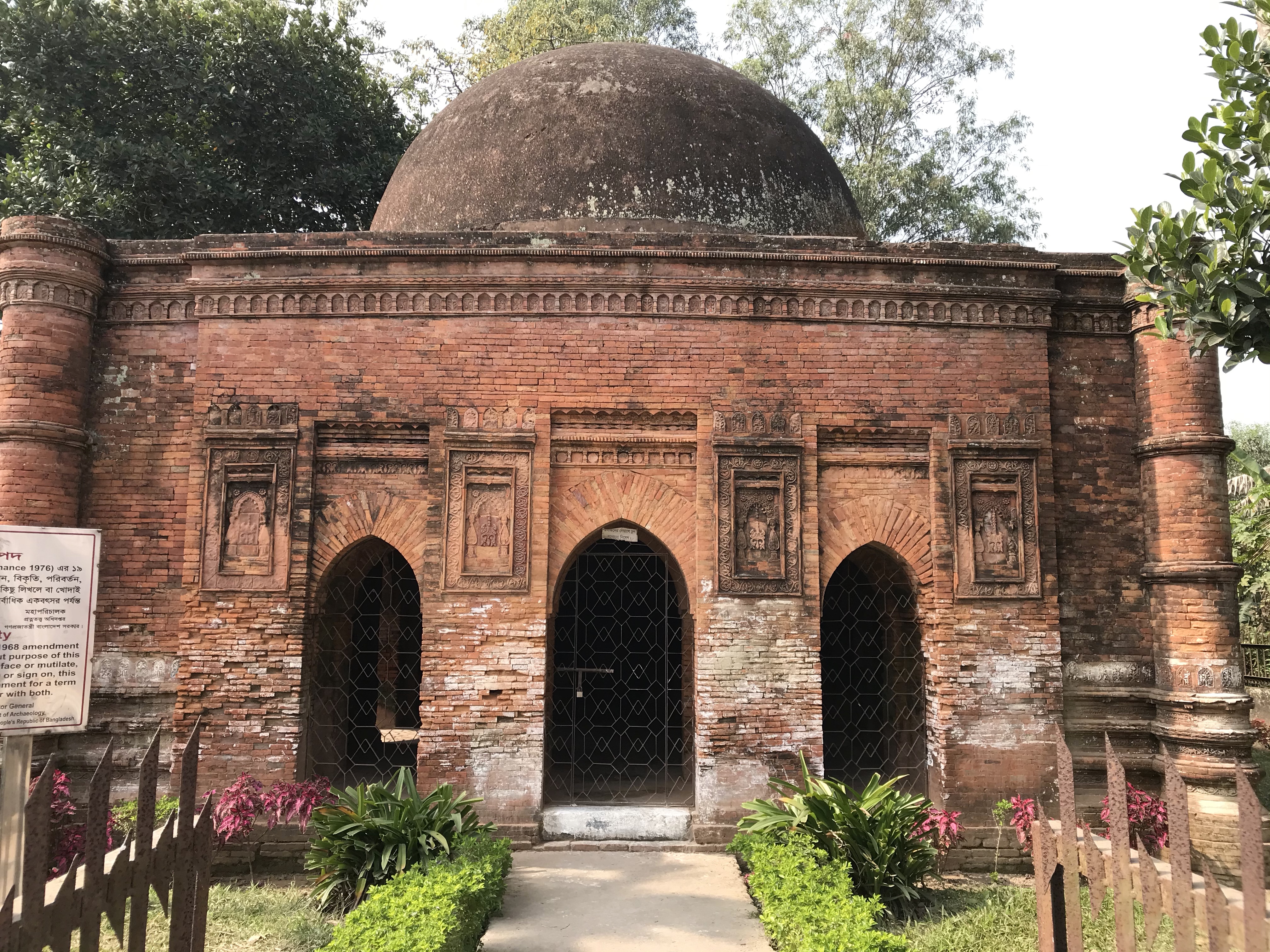
and very old! This is the Goaldi Mosque in Sonargaon, established in 1519.
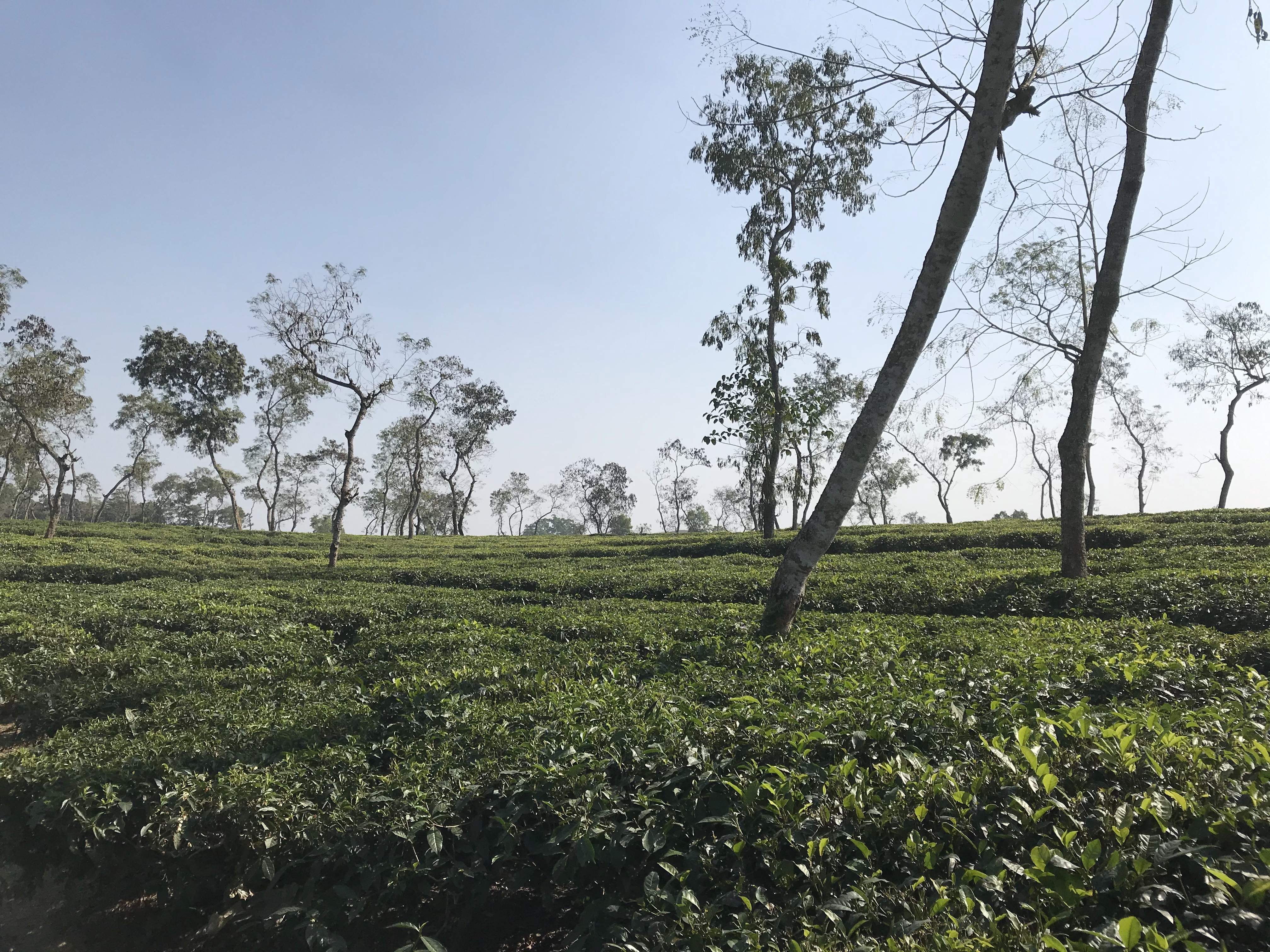
Up near Srimangal, I went walking through lemon and pineapple gardens, rubber plantations, the tea estates and tropical rainforest.
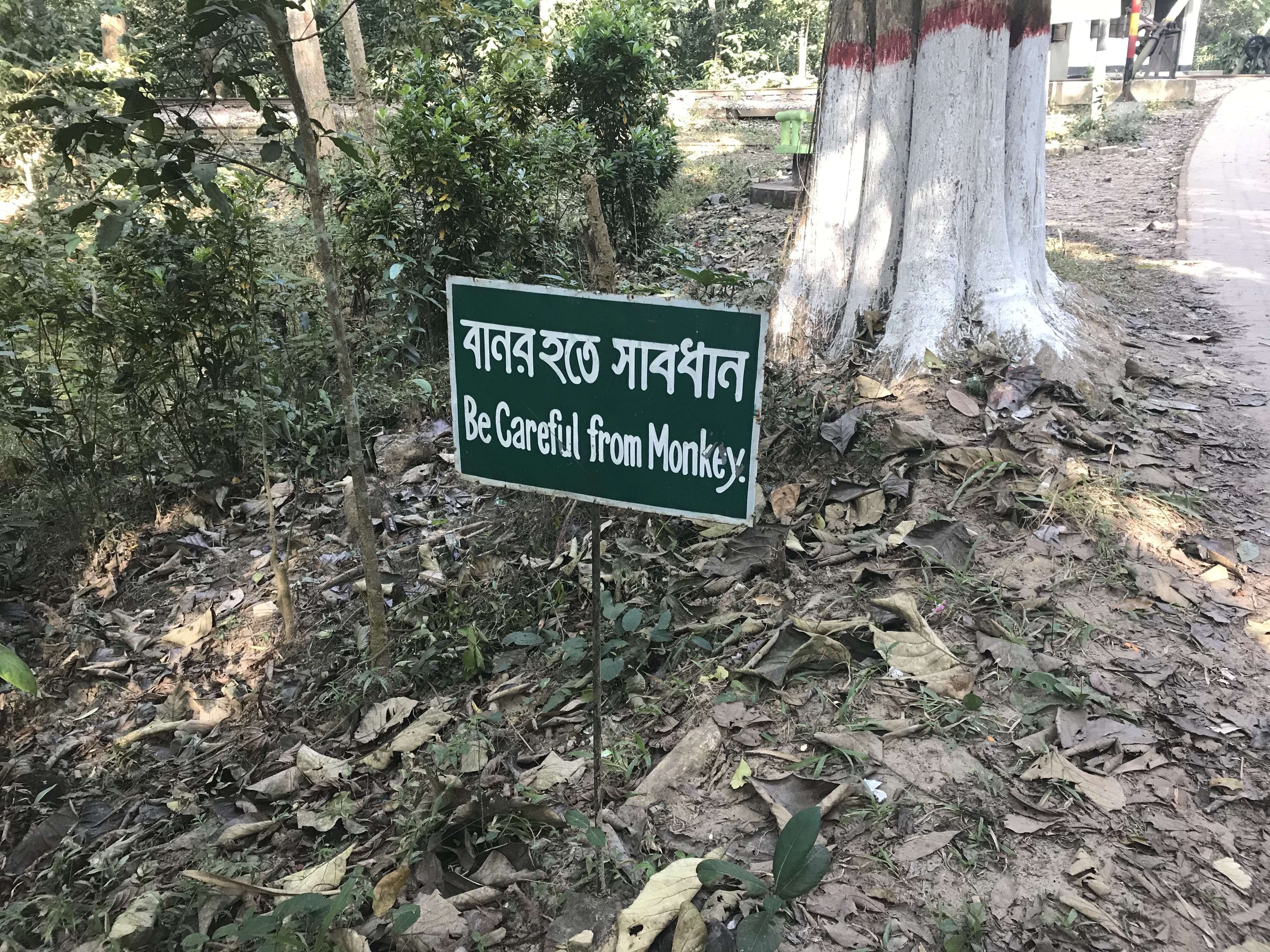
 In the Lawachara National Park, you can see plenty of wildlife, including gibbons and monkeys…
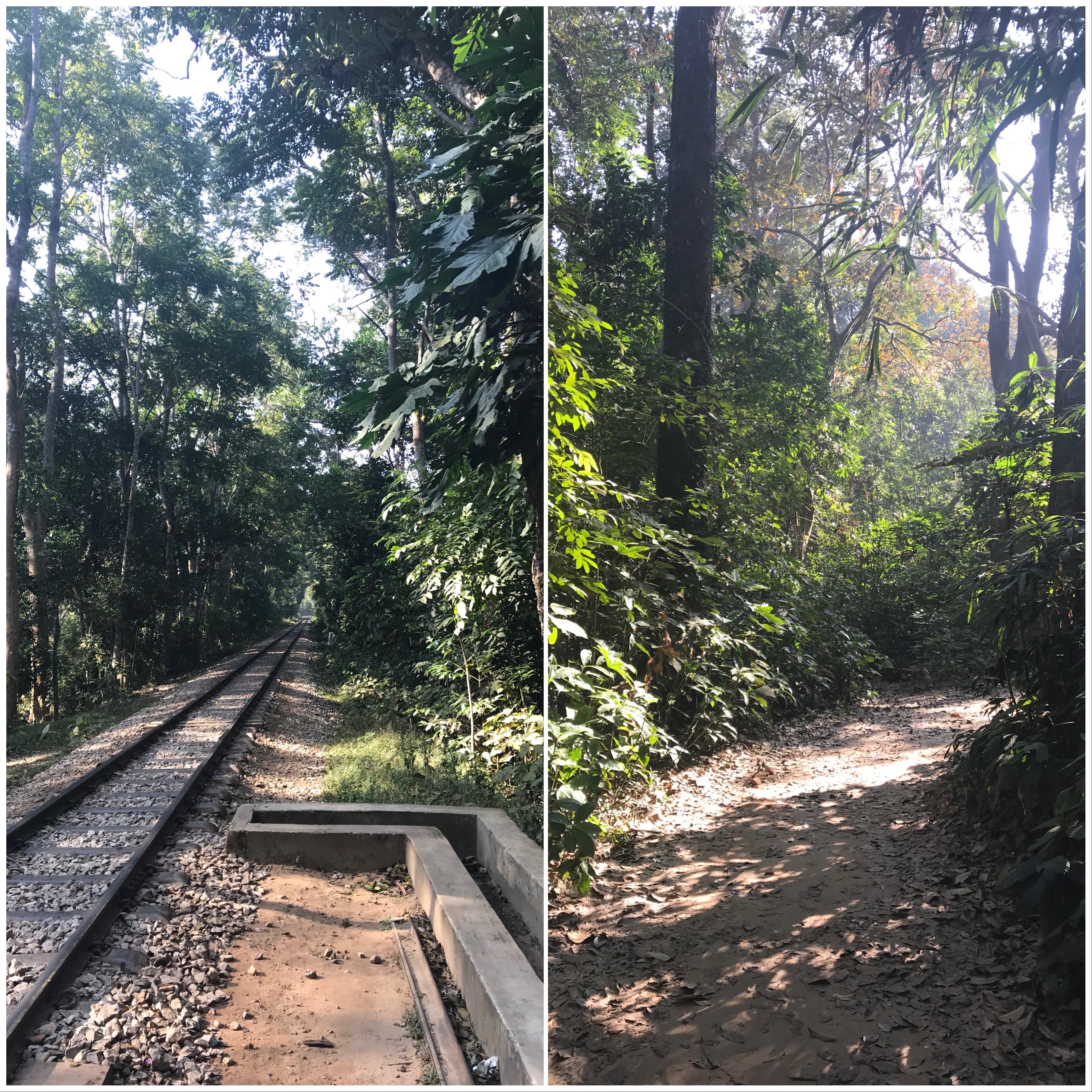
…and there’s excellent bird watching here too, but I didn’t get any photos of them either, so here are a couple of photos of the forest instead, because it was really beautiful 😉
The featured imaged is of a bloke I met after walking through the rainforest; not only was he quite a talented flute player, he also did some fun sleight of hand magic tricks for me while I was eating my post-hike fresh pineapple and papaya and said he had a TV show. (He also had the uncanny mannerisms of a Bangladeshi Ray McCooney, a character from Little Britain 🤣.)
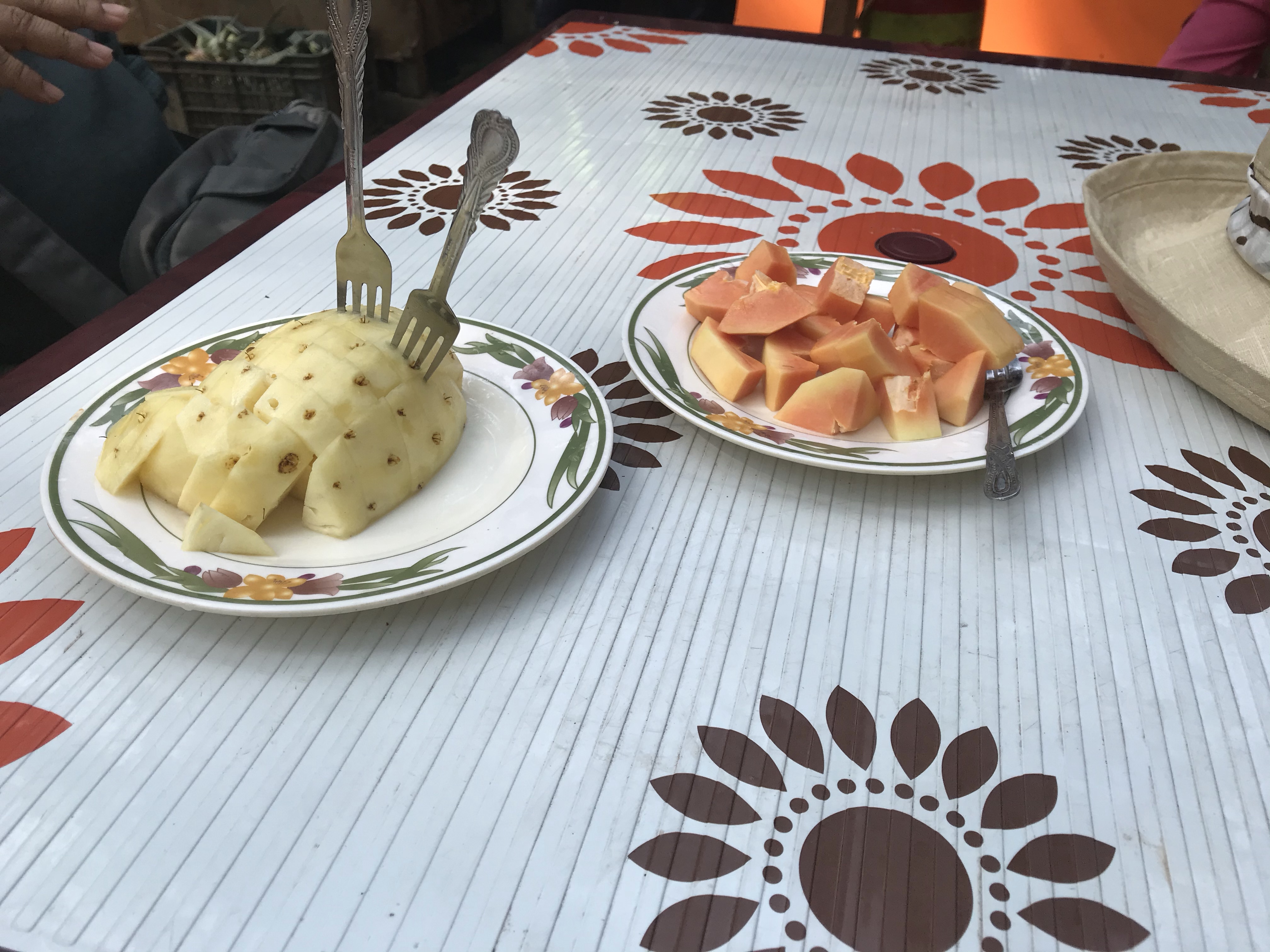
The food generally was a massive highlight for me. The Bangladeshis really seem to like their food, and you can’t move more than a few yards before finding a restaurants, or a stall, or hawker.

Stomach upsets are common for travellers to Bangladesh, but more by luck than judgement, I managed to come away unscathed, even though I got all my meals (bar one hotel meal) from street stalls and in local restaurants.
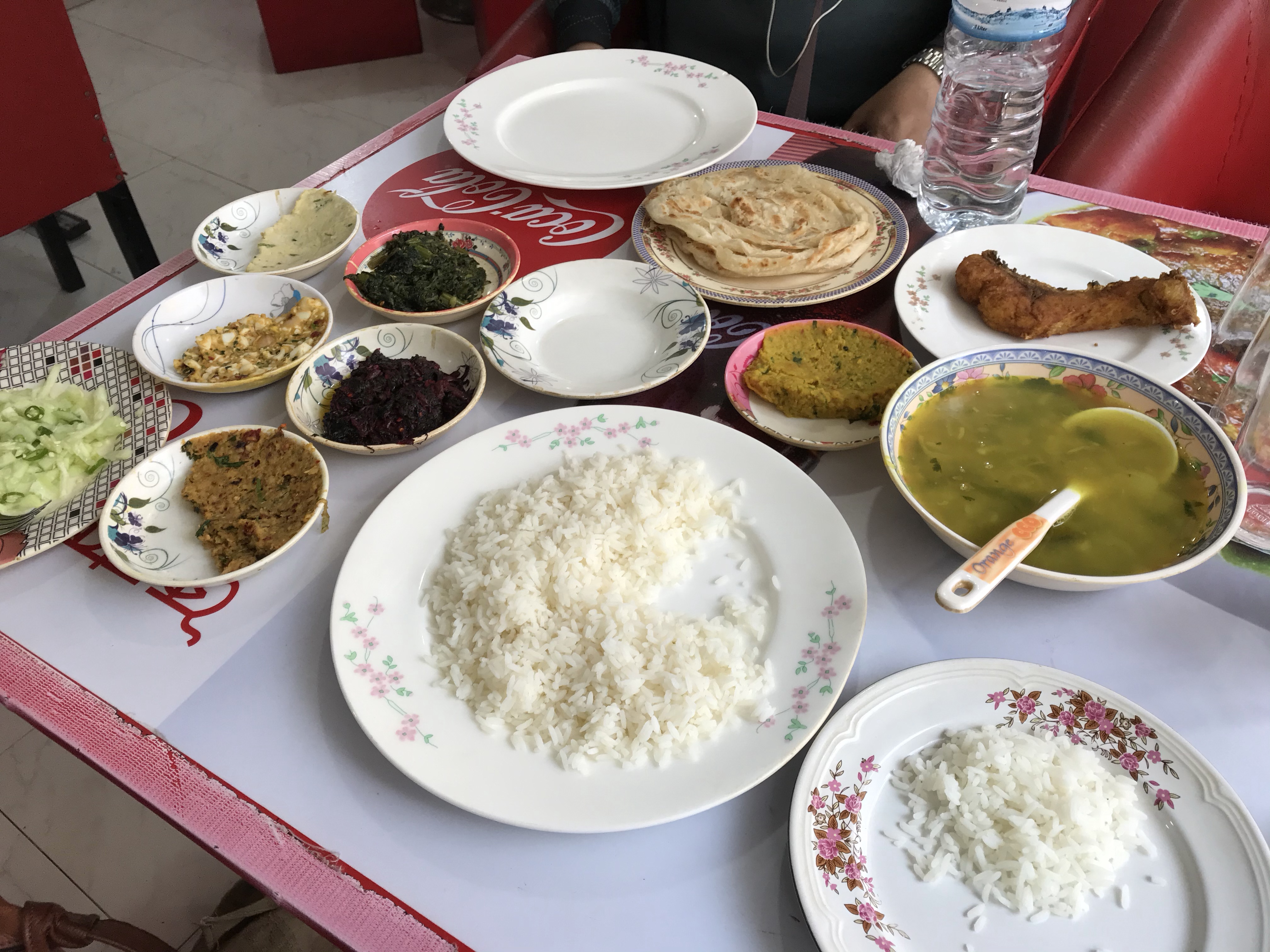
This is a traditional Bengal lunch – fish and mashes with rice, roti and lentil soup.
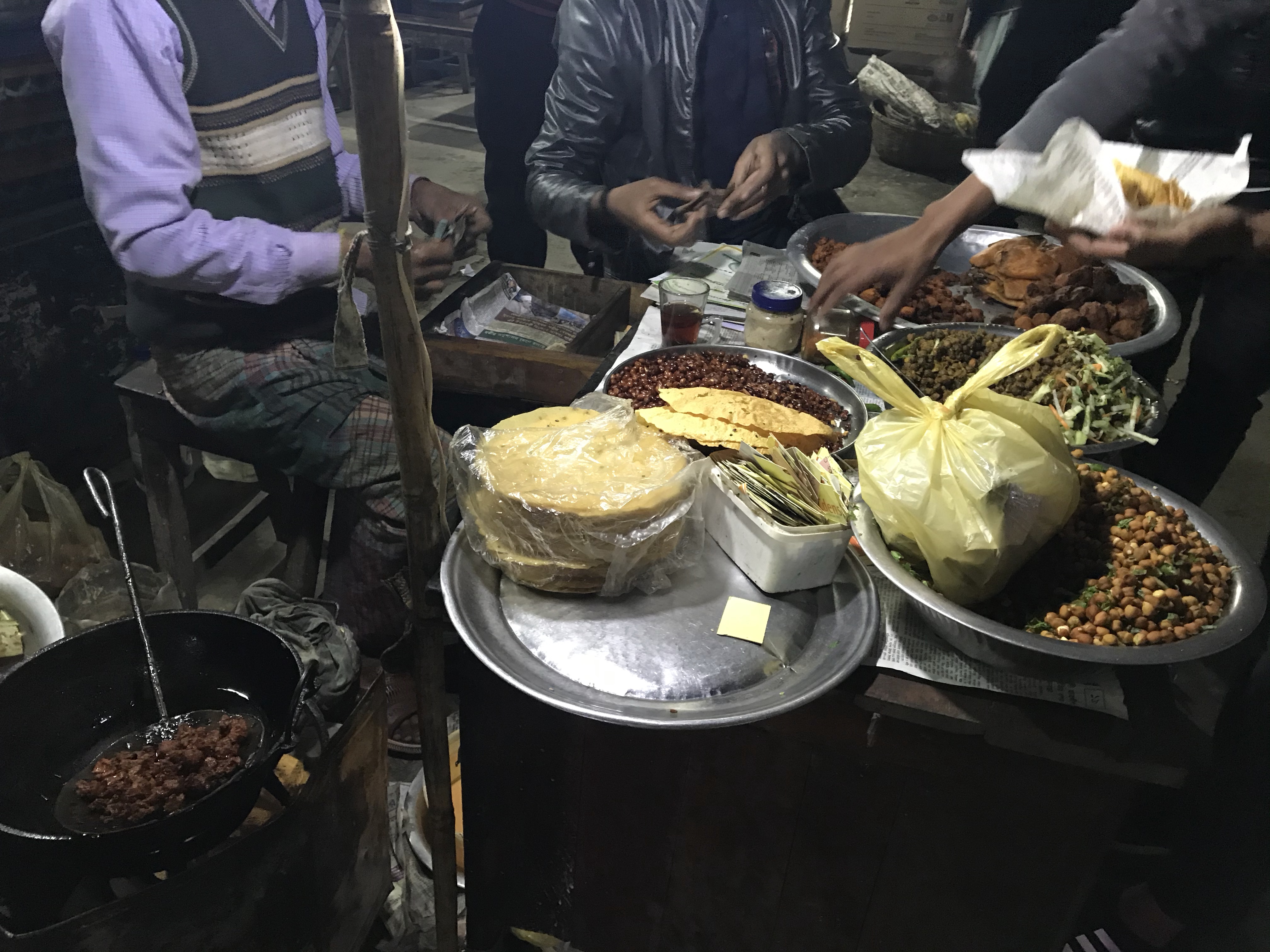
There are lots of photos of food coming up, so if you’re not that interested, skip ahead. But it was so tasty, as well as being cheap and filling, that it seems a shame not to show you.
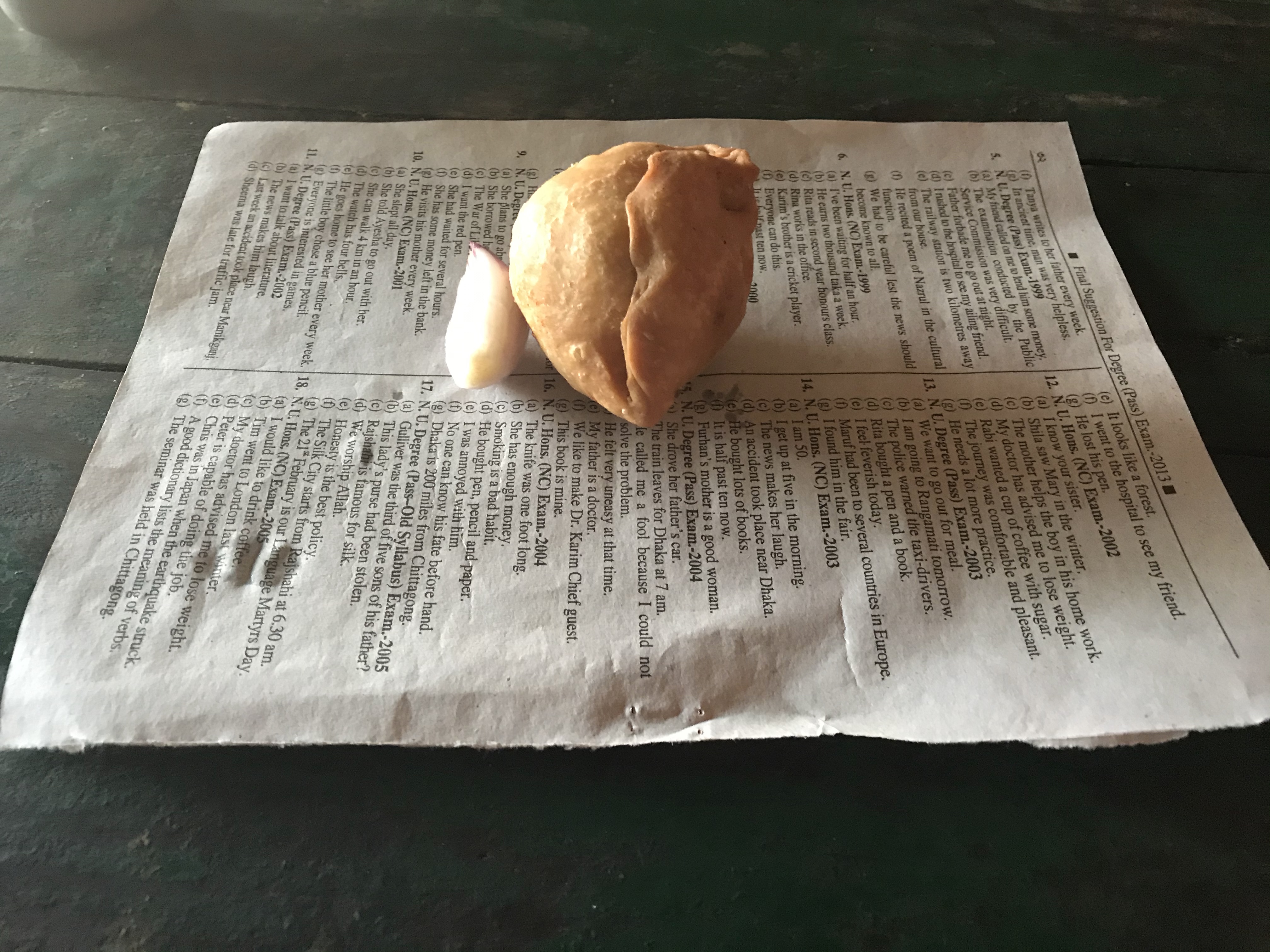
As you can see from this and some of the other photos, all the street food from stalls is served in paper, usually torn out from books. This one here is from a book with past degree exam questions for revising!
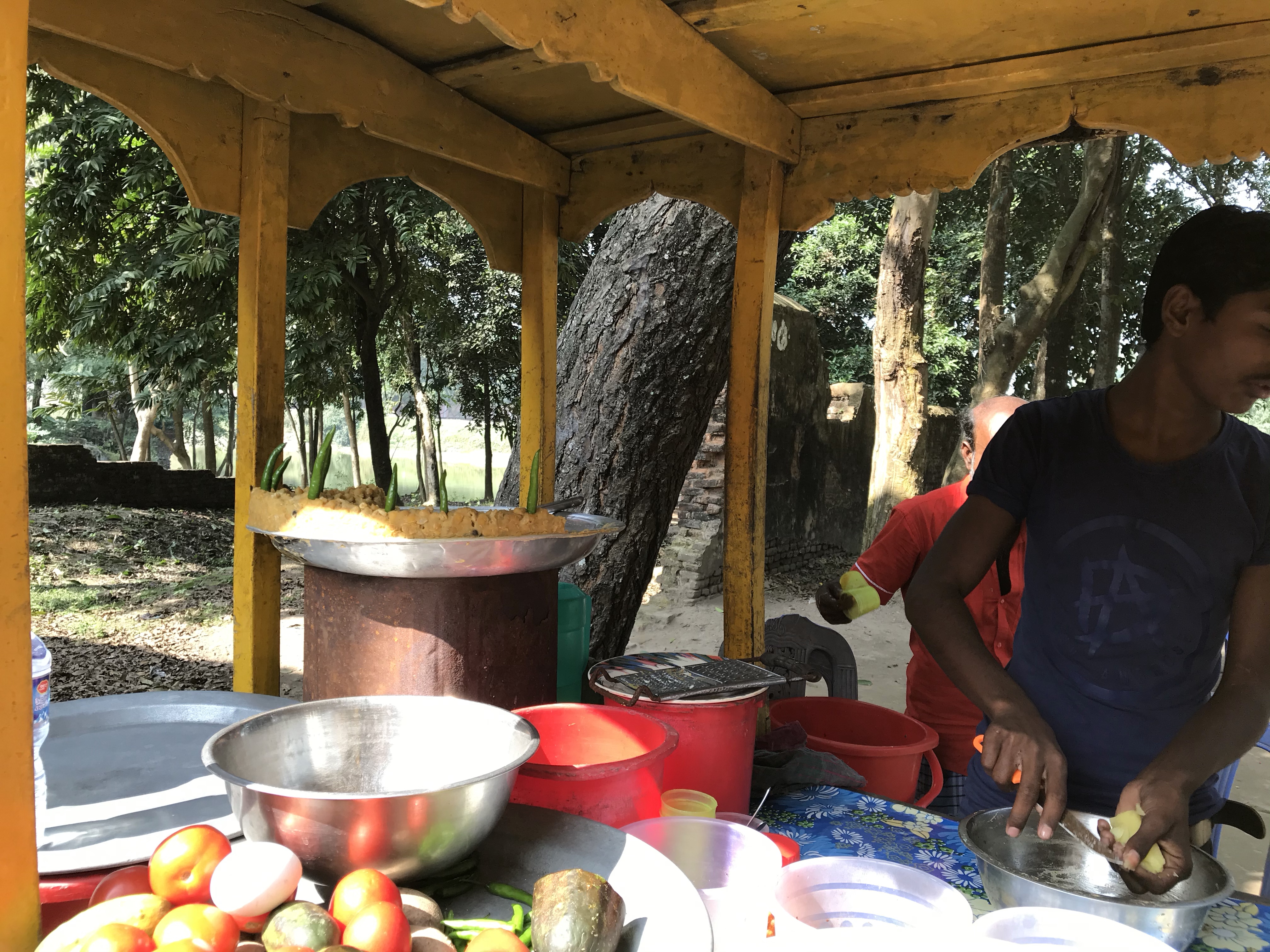
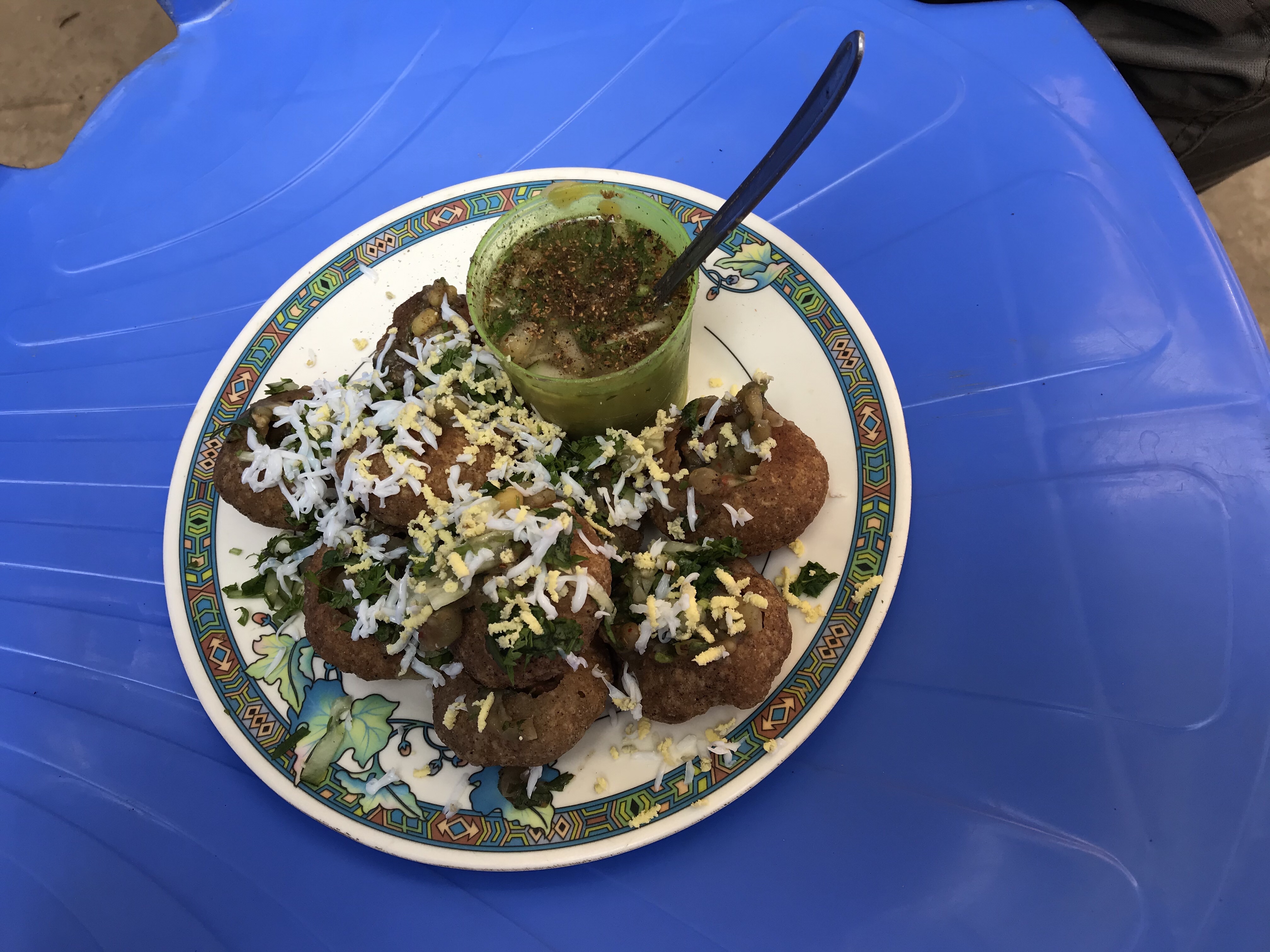
This was a quick lunch of fuchka chaatpoti. Actually who am I kidding, it was a leisurely lunch, watching father and son preparing the food and then eating it on the banks of the river near Panam.
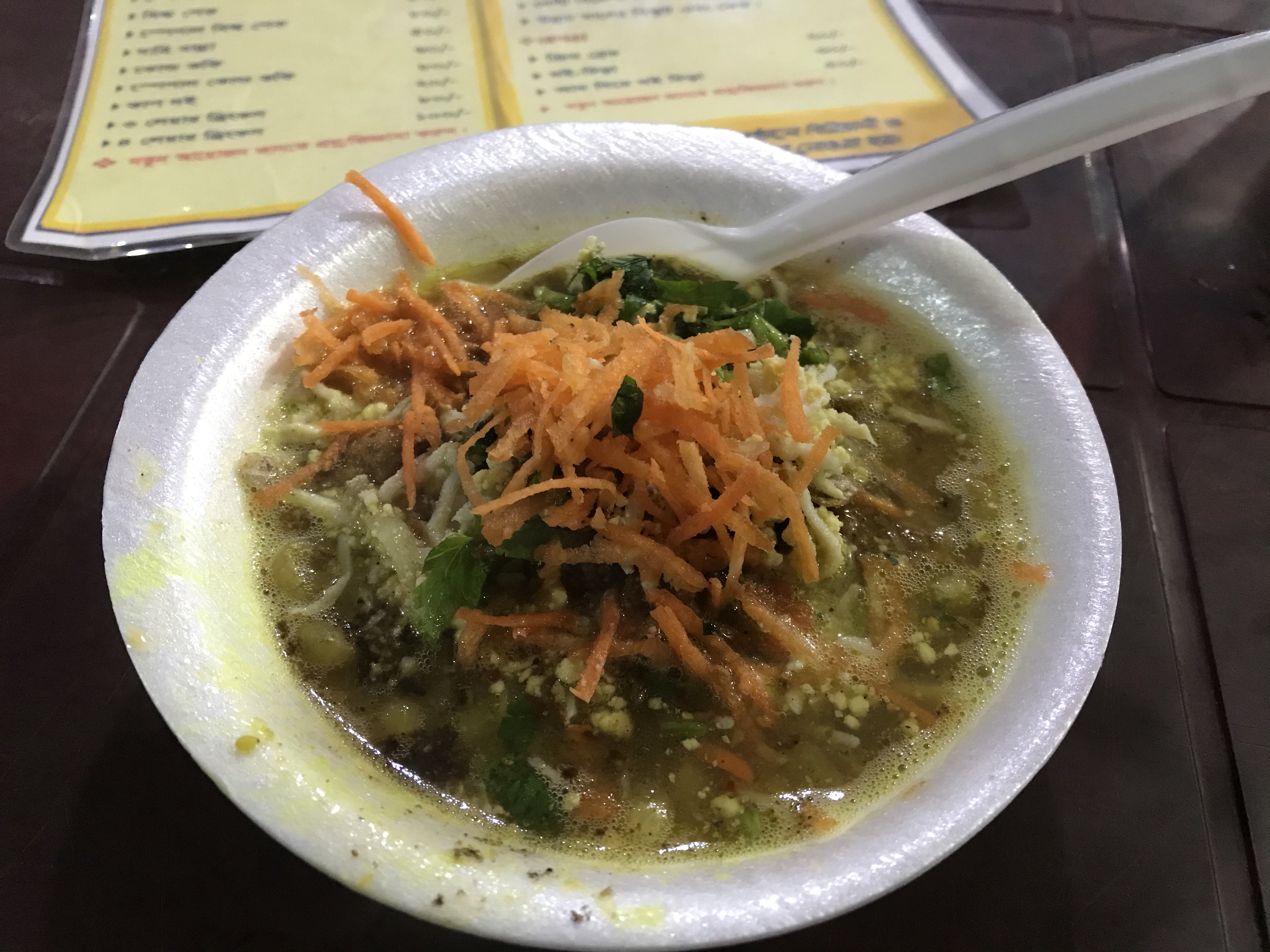
This here is the same dish as the one above, but in soup form with the fuchka on the side and crumbled in separately. It was also extremely hot 🌶 and I’m ashamed to say I had to pick my way around some of the chilies towards the bottom of the bowl 🥵!! Two bowls of this cost less than a Kit Kat.
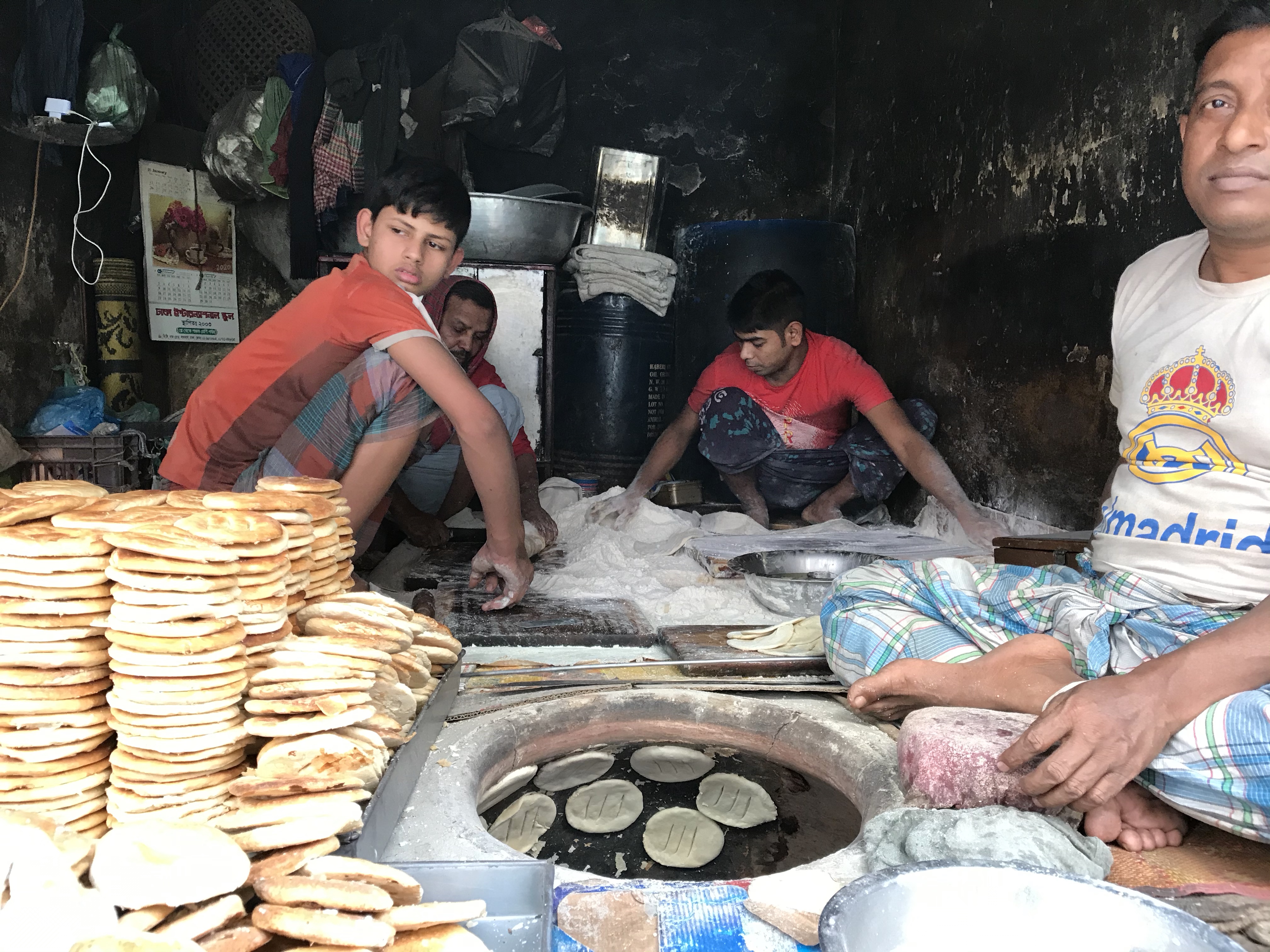
Freshly made bakal khani- it comes in sweet or salty and is a great on-the-go snack if you’re stuck in a rickshaw jam!

As you’ll probably expect, all desserts are unbelievably sweet!
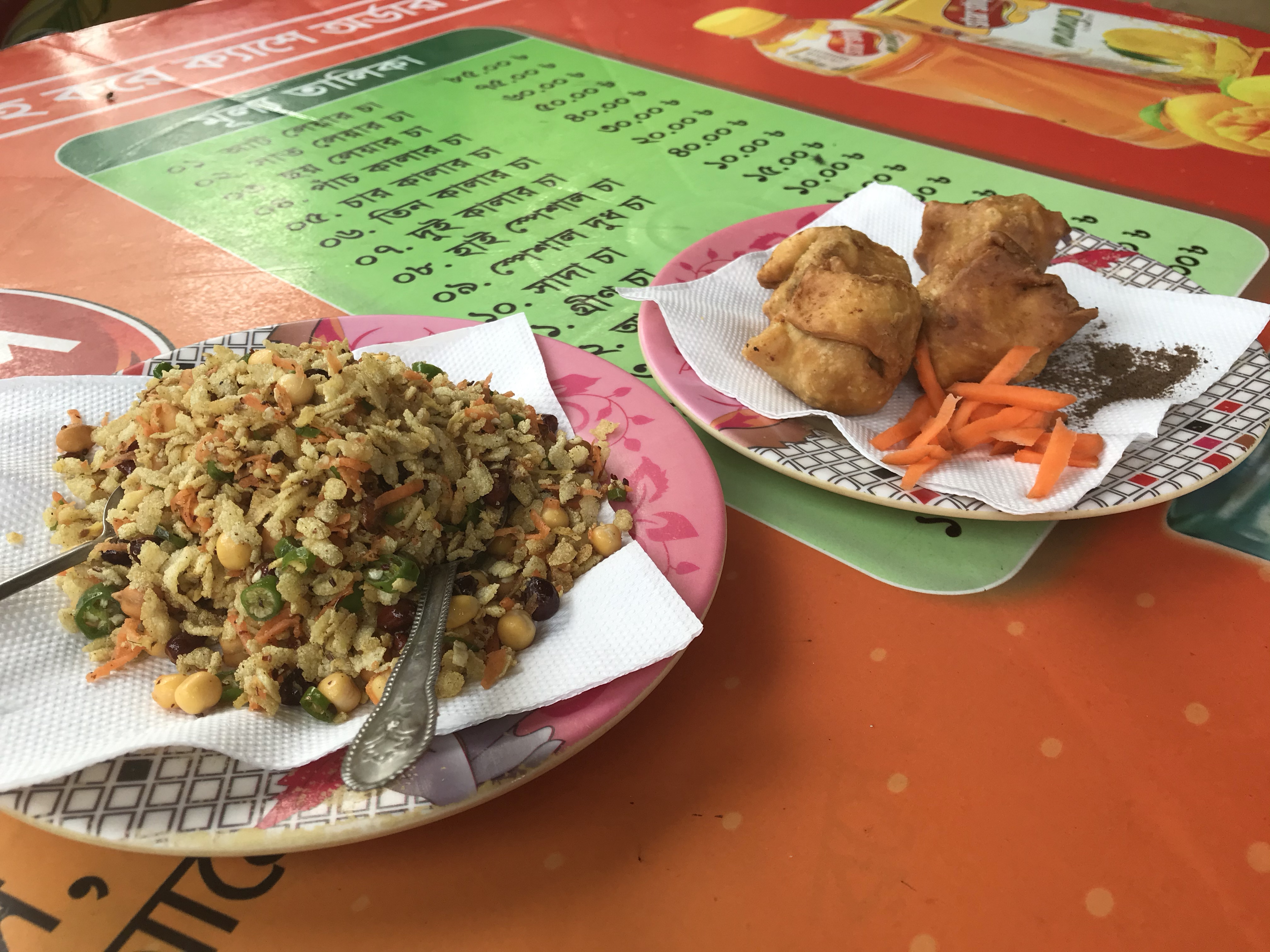
I think the one on the left is called chira bhaja, but honestly, I ate so much food that week, that I can’t really remember the name of everything!
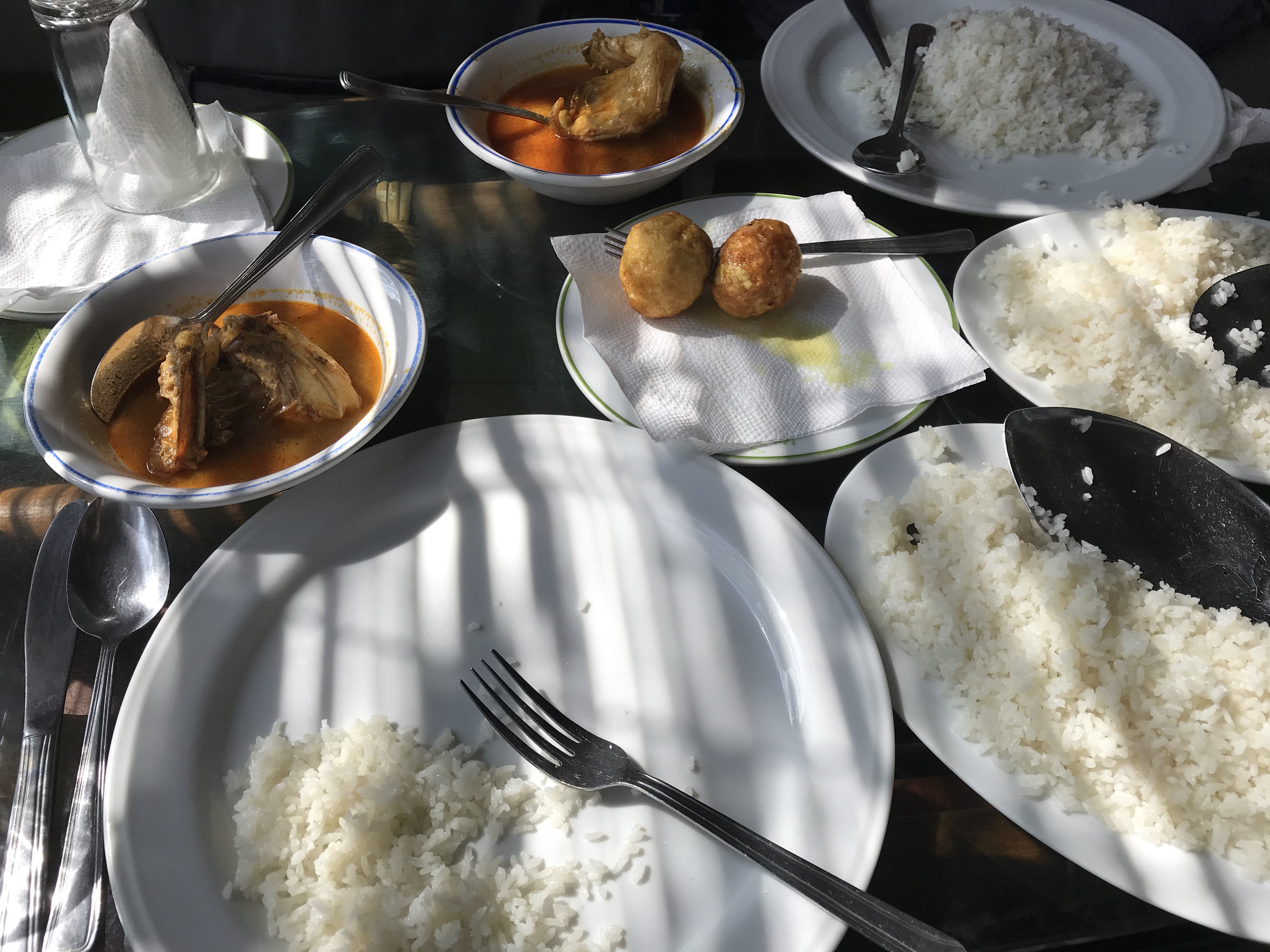
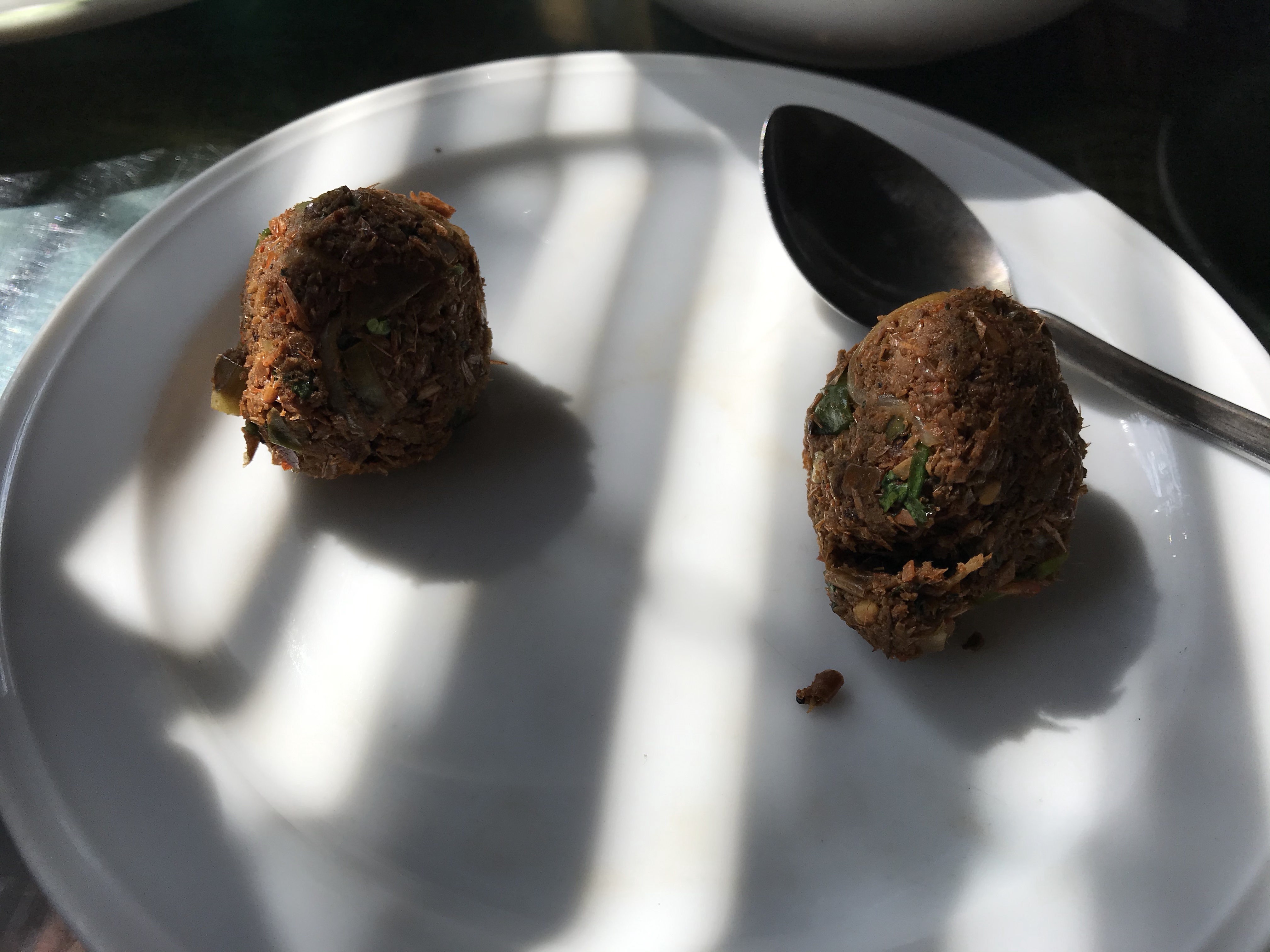
The two photos above show the sort of meal that Bangladeshi people would make if you came to their house – this is a really expensive type of rice run though with butter, plus deep fried eggs, and mashed shrimp balls in the bottom photo. The chicken in the top photo is called deshi chicken, which means it’s local chicken. And by local, they don’t just mean from Bangladesh, or even from the town you’re in; it’s local in the way that it was pecking around outside your back door about an hour ago….
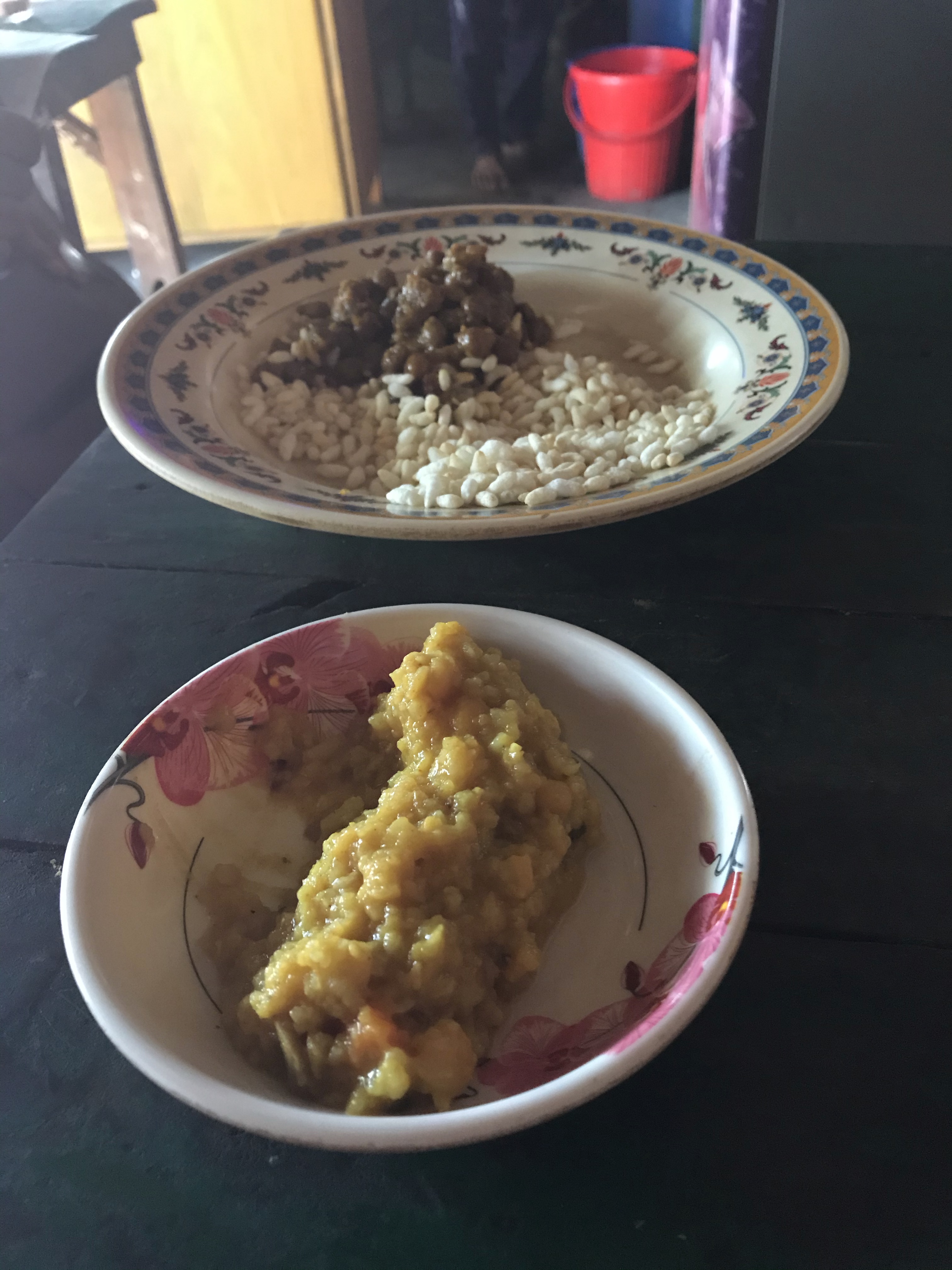
Both of these dishes were eaten in a small shack at the side of the road where men were stopping by for ‘fast food’ during the working day.
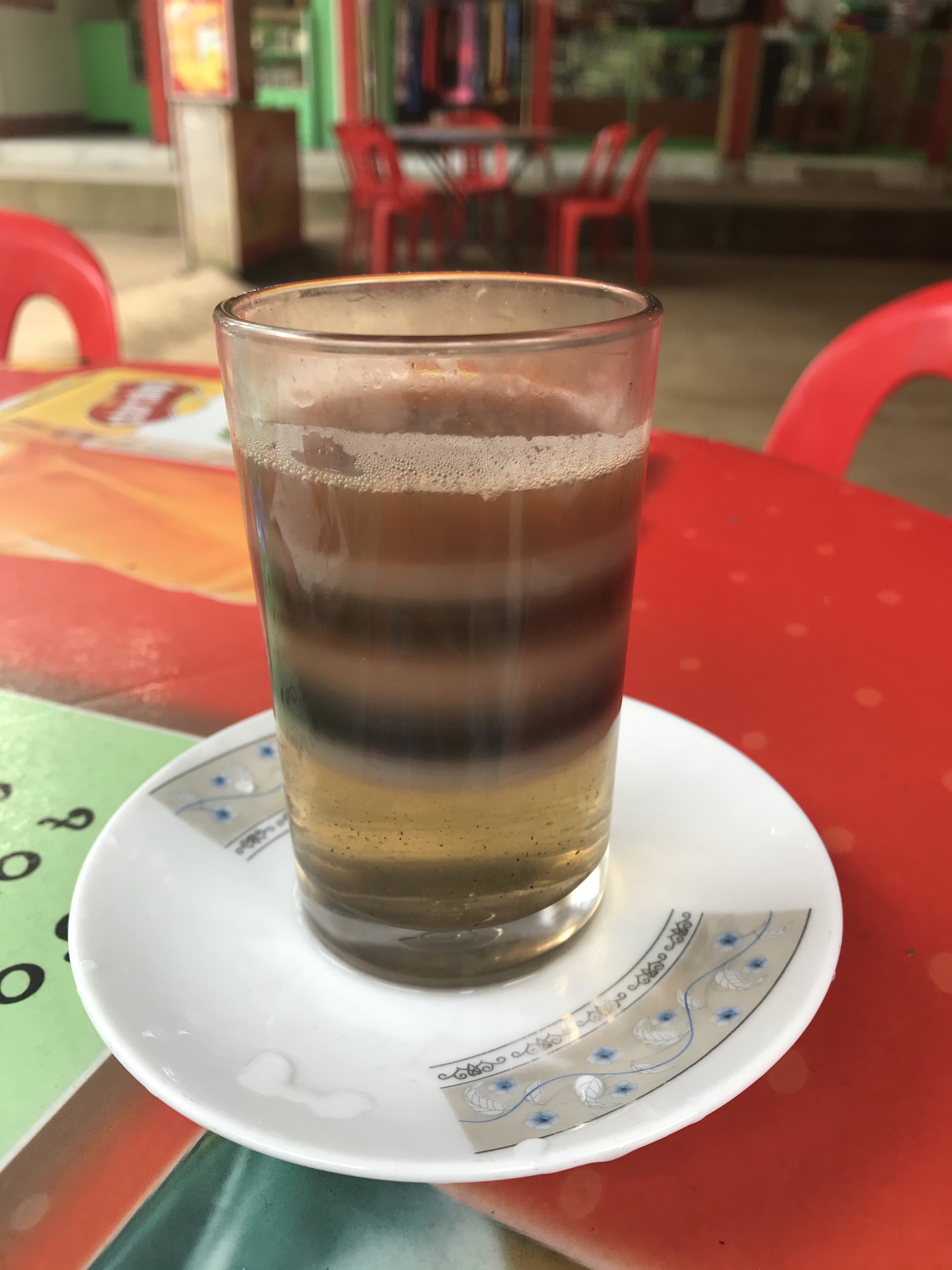
This is called Seven Layer Tea, created by Romesh Ram Gour, who realised that different teas have different densities and so make distinct layers when you pour them on top of one another with different spices, tea leaves, and milk. It’s only served in the Sylhet region, and I think from only one roadside stall, so it sort of has to be on your top do’ list. For the experience, not for the taste, you understand 🤫
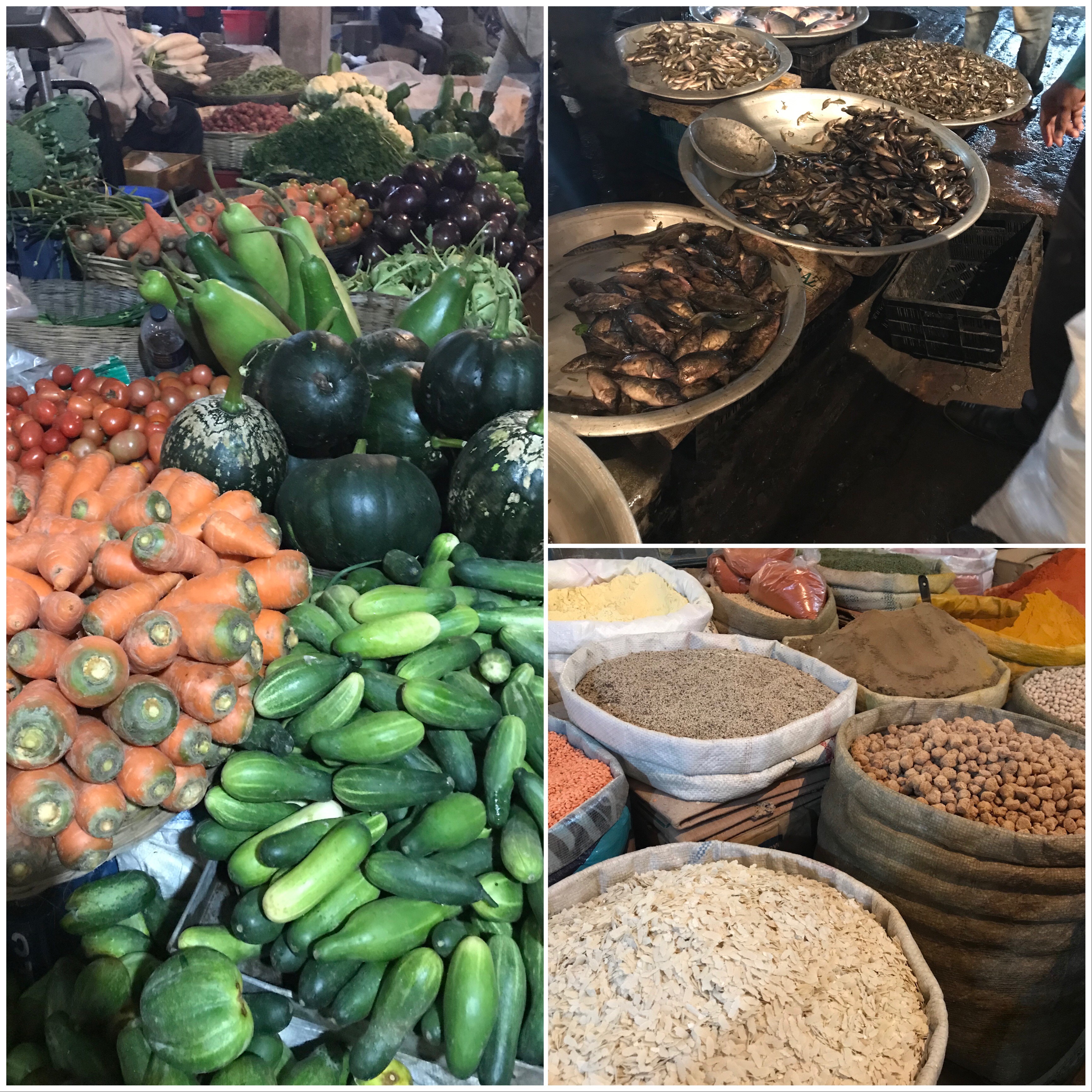
It’s not just the restaurants and stalls – even the food in the markets looks plentiful and tasty.
I was a bit concerned about having a guide for the whole time during my trip, but in the end I think it meant that I got to experience a lot that I might not otherwise have had the chance to do – including visiting the guides relatives and friends in their homes, both in Dhaka and in the countryside, eating a greater variety of foods, and having an interpreter on hand to talk to local people much more than I would on my own.
I enjoyed my holiday to Bangladesh so much, and I barely even touched it; there’s so much more in the Sundarans (where there are still Bengal tigers), in Chittagong, Cox’s Bazar with it’s world’s longest beach, the waterways, and the historical north west.
The World Economic Forum’s Travel & Tourism Competitiveness Report for 2019 lists Bangladesh as number 120 on a list of 140, but it’s moved up 5 places in the last two years! It’s not set up as a tourist destination – you’ll be hard-pressed to find anything to spend your money on that isn’t food – and the government doesn’t seem to do a very good job of advertising it.
But the people are so lovely and so delighted to see you, you’ll be made to feel like a rock star. So next time you’ve got a couple of weeks to spare, I simply can’t recommend Bangladesh highly enough 🥰🥰.


A nicely put up writing. I am glad that you had enjoyed here.
LikeLiked by 1 person
Thank you – I can’t wait to visit again ☺️
LikeLiked by 1 person