
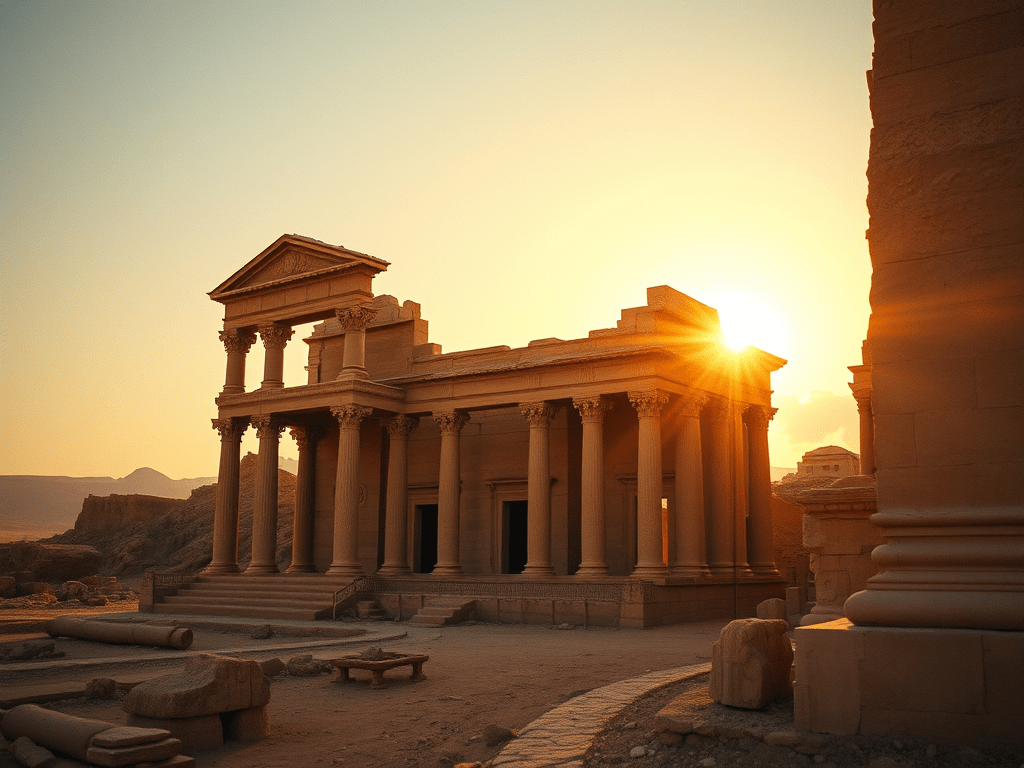
Iraq might just be the most unappreciated tourist destination in the world.
Sadly more famous these days as a zone of conflict, Iraq has a glorious past dating back thousands of years and should be better remembered as the cradle of civilisation. With its many UNESCO World Heritage Sites, holy cities and religious shrines, as well as constant reminders of its recent bloody past, I don’t even really know where to start telling you what an incredible experience it was to visit!
So first a quick word about food. I’m not quite sure what I was expecting, but the food in Iraq was amazing! Everything I ate was absolutely delicious; if you like Levantine food, you’re going to be well fed in Iraq 😋
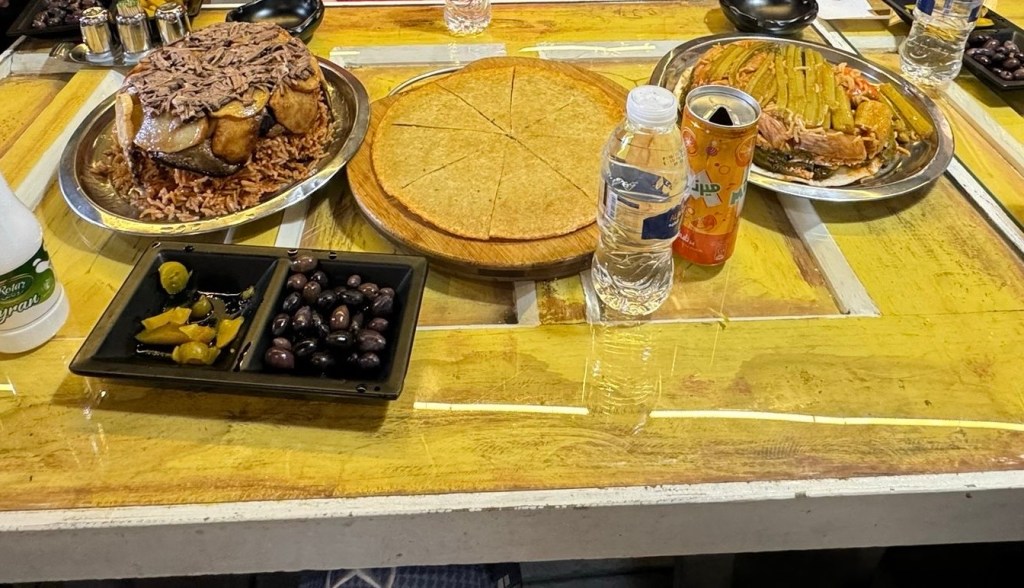
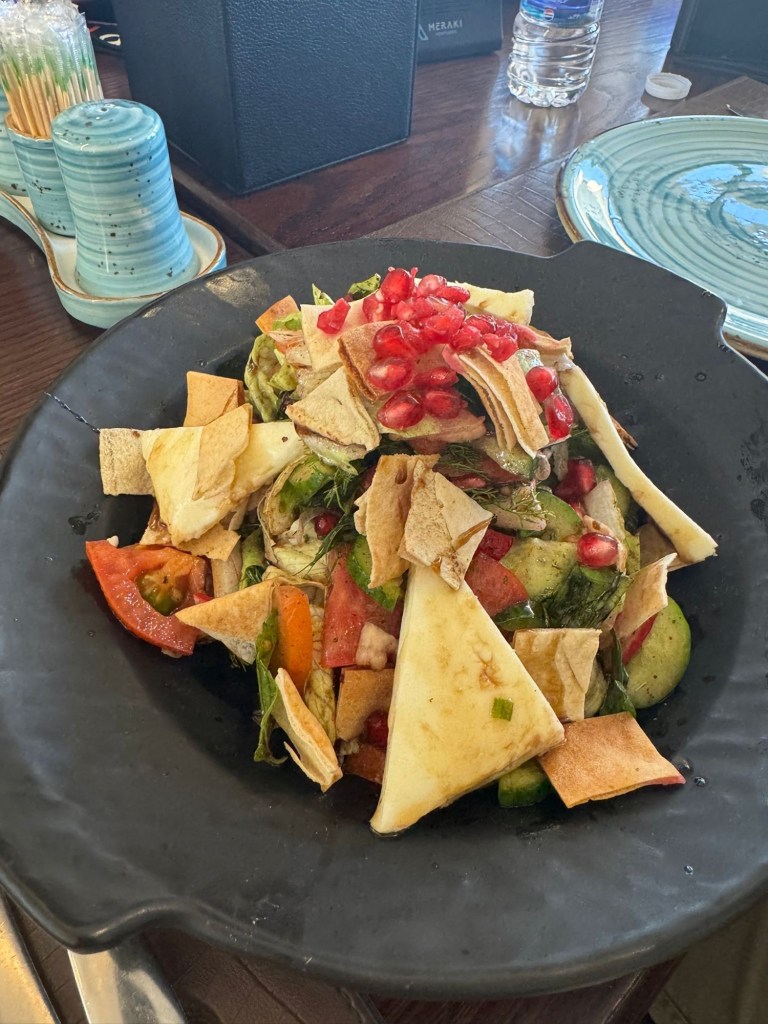
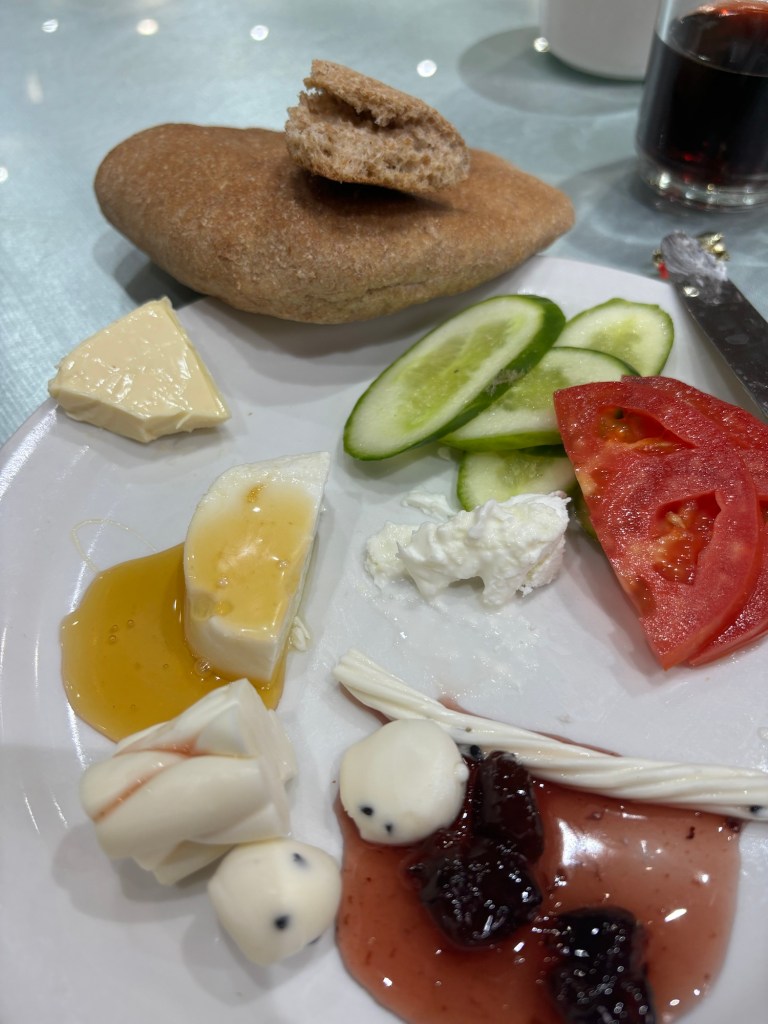
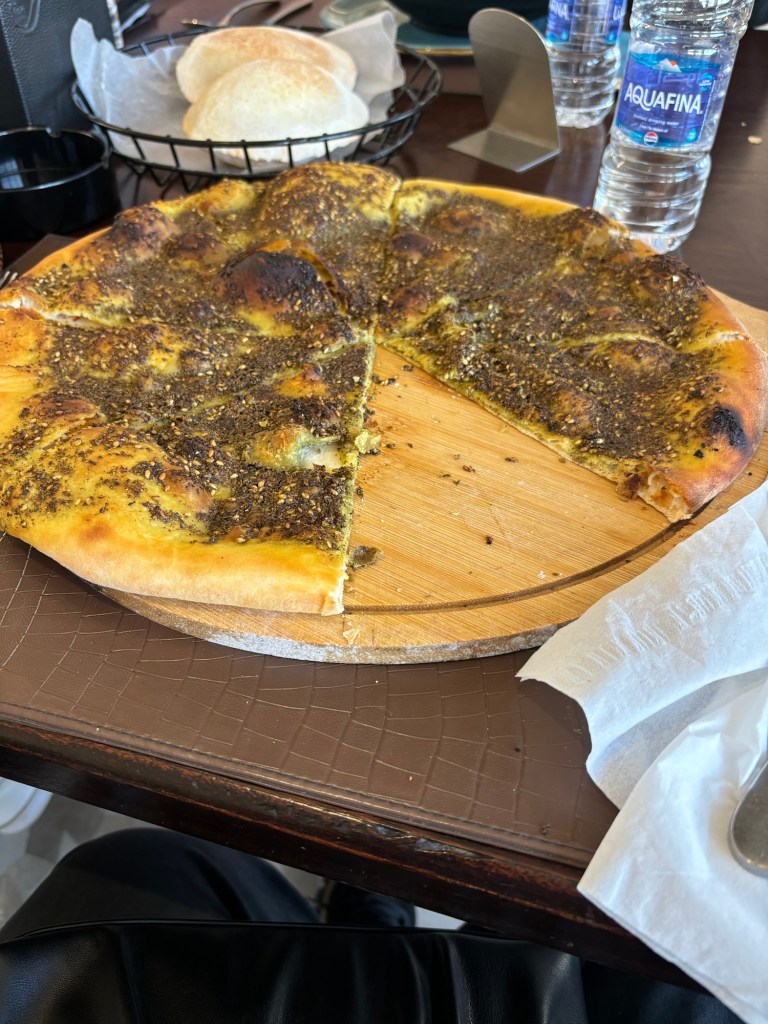

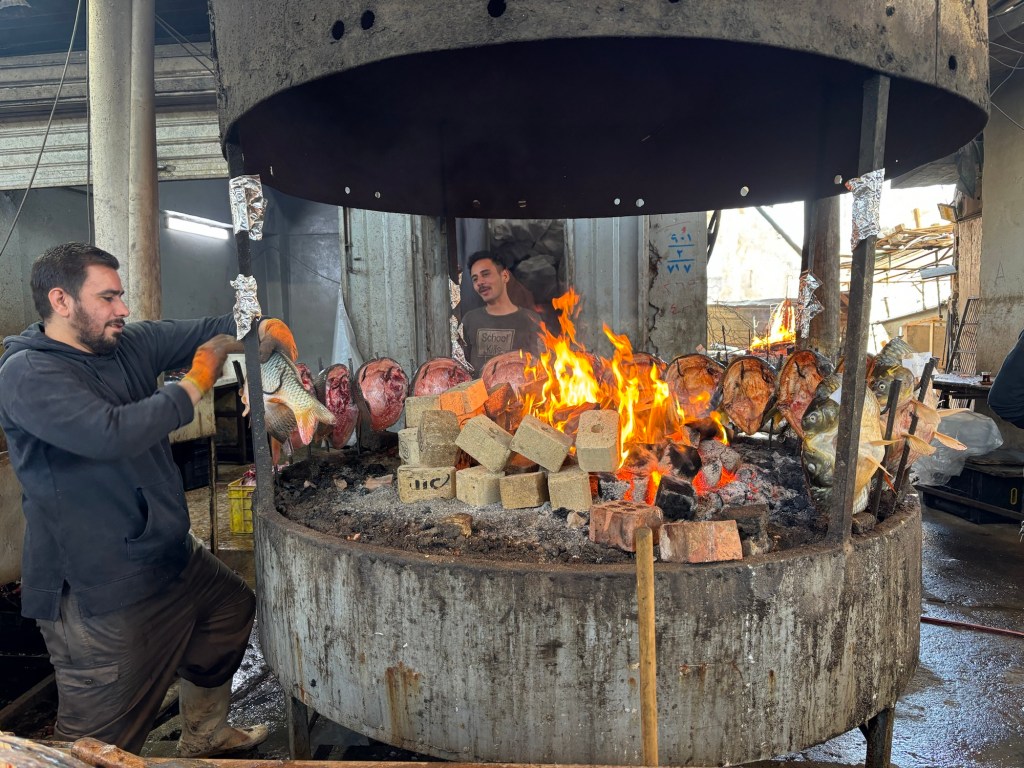
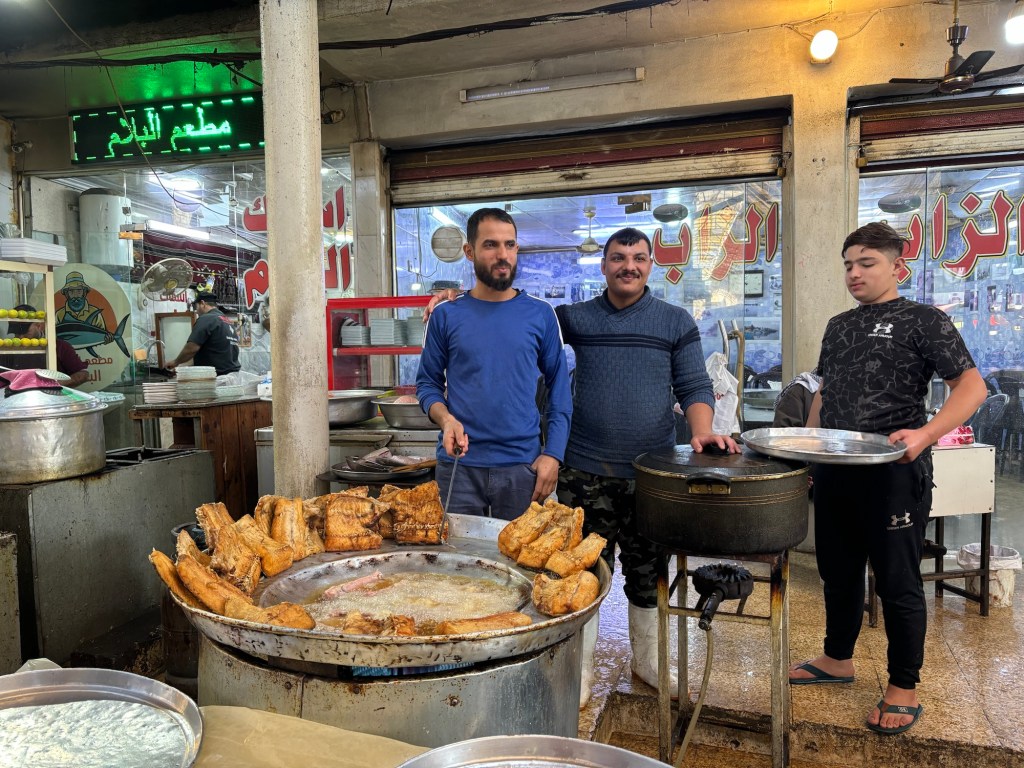
Masgouf is a way of cooking fish – a distinctive Iraqi technique that allows the flames and smoke to come from the side to smoke and cook the fish.
This is in the fish market in Mosul – you can see the fish cut in half and propped up flesh side towards the fire.
And then there’s fatayer, hummus, lentil soup, shawarma, muhammara, baklava, halva, and fabulous fresh bread with every meal. If I’d taken a photo of every delicious falafel sandwich I ate, we’d be here all day, so let’s move on and have a look at the places I visited, because this is already going to be quite a long post as it is 😉
Baghdad
The Iraq Museum in Baghdad was really good with art and artifacts from ancient Assyria, Babylon and Sumer, as well as both pre-Islamic and Islamic Arabian collections. But for every exceptional item on display, there’s a reminder of what’s not there. The museum was heavily looted during and after the 2003 invasion of Iraq and despite a huge effort, only a few stolen artifacts have been restored. And, in a familiar story, you’ll have to go to London, Berlin or Paris to see other important Assyrian pieces, as well as the temple wall of Wakra, the Ishtar Gate of Babylon and Hammurabi’s code.
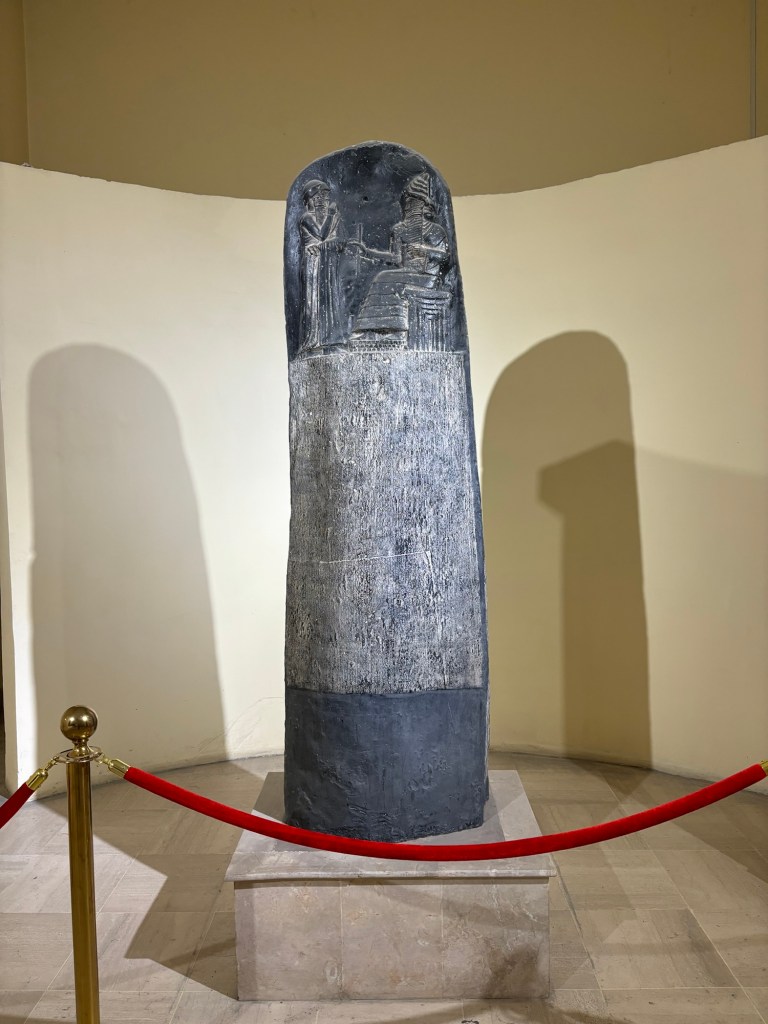
There is a copy of Hammurabi’s Code in the museum; the original dates to 1792-1750 BCE, and is considered the oldest inscribed law in the history of mankind. Ikr?!
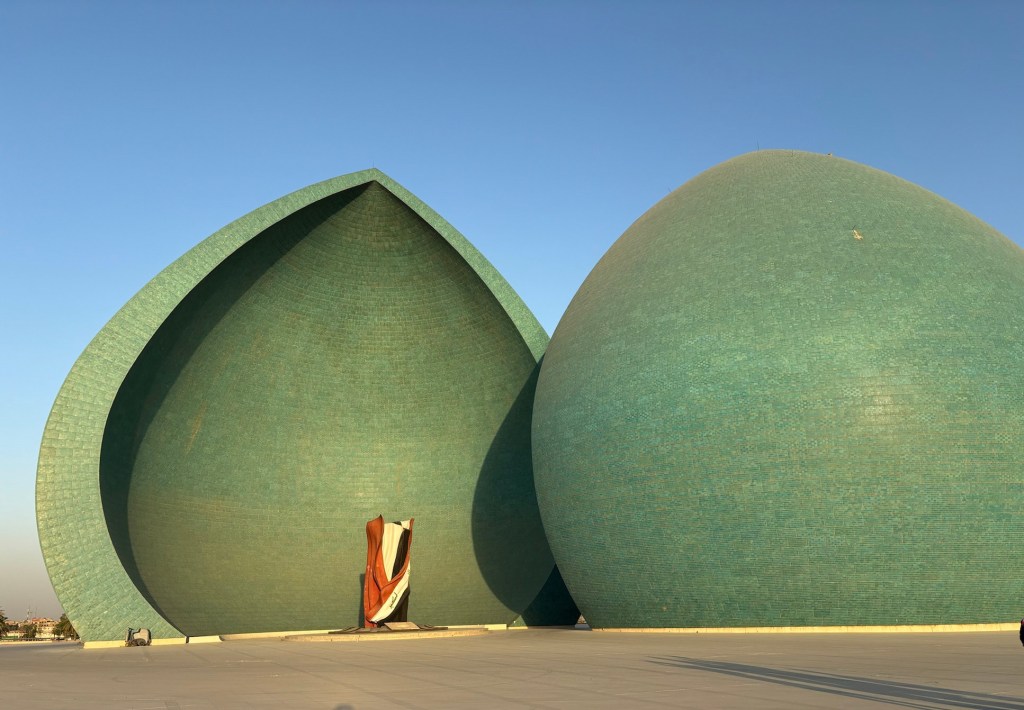
Baghdad was interesting enough, including the square where that statue of Saddam was famously toppled after the invasion of Iraq, and the Martyr’s Memorial, but personally I think all the really cool stuff is outside the capital.
Babylon
Babylon is about 85km outside Baghdad and I’m guessing everyone’s heard of it either because of the Hanging Gardens, Nebuchadnezzar or other bible stories, including the Tower of Babel. It’s the home of Hammurabi (of Code fame above), and is where Alexander the Great died. It’s a UNESCO World Heritage Site now and you can see how the new city was built on top of the old one. And when I say ‘new’, I mean 7th and 6th centuries BCE, and ‘old’ is 17th and 16th centuries BCE.

On the wall just above the left gate, you can see the reliefs on the bricks, which used to be painted like this section below in the Iraq museum. And it was originally like this all the way along on both sides of that walkway.
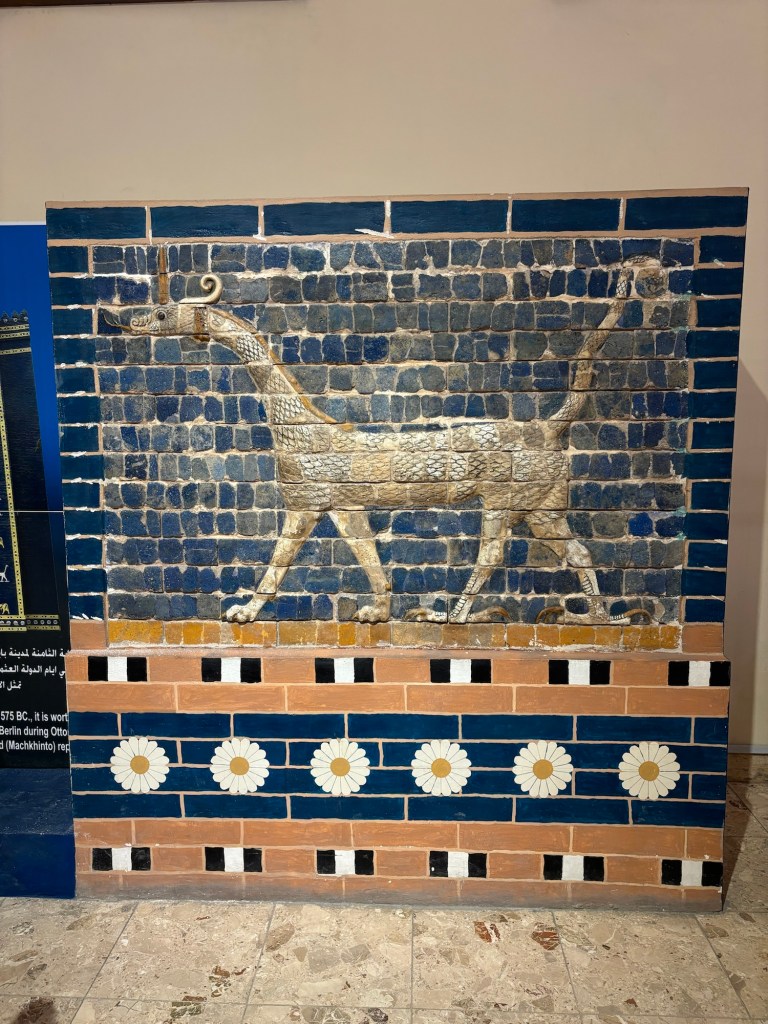
It must have looked incredible. But now much of what you see in Babylon is new construction and it can feel a bit Disneyland.
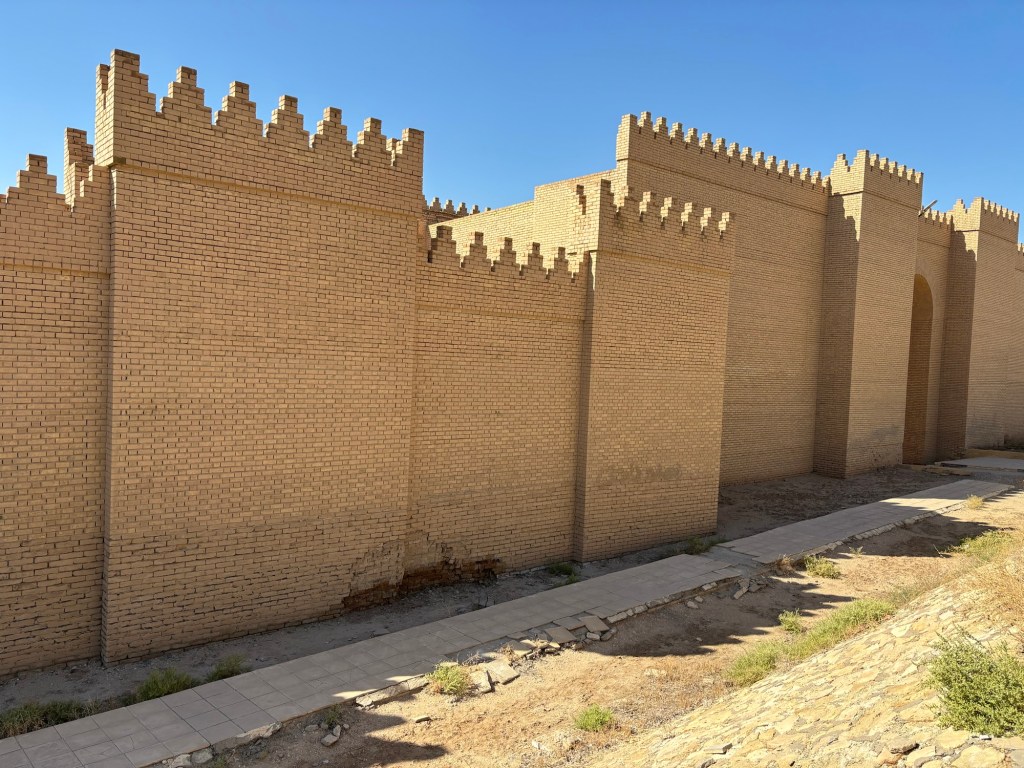
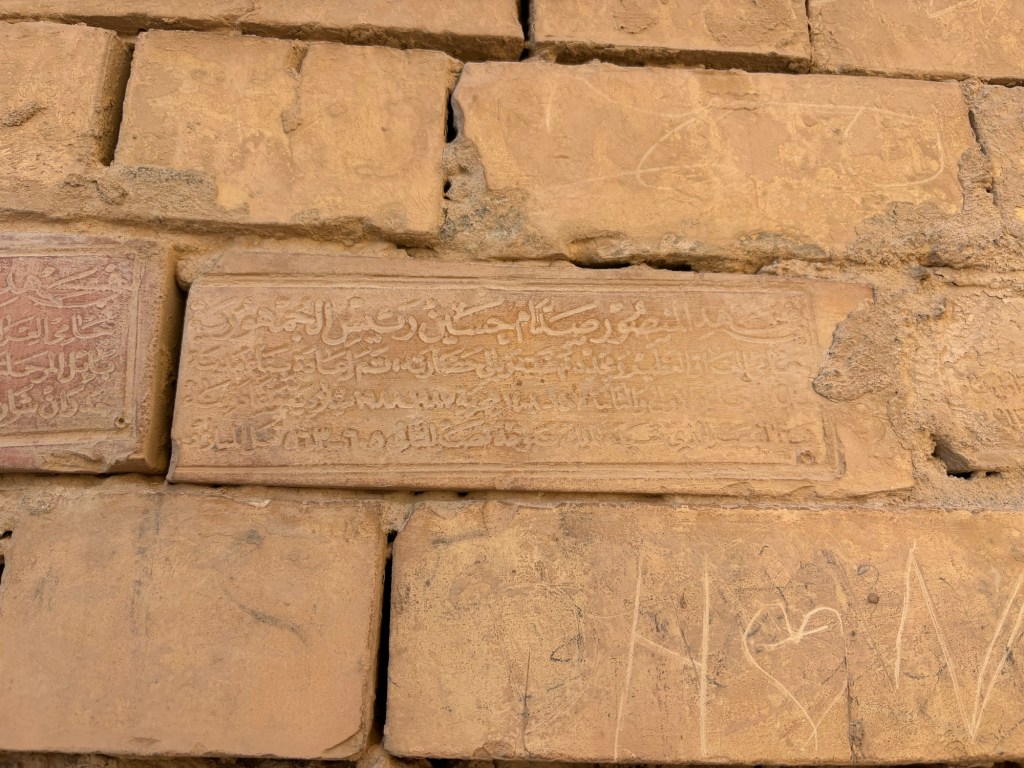
Saddam Hussein apparently considered himself a bit of a modern day Nebuchadnezzar, and spent millions reconstructing it. Nebuchadnezzar had stamped the bricks of ancient Babylon with his name and titles, and Saddam did the same. Ego much.
Saddam wanted a palace to overlook his and Nebuchadnezzar’s works, and when Saddam wants a palace on a hill, Saddam gets a palace on a hill – he basically levelled a village, built an artificial hill and had a palace constructed.
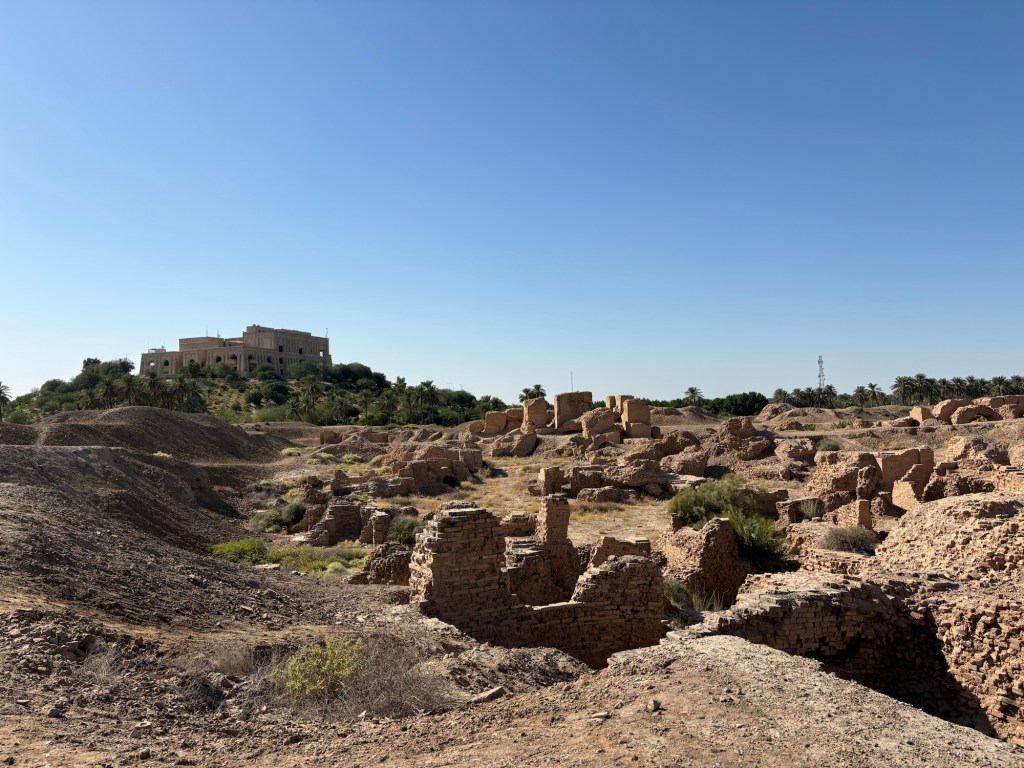
Saddam’s Palace is now closed to the public, but like many things, it’s still possible to get in as long as you’ve got someone with local connections and you don’t mind a bit of razor wire. Nothing like a spot of urban exploration on a Tuesday afternoon 😉.
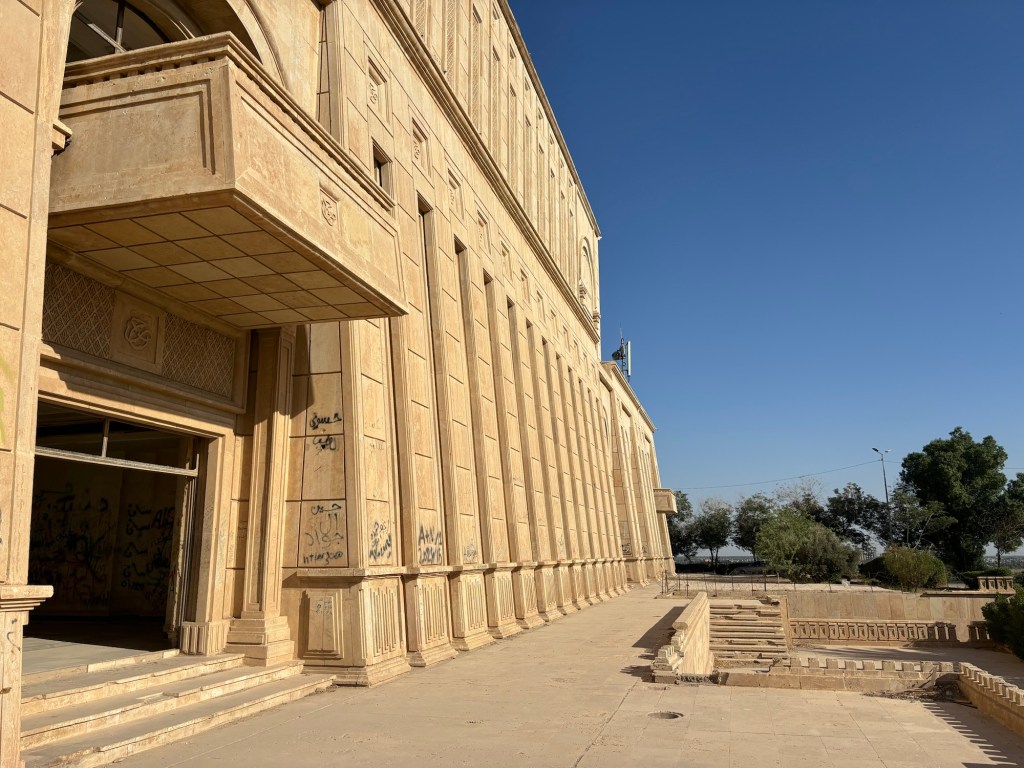
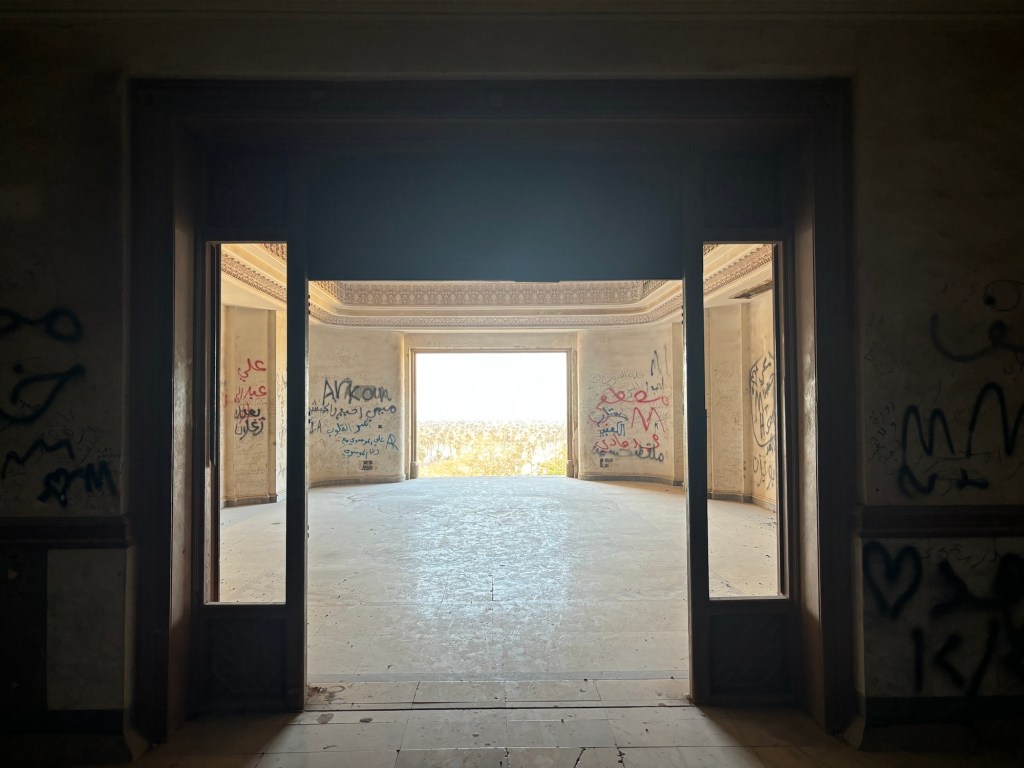

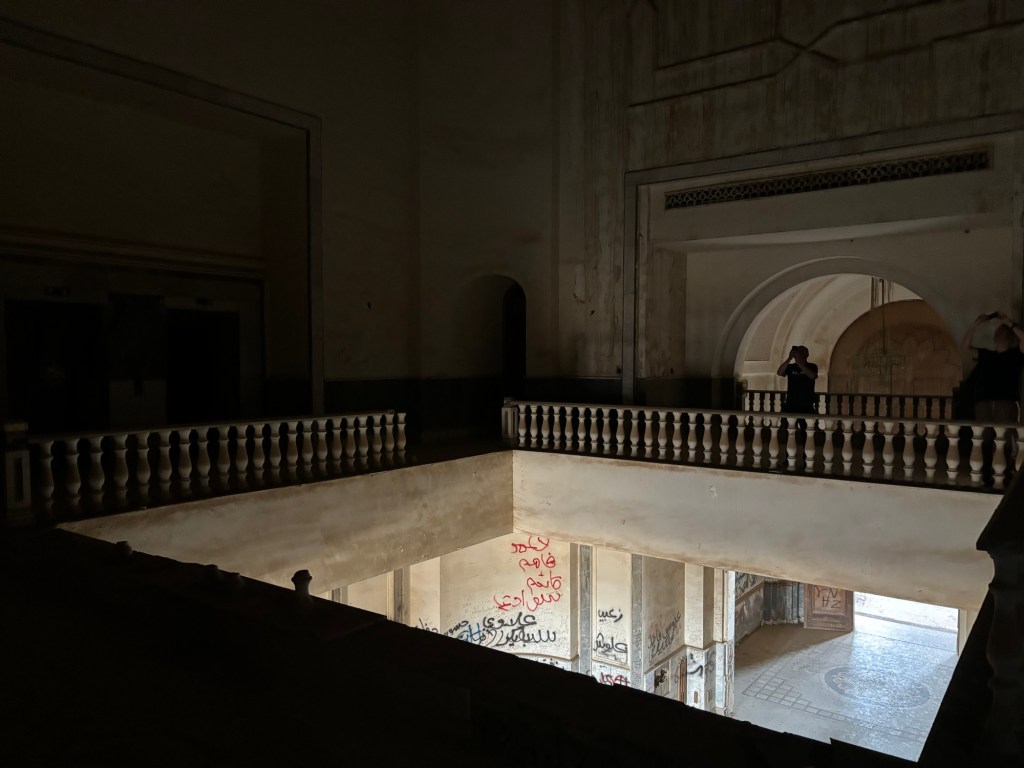
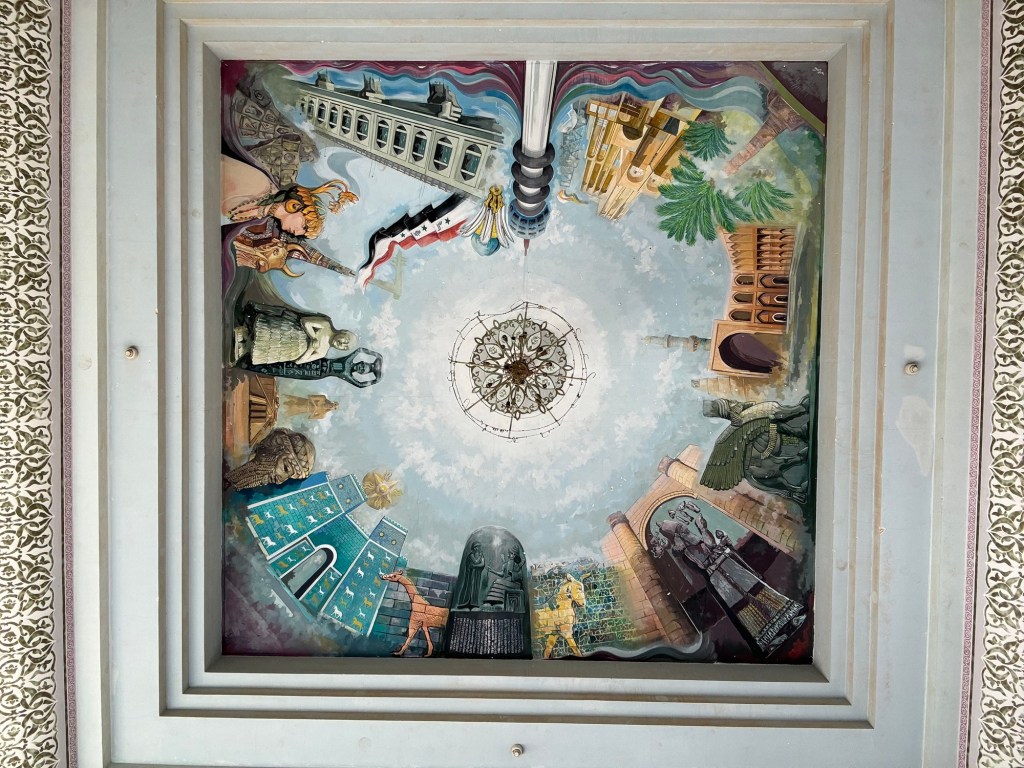

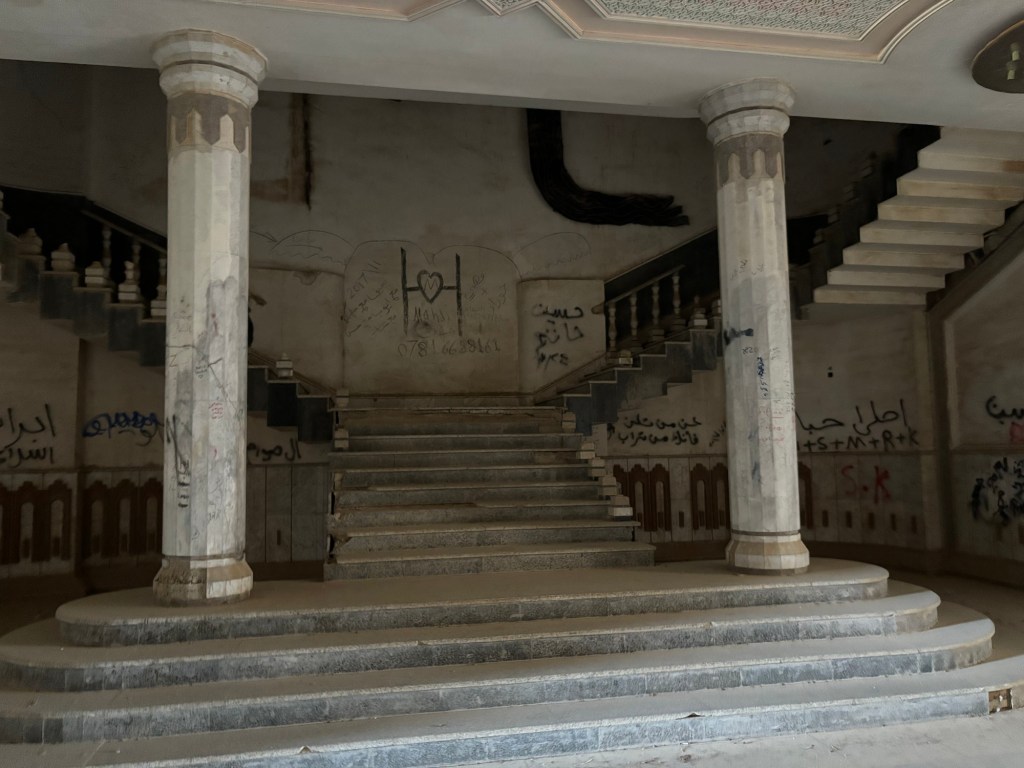
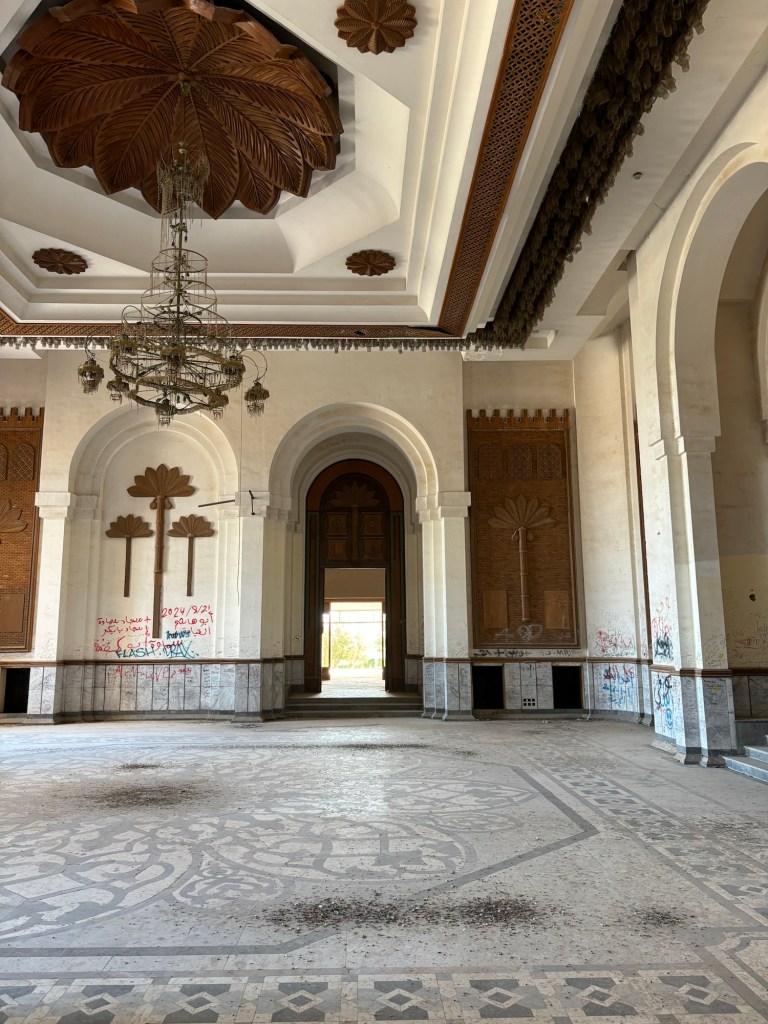
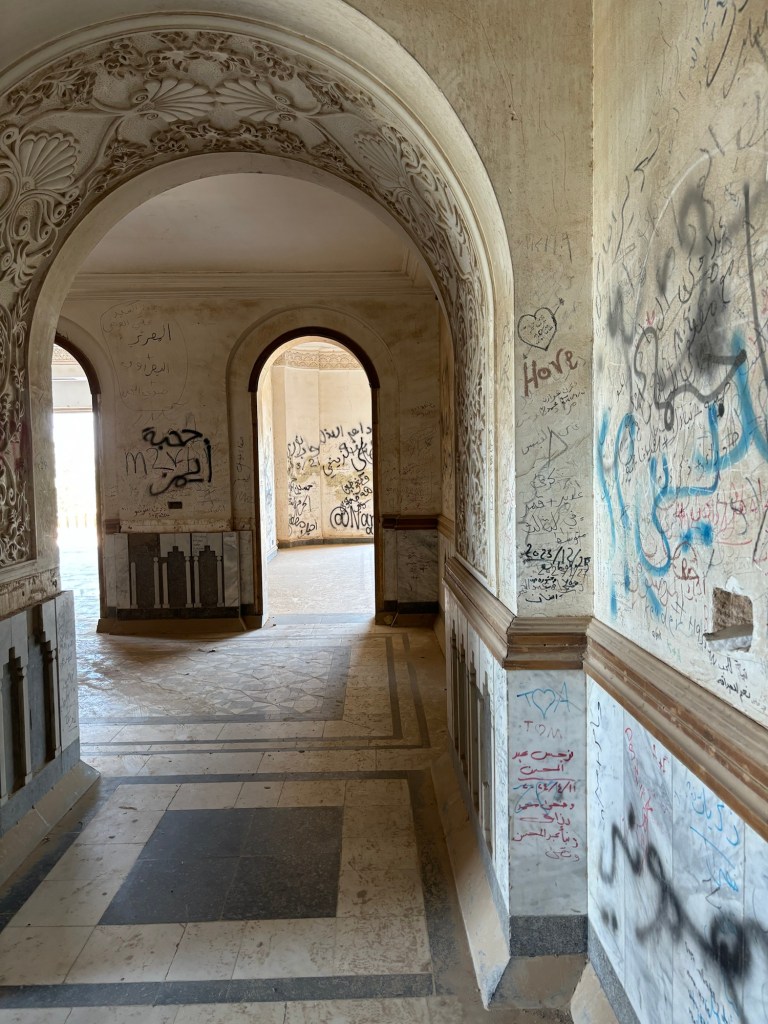
U.S. forces used this particular palace as a base after the invasion of Iraq in 2003, so a lot of the graffiti is by American soldiers. The mural is a ceiling mural surrounding the central light in one of the main rooms.
Karbala
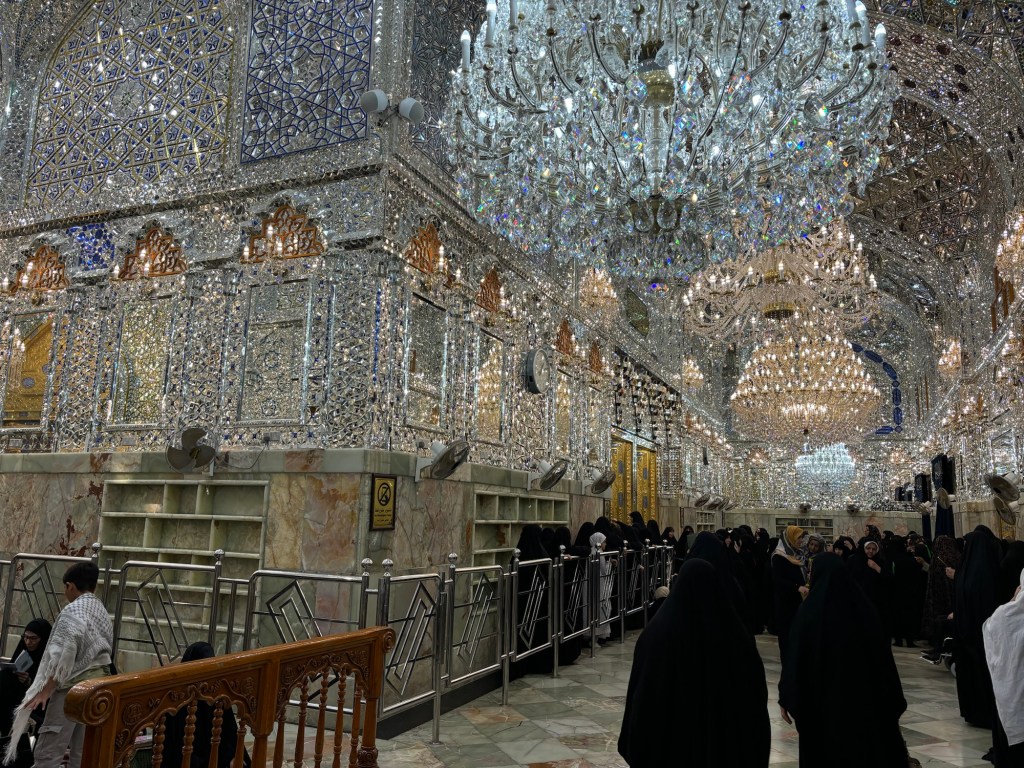
Next stop for me was Karbala, a holy city for Shia Muslims and site of the shrines of Husayn ibn Ali and his brother Abbas ibn Ali, buried here after the Battle of Karbala in 680 CE. Iraq generally has a lot of religious tourism, and Karbala particularly is visited annually by millions of pilgrims.

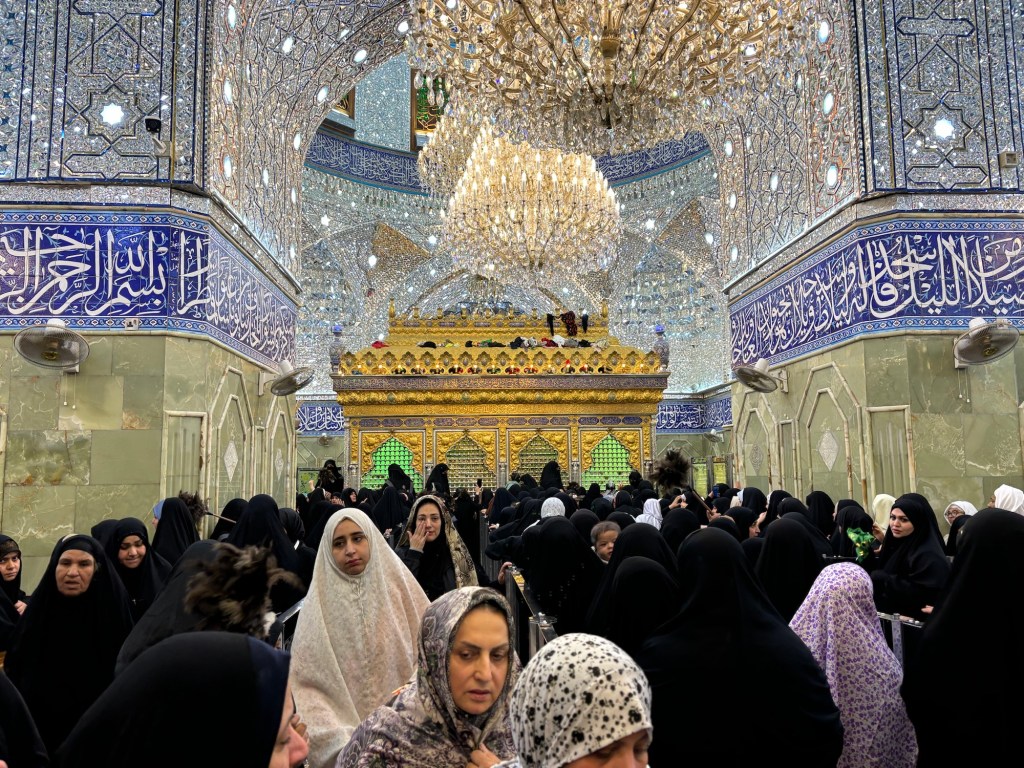
If you look carefully in the photo of Abbas’s shrine, you can see several women with feather dusters, which fabulously are used to gently encourage you to move forward or move aside. Or stop taking photos 😬.
Najaf
Still in the south of Iraq, Najaf is another holy city for Shia Muslims and the site of the largest cemetery in the world, Wasi-us-Salaam, the last resting place of more than 6 million people. Because Najaf is the location of the shrine of Ali ibn Abi Talib, the first Shia Imam, Shi’ite Muslims from all over the world request to be buried here.
Also apparently buried in Najaf are Noah and Adam (yes that Adam), but it’s Ali’s shrine that’s the popular destination for pilgrims. And also for non-pilgrim tourists, but there were far far fewer of us – I think we only saw one or two other western tour groups across the whole country during our trip.
Mesopotamian Marshes
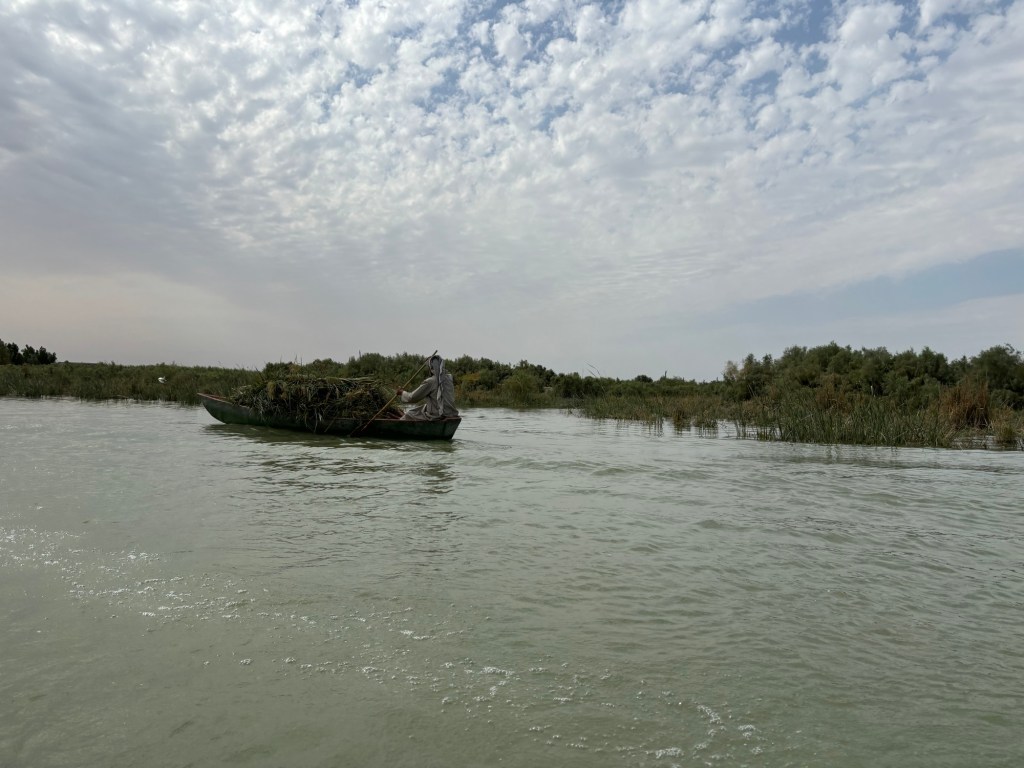
The Mesopotamian Marshes in southern Iraq are a UNESCO World Heritage Site. These floodplains are where the Euphrates and the Tigris come together and this area is thought by some to be the biblical Garden of Eden.
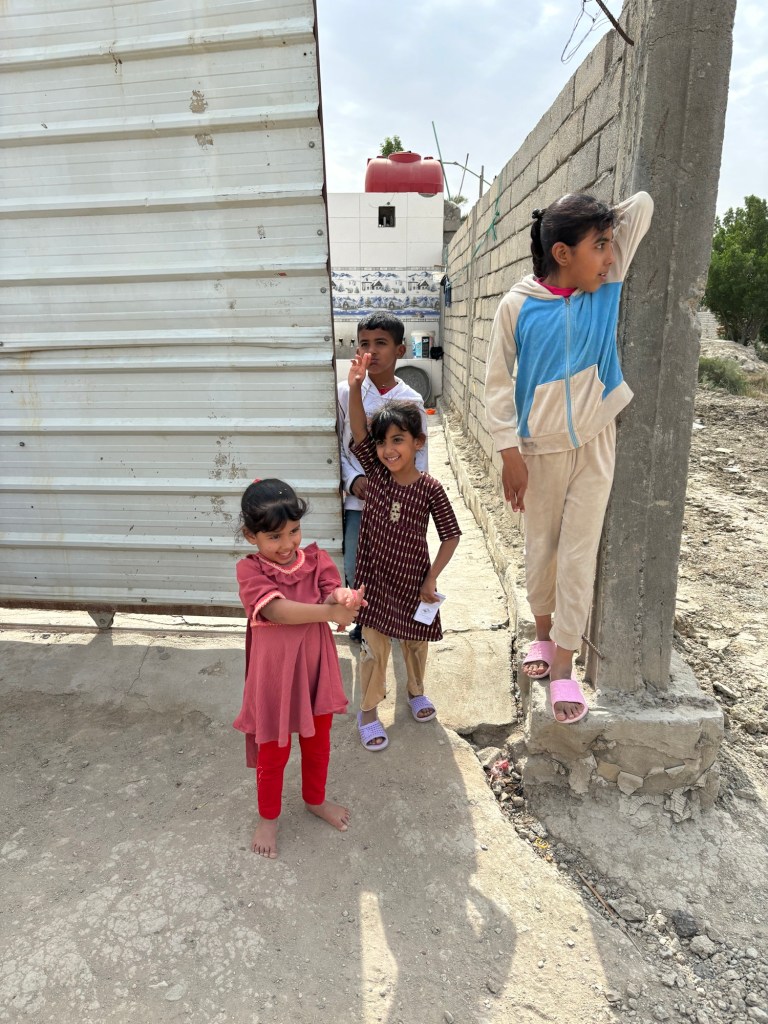
This has been the traditional homeland of the Marsh Arabs dating back 5,000 years and here there was a rich biodiversity. But in the early 1990s after a failed uprising, Saddam actively diverted water away from the marshes and burnt down villages, deliberately displacing the Marsh Arabs to other areas of Iraq and to refugee camps in Iran. From an estimated population of half a million in the 1950s, there were fewer than 20,000 by the turn of the century, according the UN.

After Saddam’s overthrow, water was diverted back, but sadly with damming further up the rivers and climate change continuing to disrupt the ecosystem, it’s doubtful whether the marshes will ever properly recover.
Ur
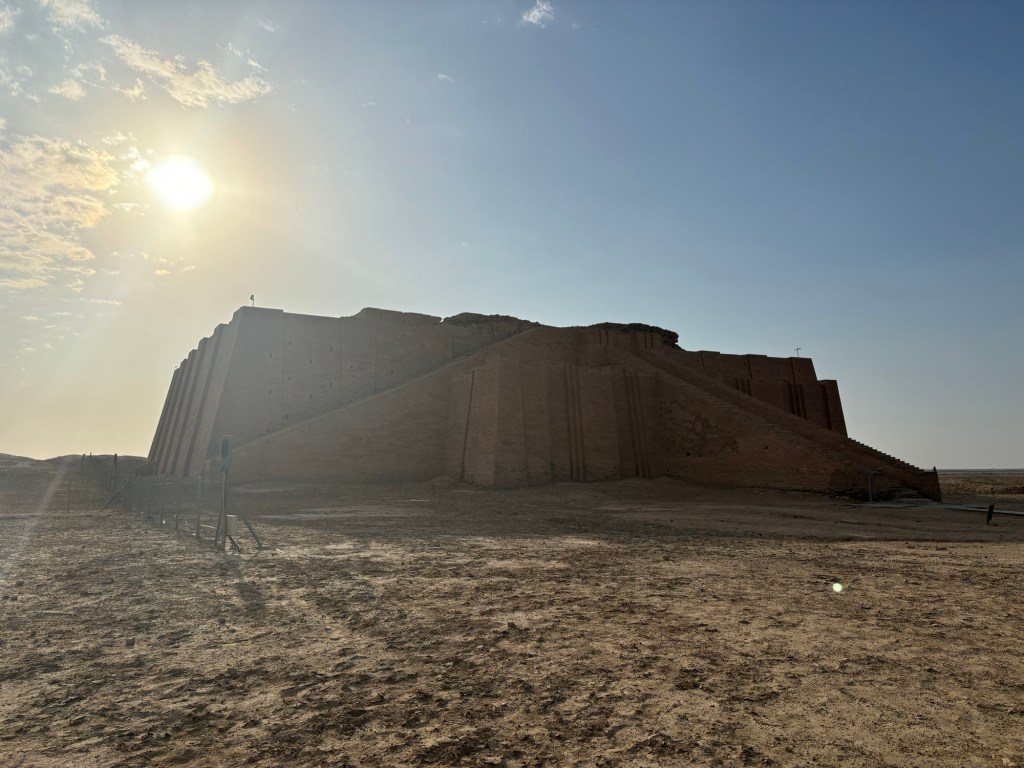
The Great Ziggurat of Ur (fantastic name) was built in the Early Bronze Age – that’s around the 21st century BCE! Even to the Neo- Babylonians in the 6th century BCE, this was properly old, and the ruins were restored by them. After the fall of Babylon, the ziggurat fell again into ruin until it was once more rediscovered in the 1850s.
Saddam then added to the restoration in the 1980s, so it’s really hard to know what it might have looked like originally. You also can’t climb up it any more, but nonetheless it’s an amazing structure and quite a sight to behold.
Nearby is also the archeological site of the Royal Cemetery, which contains thousands of graves – some are simple individual graves, some communal, and some identified as royal due to the large wealth buried within them. Burials here have been found to date back as far as 2900-2600 BCE, even earlier than the construction of the ziggurat itself.
Samarra
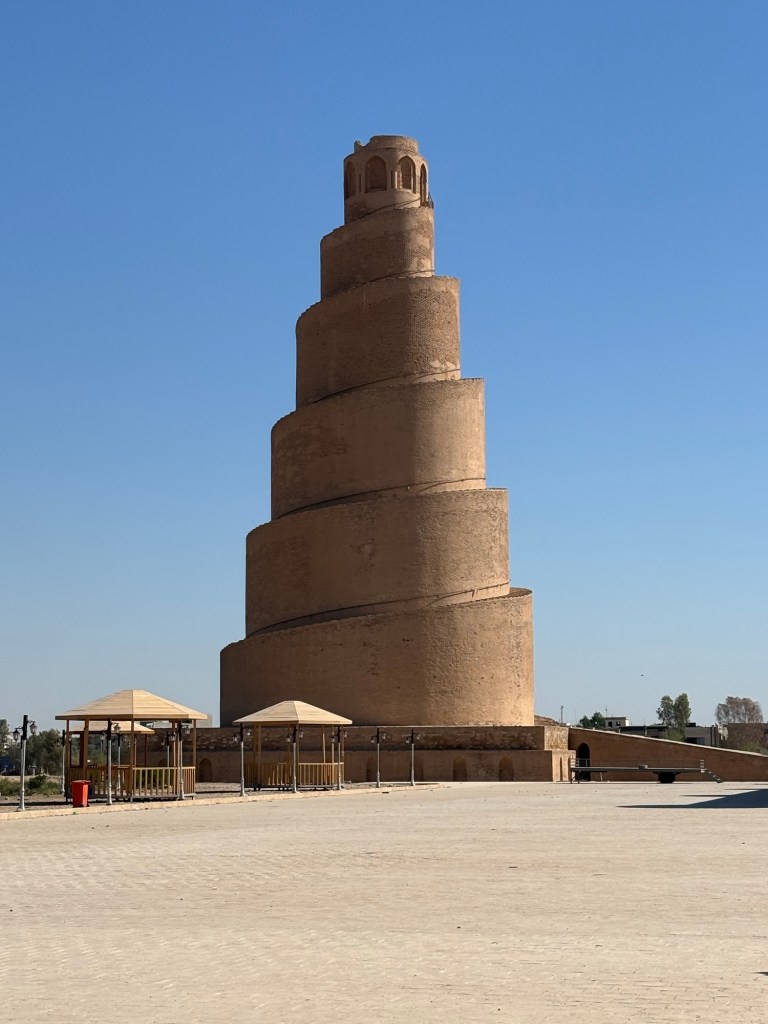
From there we drove north to Samarra to visit the remains of the Great Mosque of Samarra. It was built between 848 and 851 BCE and at the time of construction was the largest mosque in the world, It’s known for its 52 metre high minaret encircled by a spiral ramp. You used to be able to climb up to the top, but you can’t anymore. Oh well, ever mind; it didn’t look scary at all! You’ll note the handrail is on the inside of the ramp 😐
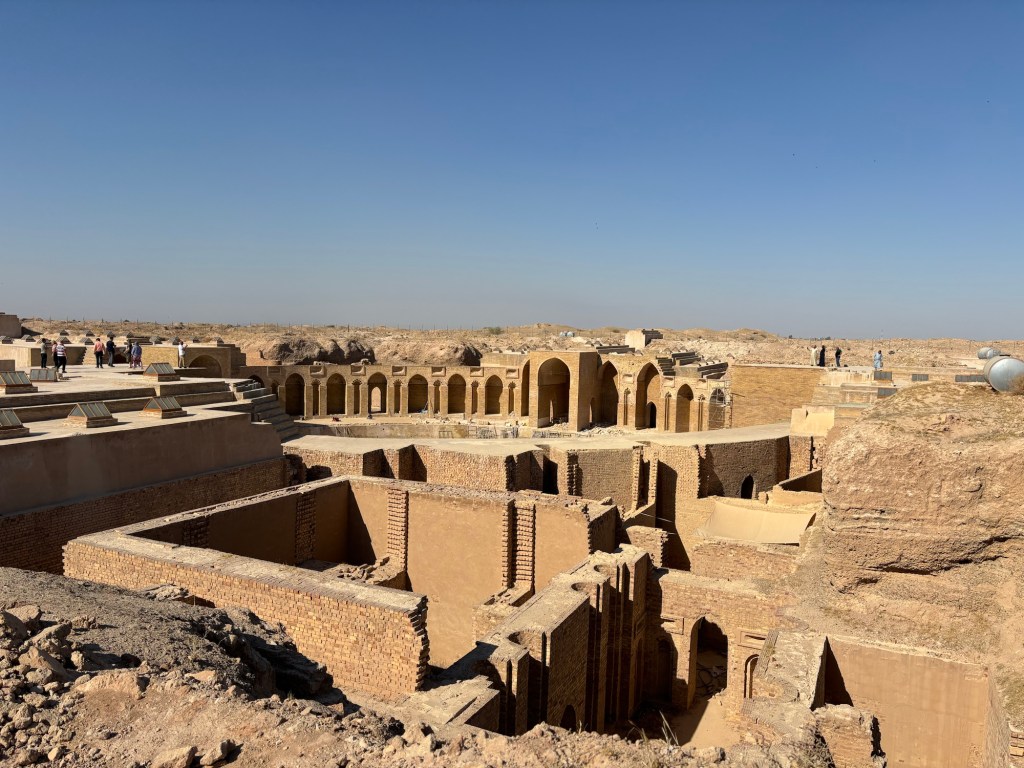
More local connections and razor wire later, we also popped in to see the site of the Palace of the Caliph in Samarra, dating from the same period, but partially reconstructed.
Hatra
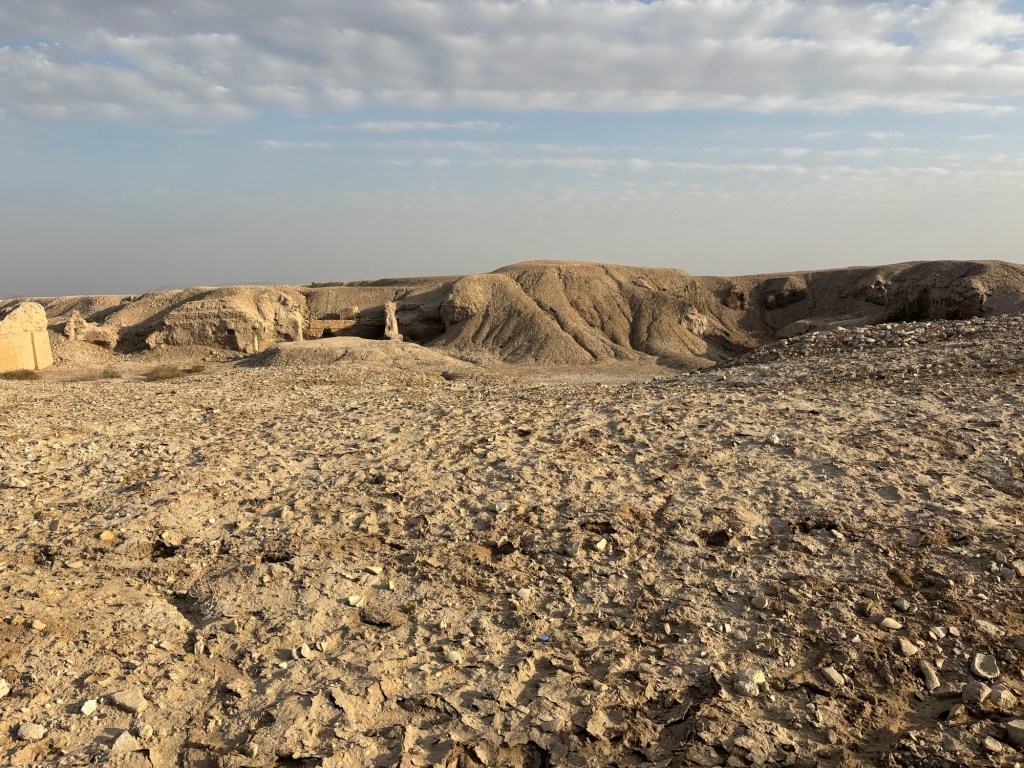
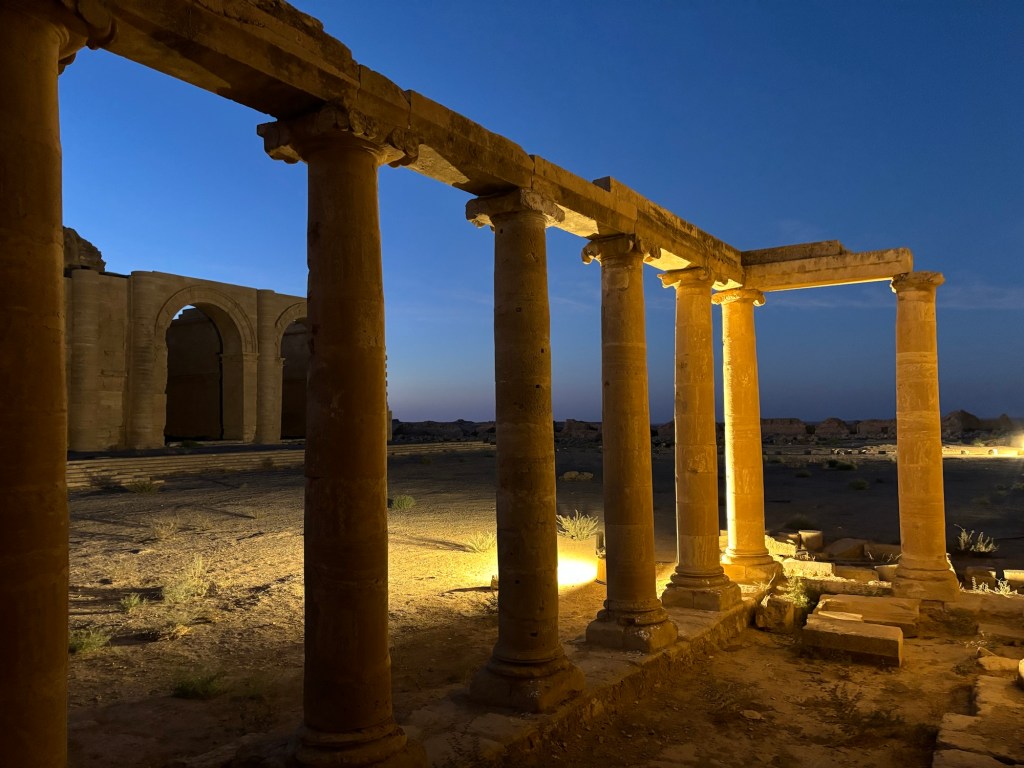
And then to Hatra which, out of all the amazing things I saw, was my absolute top favourite amazing thing, mostly because there was so much more of it than I was expecting to see. The featured photo at the top is also Hatra. Again there is some of that Saddam reconstruction along with his bragging brick stamps, but a lot more of it is original.
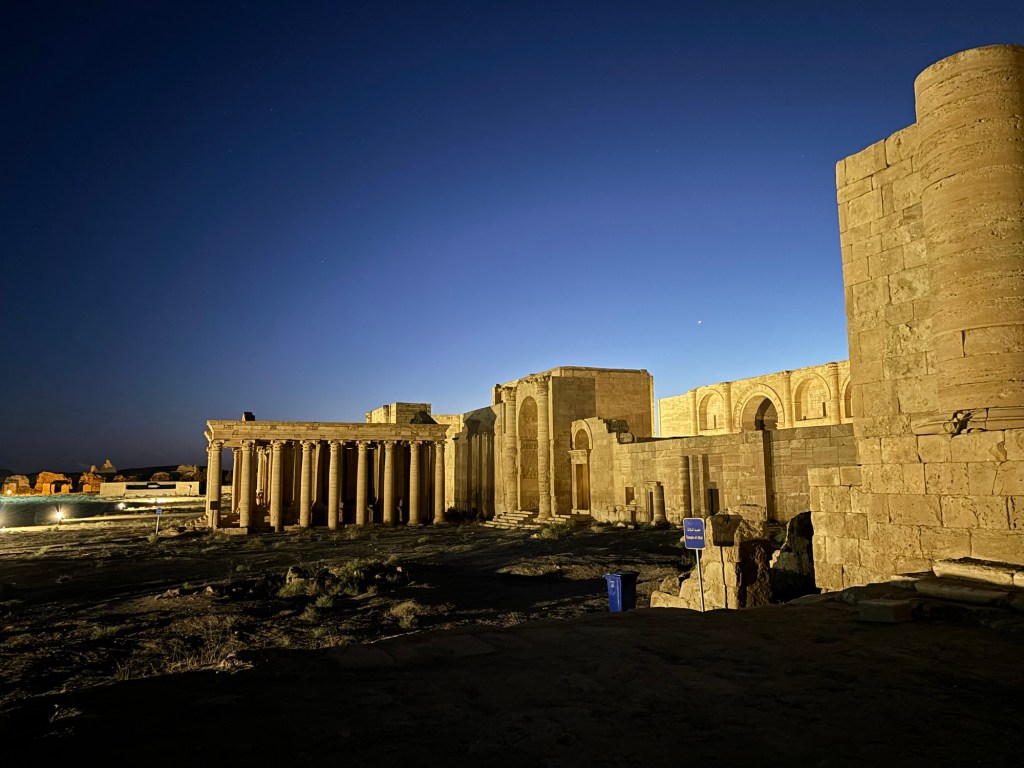
I still don’t know nearly enough about this place, except that it’s happily now a UNESCO site and was once an important trading and religious centre. Built around the 2nd century BCE, it was a major caravan city on the Silk Road, standing between the Persians in the East and the Romans in the West. It properly flourished in the 2nd century CE and stands alongside Palmyra in Syria, Baalbek in Lebanon and Petra in Jordan as one of the great Arab cities of the world.
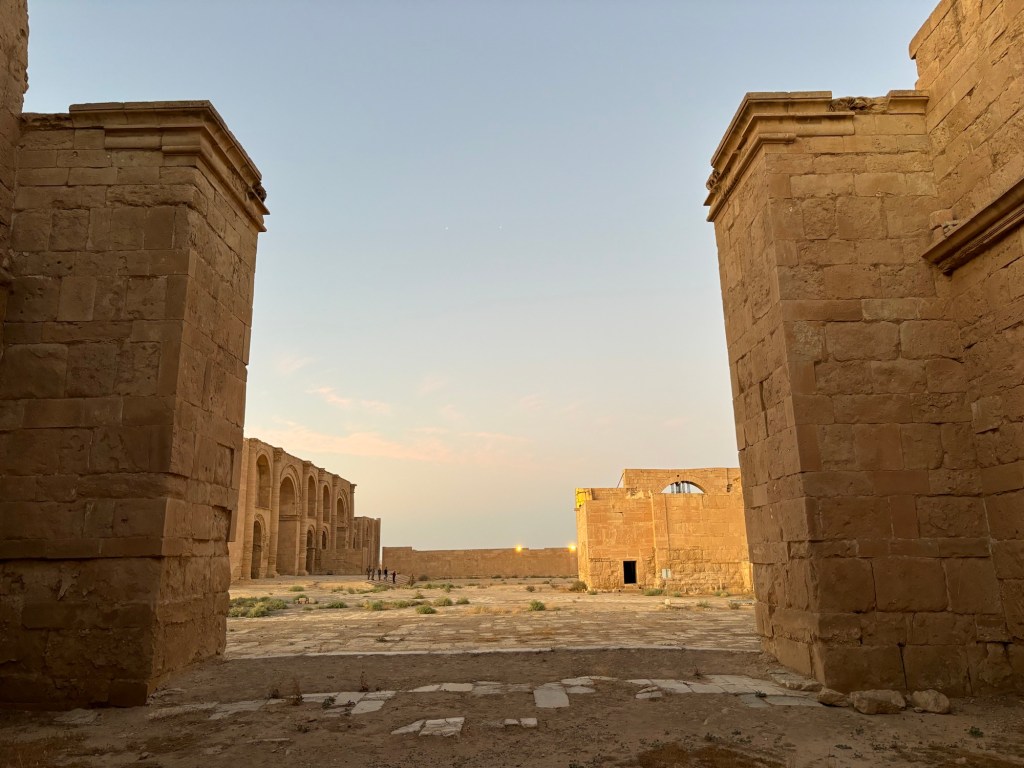
Hatra fell following a lengthy siege in 240-241 CE to Shapur I, ruler of the Persian Sasanian dynasty, and was destroyed. Legend has it that al-Nadirah, daughter of the king of Hatra, betrayed the city and permitted Shapur to conquer it because she’d fallen in love with him. He married her, but then discovered that her father had actually always respected her and treated her well, so he had her killed for her ingratitude to her dad. That’ll learn her.
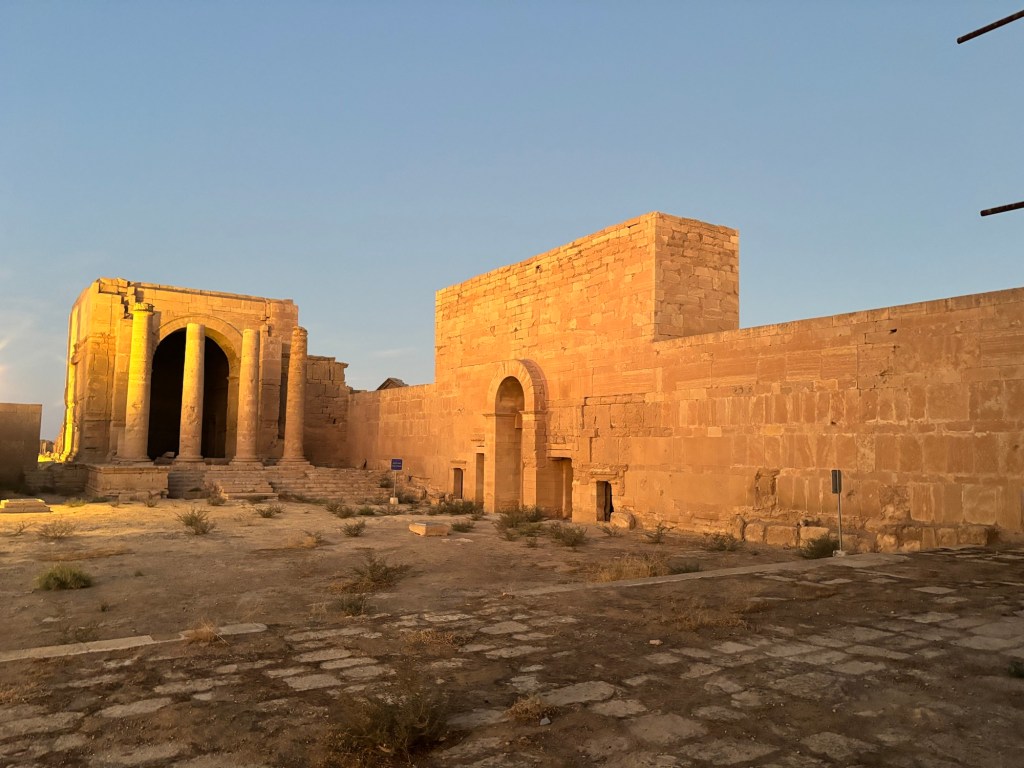
ISIS occupied this area between 2014 and 2017 and were a major threat to Hatra, claiming that many artefacts were un-Islamic, despite it being preserved for centuries by various Islamic regimes. In 2015 ISIS began demolishing the site and released a video showing the destruction of the monuments.
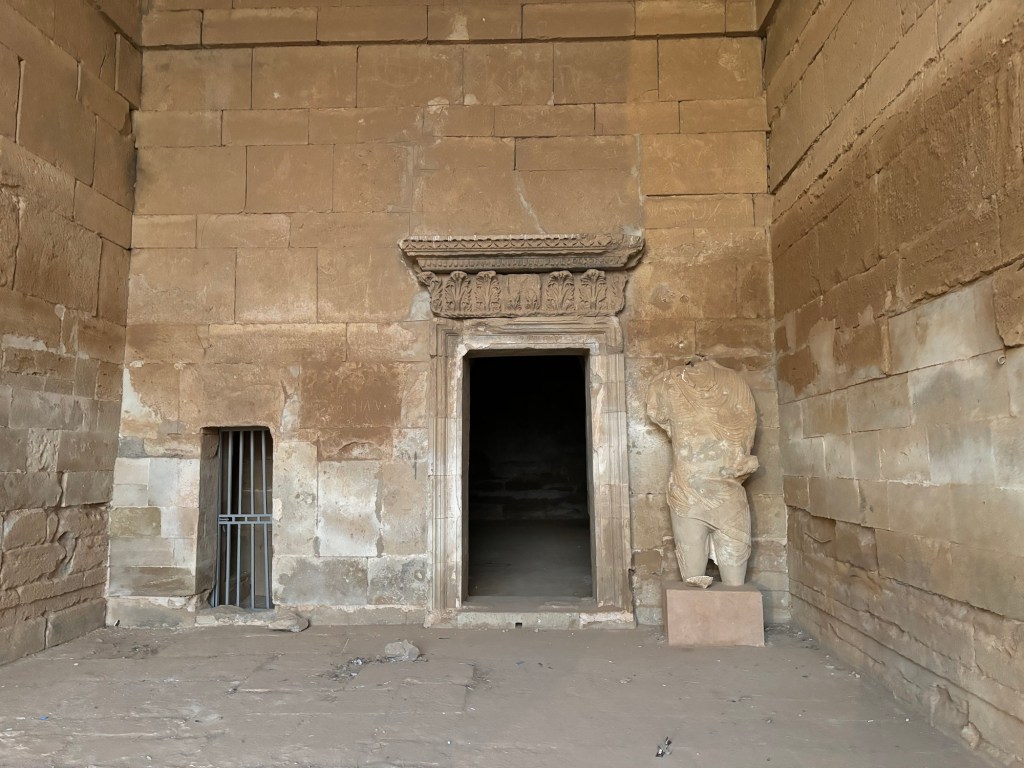
It was discovered after the defeat of ISIS that although sculptures and engraved images had been destroyed, the walls and towers were still standing, albeit scarred by bullet holes, and that fortunately the destruction didn’t compare with that of other archeological sites in Iraq and Syria, such as Nimrud and Palmyra.
Nineveh
The ruins of the ancient Assyrian city of Nineveh are now surrounded by modern day Mosul. While much of the ancient city walls that you can see are more Saddam reconstruction, you can clearly see the mounds all round where the walls had been, and some cuneiform etched pieces have remained intact.
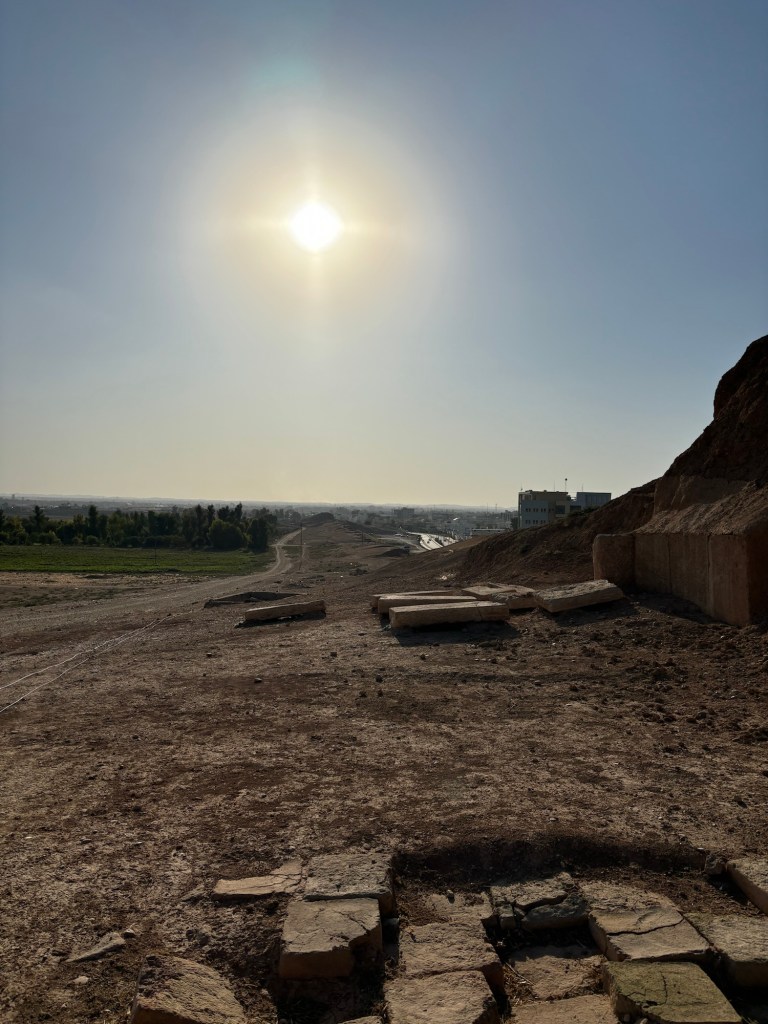
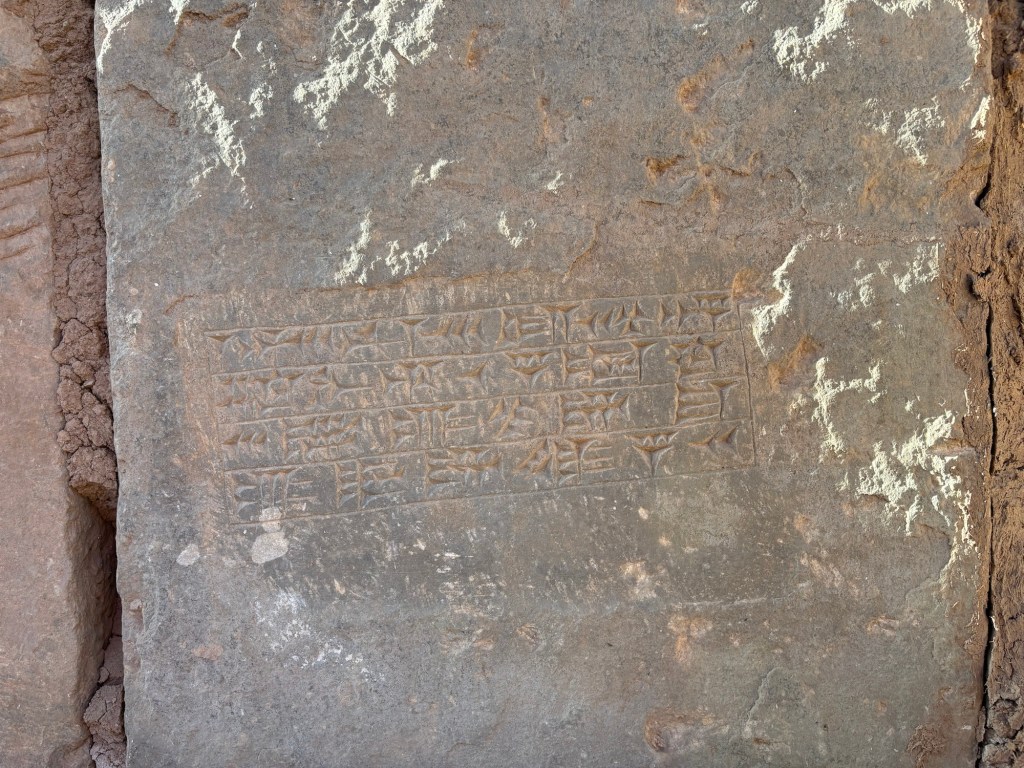
For a period of a few decades in the 7th century BCE, Nineveh was likely the largest city in the world. You’ve probably heard of Nineveh for other reasons; it’s the biblical city to which Jonah failed to deliver the judgement of God, and subsequently ended up in a whale for three days. In fact there used to be a mosque in Mosul that was built around the supposed grave of Jonah, but in a familiar story, ISIS blew it up in 2014.
Mosul
Mosul is the second most populous city in Iraq after Baghdad, and has a history dating back some thousands of years. Nearby to the archeological site of Nineveh is the Mosul Grand Mosque. Construction started during Saddam’s rule, but the work was interrupted due to political instability and it remains unfinished to this day. There are 18 domes representing the 18 Governorates of the Republic of Iraq.

Whilst it has a long and rich history, Mosul is sadly best known these days for its occupation by ISIS from 2014 and its liberation by the Iraqi Armed Forces in 2017. When Mosul fell to ISIS, about half a million people escaped by car or foot over the subsequent couple of days. But those who remained endured a brutal occupation for 3 years, 1 month, 1 week and 4 days of murder, torture, rape and persecution of religious and ethnic minorities.
Women were forcibly taken by ISIS men to become their brides and sold into sex slavery. Scores of people were tortured and executed for crimes such as ‘refusing to be a concubine’, ‘apostasy’, ‘having illegal relations’ and ‘using a mobile phone’. Methods of execution included burning, beheading, drowning and nitric acid. Churches, monasteries, mosques and ancient sites were looted, vandalised and destroyed.
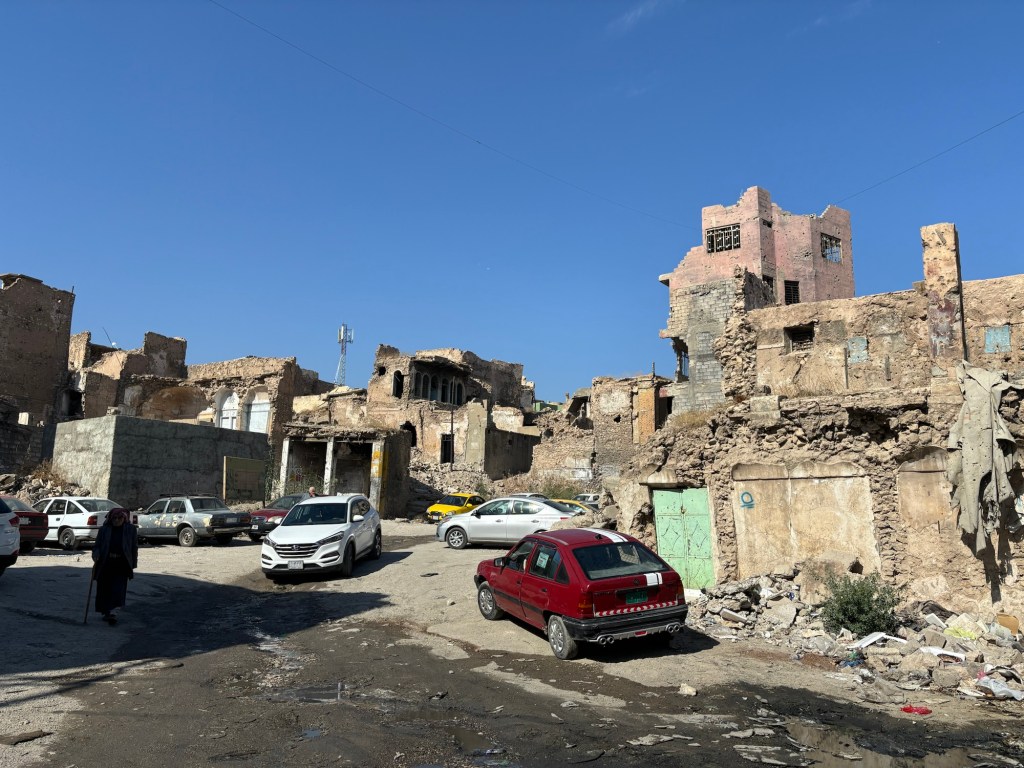
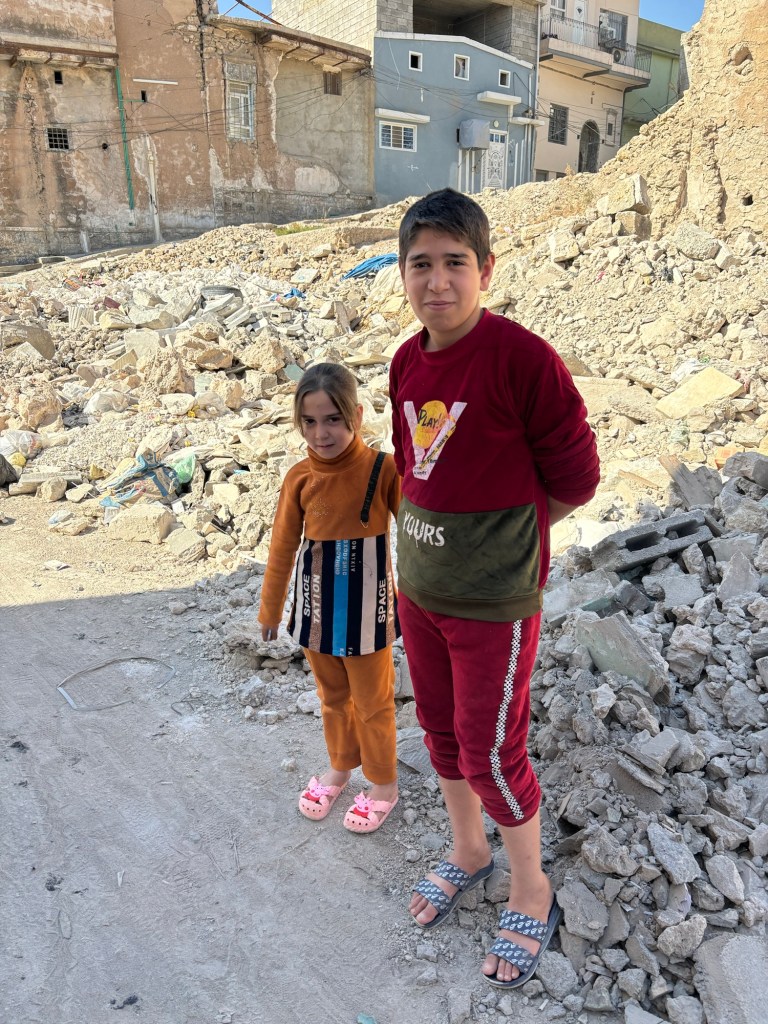
The old town of Mosul remains extensively damaged to this day.
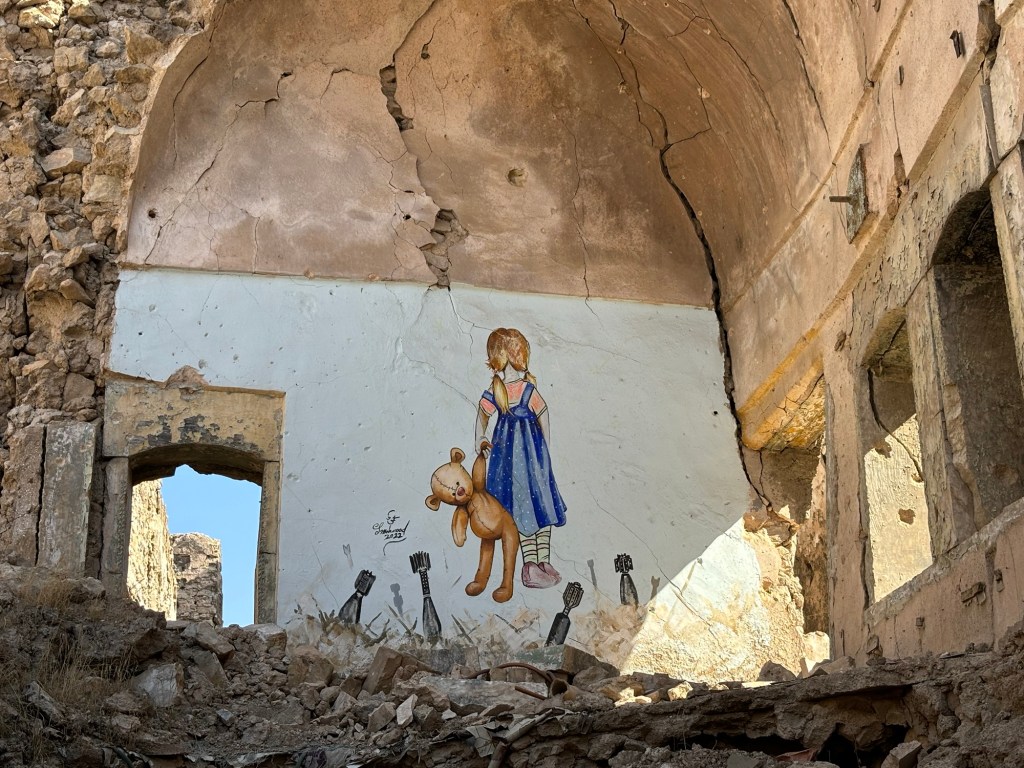
And since the liberation was only 7 years ago, almost everyone you meet likely lived through the occupation.
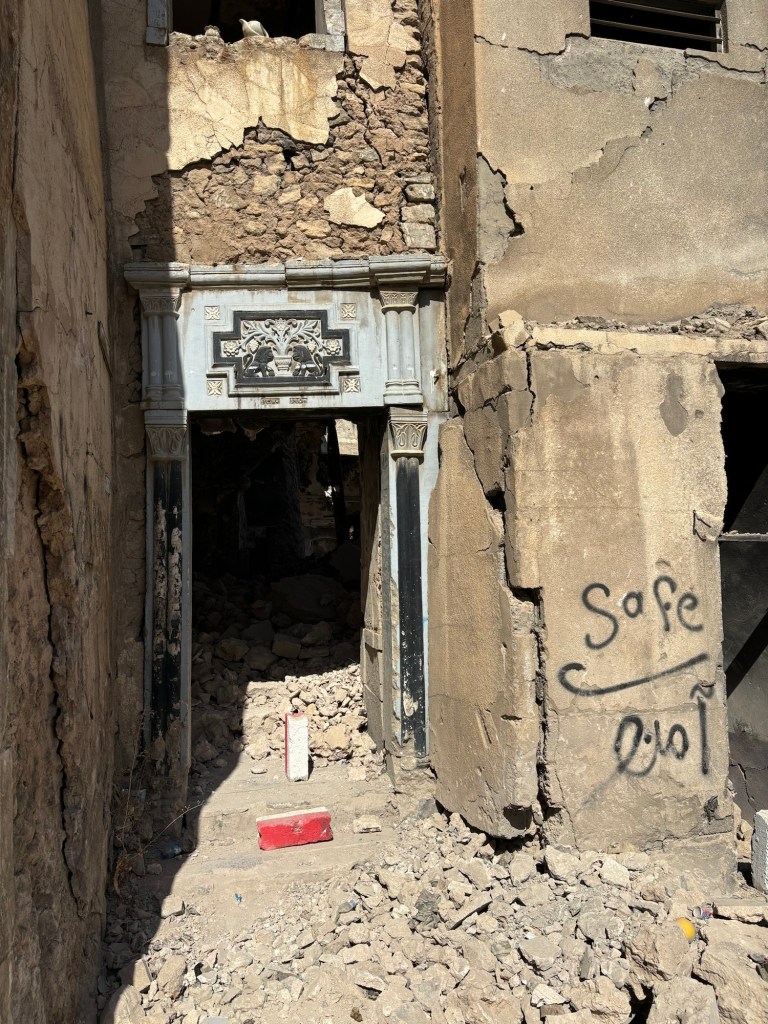
Explosive clearance is taking place but still ongoing; buildings are marked safe, or have a red block to show they haven’t yet been cleared.
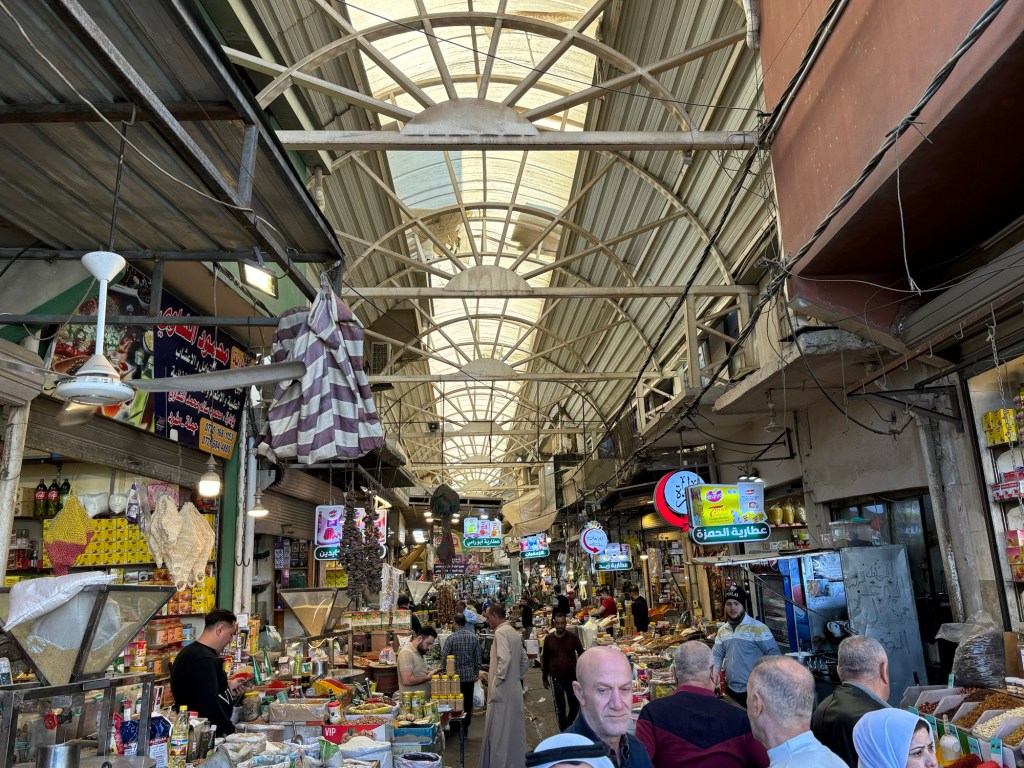
But, backed by the UN, restoration is underway and people are going about their lives.
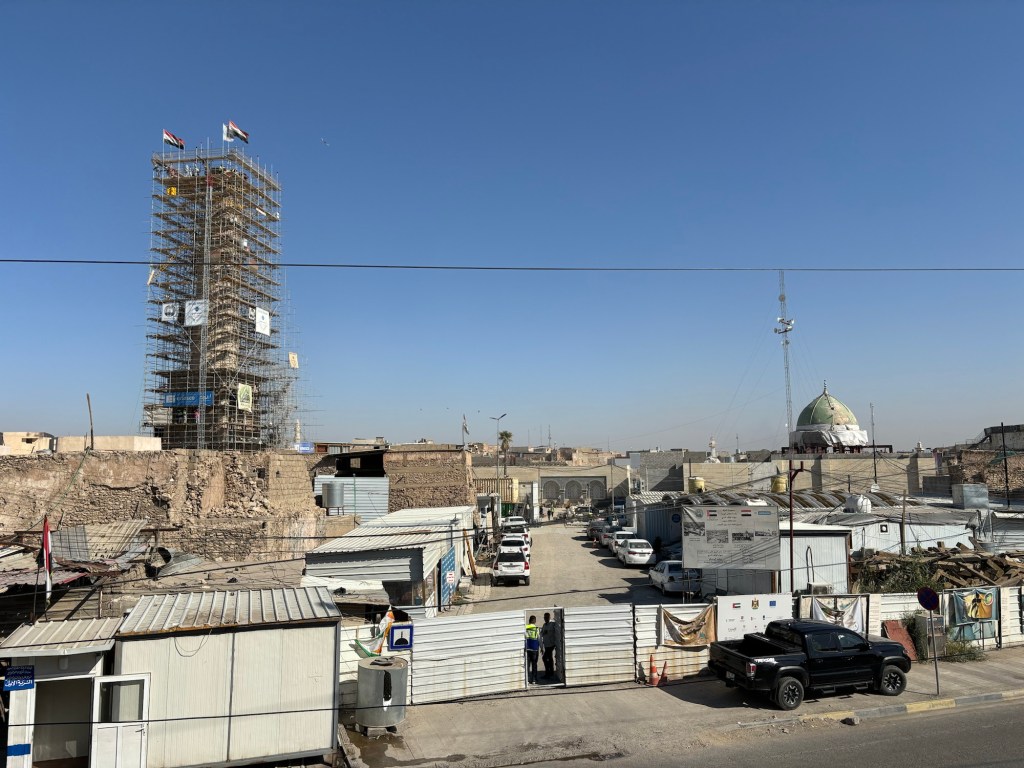
The Great Mosque of al-Nuri in Mosel was famous for its leaning minaret, which appears on one of the Iraqi banknotes. The mosque withstood numerous hostile invading forces over an 850 year period, until 2017 when ISIS blew it up shortly before liberation. UNESCO has said it’s aiming to finish the restoration of the minaret by the end of this year (2024) ‘finally erasing the stigma of the Daesh occupation’.
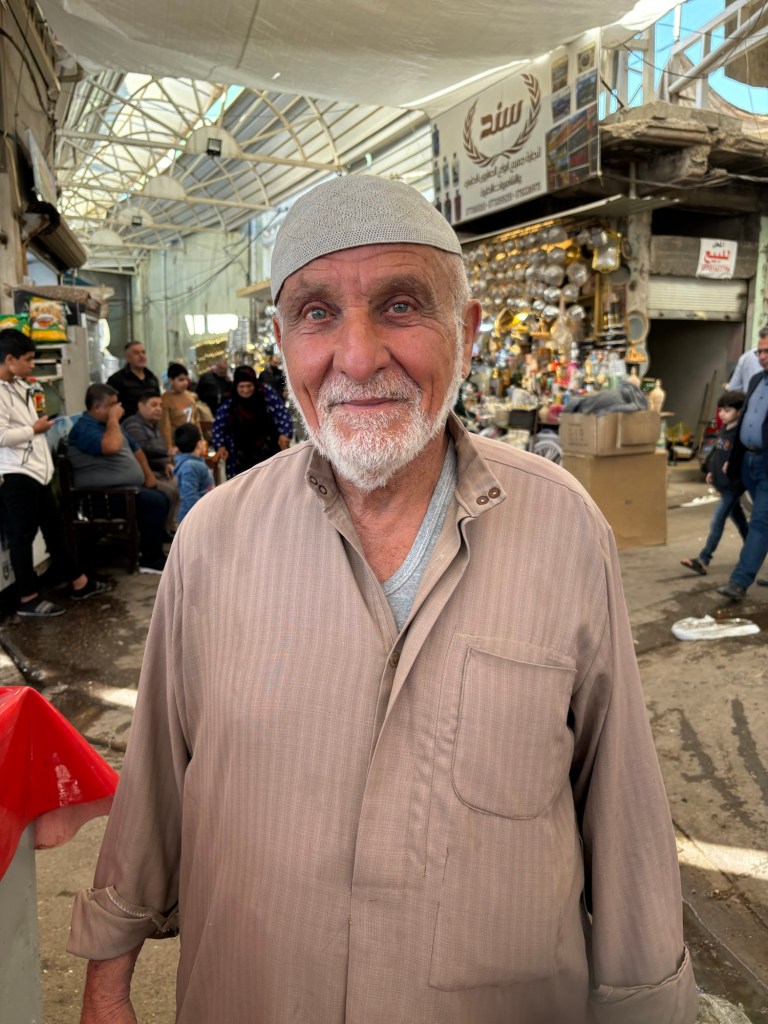
Not just in Mosul, but all over all over Iraq people were incredible – helpful, kind, interesting, funny, resilient. We western tourists were few and far between and everyone wanted to know why we were there. We had as many photos taken of us as we took of them, and some of the people I was with were even interviewed by the local news.
Iraq is full of places that you’ve heard of but might not be sure why, or perhaps thought they were just mythical places. If there’s any period of human history that you’re interested in, there’s probably somewhere in Iraq to learn more about it.
I really hope more people will visit the country, and that Iraq will find the enduring stability and peace that its people so truly deserve. Memories of this trip will stay with me for a very long time; it might just be my favourite holiday yet.

 cheeky gin travels
Can you send these to me Liz?
Maurice
LikeLike
I’ve sent you an invite to subscribe – that way you’ll get a notification every time I do a post.
LikeLike